A medicine to reduce heavy bleeding such as heavy periods
Etamsylate
A medicine used to reduce heavy bleeding, such as heavy menstrual bleeding, by helping small blood vessels work better.
What is Etamsylate?
Etamsylate is a medicine used to reduce heavy bleeding, most commonly heavy menstrual bleeding (heavy periods). It works by supporting the small blood vessels and helping them seal more effectively, so bleeding is reduced. It is taken by mouth and is generally well tolerated, with the most common effects being mild, such as headache, nausea or stomach upset. It reduces blood loss rather than treating the underlying cause of heavy bleeding, so the cause is also looked into where needed.
Education and reference only. This is a plain-language guide to Etamsylate — it deliberately contains no doses. Doses depend on the person, the brand and the reason for treatment, and belong with your prescriber. Always check the BNF, the product labelling (SmPC) and follow medical advice.
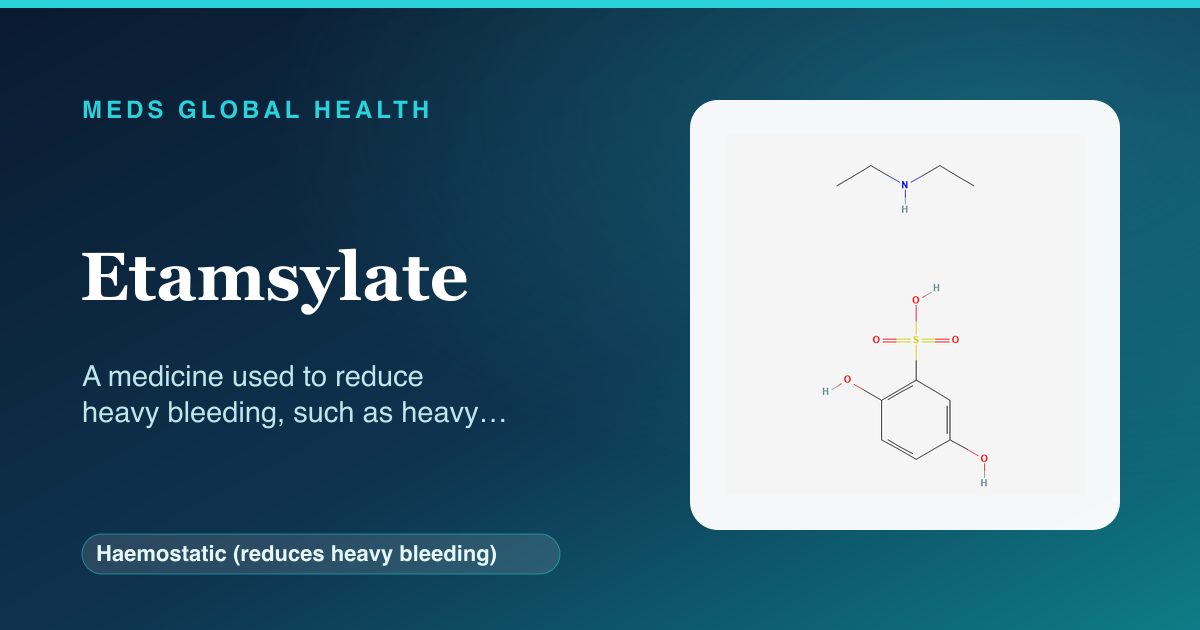
What it is
Etamsylate is a medicine that helps reduce heavy bleeding. It is most often used for heavy menstrual bleeding, where periods are heavier than usual. It is taken by mouth as tablets. Rather than acting like a strong clot-forming medicine, it works on the tiny blood vessels (capillaries), helping them stay intact and seal off bleeding more effectively. It is used to lessen blood loss, and is generally well tolerated, but the reason behind heavy bleeding is usually also looked into so the right overall plan can be made.
How it works
Etamsylate works on the small blood vessels in the lining of the body, helping them become less leaky and supporting the early steps of sealing a bleeding vessel. By improving how well these tiny vessels hold together and how the first plug forms where bleeding starts, it reduces the amount of blood lost. It does not act like an anticoagulant in reverse or form large clots throughout the body; it simply helps the natural sealing process at the small-vessel level. It is taken while bleeding is a problem, such as during heavier days of a period.
Company & origin
A medicine used in the UK to help reduce heavy bleeding, such as heavy menstrual bleeding, by supporting small blood vessels.
Practical use
How to take Etamsylate
General, dose-free guidance — always follow your prescriber's and the leaflet's specific instructions.
- Take the tablets by mouth as directed, usually with or after food to reduce the chance of stomach upset.
- For heavy periods, take it during the days when bleeding is heaviest, as advised by your prescriber.
- Do not take more than the recommended amount in the hope of a bigger effect.
- Tell your doctor if your bleeding is very heavy, getting worse, or if you feel faint, dizzy or very tired.
- Have the cause of heavy bleeding looked into, as etamsylate reduces blood loss rather than treating the cause.
Weighing it up
Advantages & disadvantages of Etamsylate
Advantages
- Helps reduce heavy bleeding, such as heavy periods, by supporting small blood vessels.
- Generally well tolerated, with mostly mild side effects.
- Taken by mouth as tablets, so it is simple to use.
Disadvantages
- Reduces blood loss but does not treat the underlying cause of heavy bleeding.
- Can cause mild effects such as headache, nausea or stomach upset.
- Very heavy or worsening bleeding still needs medical assessment.
Practical use
Good to know
A reassuring thing about etamsylate is that it is generally well tolerated, and when side effects do happen they tend to be mild, such as a headache, feeling a bit sick, or mild stomach upset, which often ease if it is taken with food. It is helpful to understand that it reduces how much you bleed rather than treating the cause of heavy bleeding, so if heavy periods are a new or ongoing problem it is worth having the cause looked into, as other treatments may suit better or be needed as well. Take it as directed, and let your doctor know if your bleeding is very heavy, getting worse, or if you feel faint, dizzy or unusually tired, which can be signs of significant blood loss.
Who should not take it / use with caution
- People who have had a serious allergic reaction to etamsylate should not take it.
- It is used with caution in people with certain blood disorders, under medical advice.
- It is used in pregnancy and breastfeeding only on the advice of a doctor.
Monitoring
- Reviewing whether bleeding has reduced with treatment.
- Checking for signs of significant blood loss, such as feeling faint, dizzy or very tired.
- Looking into the cause of ongoing or heavy bleeding so the right overall plan can be made.
Side effects
- Headache.
- Nausea or mild stomach upset, often eased by taking it with food.
- Skin rash in some people.
- Rarely, a more serious allergic reaction, which needs urgent medical attention.
Key interactions
- It has few well-established routine interactions, but tell your prescriber everything you take.
- Let your doctor know about other medicines that affect bleeding or clotting.
- Check with a pharmacist before adding over-the-counter medicines or supplements.
Available as: Tablets taken by mouth.
Answers
Etamsylate: frequently asked questions
What is etamsylate used for?
It is used to reduce heavy bleeding, most commonly heavy menstrual bleeding (heavy periods), by helping small blood vessels seal off bleeding more effectively.
How does it reduce bleeding?
It supports the tiny blood vessels so they are less leaky and seal more effectively where bleeding starts, which lessens the amount of blood lost.
Is it generally well tolerated?
Yes, it is usually well tolerated, with mostly mild effects such as headache, nausea or stomach upset, which often ease if taken with food.
Does it treat the cause of heavy periods?
No. It reduces how much you bleed rather than treating the cause, so it is worth having the reason for heavy bleeding looked into.
When should I see a doctor?
Tell your doctor if bleeding is very heavy or getting worse, or if you feel faint, dizzy or very tired, as these can be signs of significant blood loss.
Authoritative sources
- BNF
- NICE CKS
Building a medicines information resource?
We create evidence-led, dose-free drug and formulary references for teams.