A second-line tablet for drug-resistant tuberculosis
Ethionamide
A second-line anti-TB tablet used, alongside other medicines, to treat drug-resistant tuberculosis.
What is Ethionamide?
Ethionamide is a second-line medicine used to treat drug-resistant tuberculosis, a form of TB that does not respond to the usual first-choice antibiotics. It is always used as part of a combination of several anti-TB medicines, never on its own. It commonly causes stomach upset, which can make it hard to tolerate, and it can affect the liver, the thyroid gland (causing an underactive thyroid) and the nerves. Vitamin B6 (pyridoxine) is usually given alongside it to protect the nerves. It is used under a specialist TB service with regular monitoring.
Education and reference only. This is a plain-language guide to Ethionamide — it deliberately contains no doses. Doses depend on the person, the brand and the reason for treatment, and belong with your prescriber. Always check the BNF, the product labelling (SmPC) and follow medical advice.
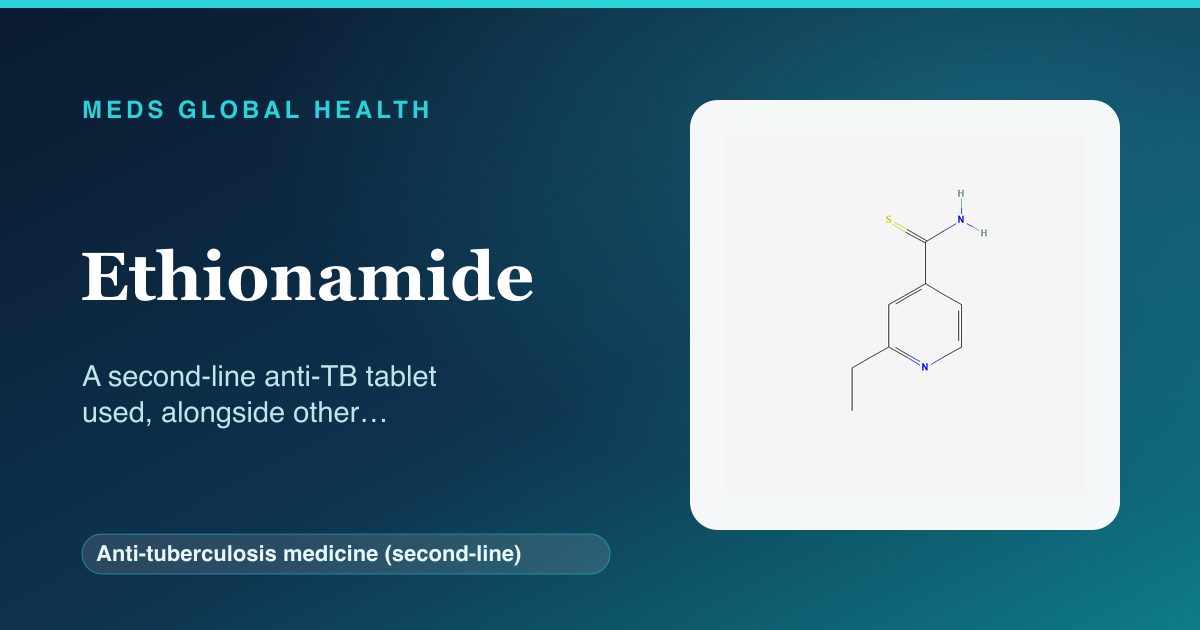
What it is
Ethionamide is an older, second-line anti-tuberculosis medicine used when TB does not respond to the standard first-choice drugs, such as in drug-resistant TB. It is taken by mouth and is always given as one part of a combination of several anti-TB medicines, because TB needs to be hit in different ways at once. It is reserved for difficult cases and is prescribed and closely supervised by a specialist TB team, as it needs careful monitoring and can be hard to tolerate.
How it works
Ethionamide works by interfering with the TB bacteria's ability to build their protective cell wall, which they need to survive, helping to clear the infection. Because TB bacteria can quickly become resistant to a single medicine, ethionamide is always combined with other anti-TB drugs so the bacteria are attacked in different ways and each medicine is protected from losing its effect. Treatment is taken daily over a long period to clear all the bacteria, including slow-growing ones, and to stop the infection returning.
Company & origin
An older second-line medicine used in the UK as part of combination treatment for drug-resistant tuberculosis.
Practical use
How to take Ethionamide
General, dose-free guidance — always follow your prescriber's and the leaflet's specific instructions.
- Take it as prescribed and always alongside your other anti-TB medicines, never on its own.
- Take it with food or at bedtime if it upsets your stomach, and ask about anti-sickness help if needed.
- Take the vitamin B6 (pyridoxine) you are given, which helps protect your nerves.
- Attend appointments for liver, thyroid and other blood tests so your team can monitor for side effects.
- Do not miss doses or stop early, even when you feel better, as the TB can return and become harder to treat.
Weighing it up
Advantages & disadvantages of Ethionamide
Advantages
- A useful second-line option as part of combination treatment for drug-resistant TB.
- Taken by mouth as a tablet.
- Adds another way of attacking the bacteria when first-choice medicines cannot be used.
Disadvantages
- Commonly causes stomach upset, which can make it hard to tolerate.
- Can affect the liver, the thyroid gland and the nerves, so monitoring and vitamin B6 are needed.
- Must always be used in combination, never alone, as part of a long course with close supervision.
Practical use
Good to know
Several things are important with ethionamide. It is always used as part of a combination, never alone, because using a single TB medicine lets the bacteria become resistant. The most common problem is stomach upset — nausea, vomiting, a metallic taste and loss of appetite — which can be hard to put up with; taking it with food or at bedtime, sometimes with anti-sickness help, can ease this. It can affect the liver, so liver blood tests are checked, and it can make the thyroid gland underactive, so thyroid function is monitored and treated if needed. It can also affect the nerves, causing tingling or numbness, which is why vitamin B6 (pyridoxine) is usually given alongside it. Taking every dose over the long course is vital, and the specialist team watches closely for these effects.
Who should not take it / use with caution
- People who have had a serious allergic reaction to ethionamide should not take it.
- It is used with caution, or avoided, in people with significant liver problems.
- It is used with care in pregnancy and only under specialist guidance, weighing benefits and risks.
- It should only be used under a specialist TB service, with regular monitoring.
Monitoring
- Liver blood tests during treatment, as ethionamide can affect the liver.
- Thyroid function tests, as it can cause an underactive thyroid.
- Watching for nerve symptoms, mood changes and how the TB is responding over the long course.
Side effects
- Nausea, vomiting, loss of appetite or a metallic taste, which are common.
- Liver problems, shown by changes in blood tests, and an underactive thyroid gland.
- Tingling or numbness in the hands and feet (nerve effects), which vitamin B6 helps protect against.
- Less commonly, mood changes, dizziness or low blood sugar in some people.
Key interactions
- Other medicines that can affect the liver add to the risk and are reviewed carefully.
- It may add to nerve-related side effects of some other anti-TB or other medicines.
- Drinking alcohol can worsen liver effects and mood changes, so advice is given on this.
Available as: Tablets taken by mouth.
Answers
Ethionamide: frequently asked questions
What is ethionamide used for?
It is a second-line medicine used as part of combination treatment for drug-resistant tuberculosis, when first-choice anti-TB medicines cannot be used.
Why is it never taken on its own?
Using a single TB medicine alone lets the bacteria become resistant, so ethionamide is always combined with several other anti-TB medicines.
Why does it upset my stomach so much?
Stomach upset such as nausea is the most common effect; taking it with food or at bedtime, sometimes with anti-sickness help, can make it easier to tolerate.
Why am I given vitamin B6 with it?
Ethionamide can affect the nerves, causing tingling or numbness, and vitamin B6 (pyridoxine) is given to help protect against this.
What does it do to my thyroid?
It can make the thyroid gland underactive, so thyroid function is monitored and an underactive thyroid is treated if it develops.
Authoritative sources
- BNF
- NICE CKS
Building a medicines information resource?
We create evidence-led, dose-free drug and formulary references for teams.