An mTOR inhibitor immunosuppressant
Everolimus
An immunosuppressant used to prevent transplant rejection and, separately, to treat some cancers and conditions.
What is Everolimus?
Everolimus is an mTOR inhibitor, an immunosuppressant used to prevent rejection after some organ transplants and, under different brands, to treat certain cancers and conditions linked to a genetic disorder. It calms a part of the immune system or slows cell growth, which can mean a higher risk of infections. Like sirolimus, it has a narrow safety margin and needs regular blood tests, and it can cause mouth ulcers, raised blood fats and slower wound healing. The dose and brand depend on what it is being used for, and grapefruit juice should be avoided.
Education and reference only. This is a plain-language guide to Everolimus — it deliberately contains no doses. Doses depend on the person, the brand and the reason for treatment, and belong with your prescriber. Always check the BNF, the product labelling (SmPC) and follow medical advice.
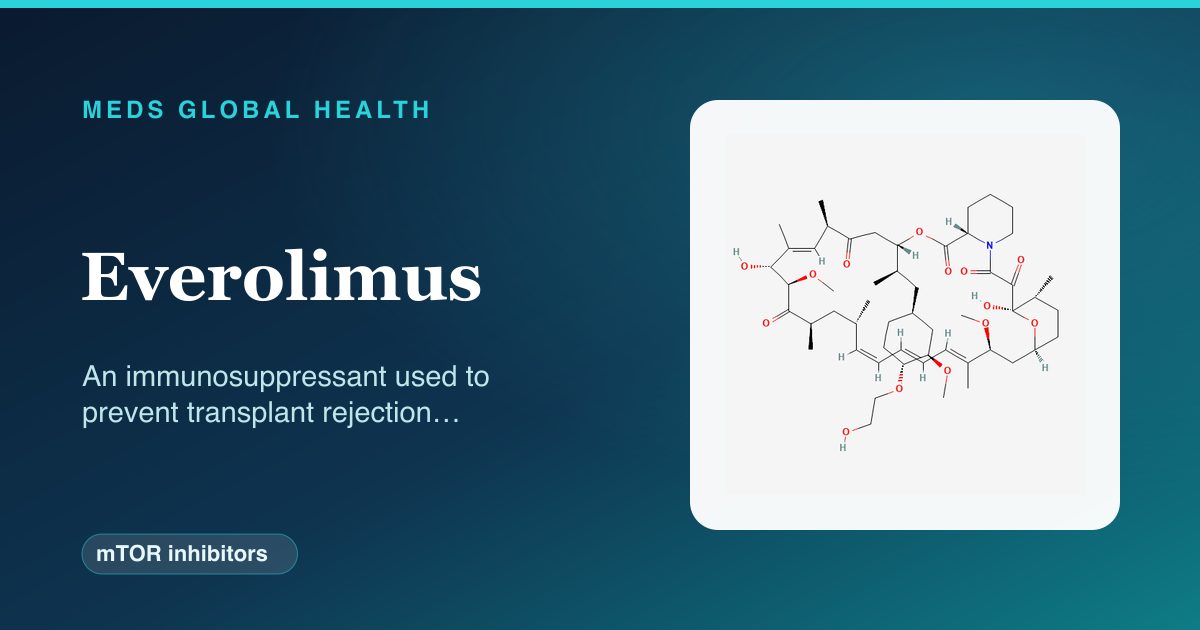
What it is
Everolimus is an mTOR inhibitor closely related to sirolimus. In transplant care it is used to stop the body rejecting a transplanted organ, often alongside a low dose of a calcineurin inhibitor. Under different brand names it is also used to treat certain cancers and growths linked to an inherited condition called tuberous sclerosis. It is taken as tablets by mouth, including a dispersible form. Because the right amount matters, it is used under specialist care with regular blood tests in transplant patients.
How it works
Everolimus blocks mTOR, a protein that drives cell growth and multiplication, inside immune cells and other cells. In transplant care this dampens the immune attack on the new organ, while in cancer care it slows the growth of certain tumours. Because mTOR is involved in healing and cell growth, the medicine can slow wound healing, cause mouth ulcers and affect blood fats. As with other immunosuppressants, a quieter immune system means a higher risk of infections, and dosing in transplant use is guided by blood-level tests.
Company & origin
Originated / developed by: Generic (originally Novartis).
An mTOR inhibitor used in the UK to prevent transplant rejection and, under different brands, to treat certain cancers and conditions.
Practical use
How to take Everolimus
General, dose-free guidance — always follow your prescriber's and the leaflet's specific instructions.
- Take it exactly as prescribed for your specific condition, at the same time each day and consistently in relation to food.
- Avoid grapefruit and grapefruit juice, which can raise the level of everolimus in your body.
- Attend all blood tests and reviews, which guide your dose and check for side effects.
- Report mouth ulcers, new breathlessness, leg swelling or signs of infection promptly.
- Tell your team before any planned surgery, as everolimus can slow wound healing.
- Never stop it suddenly without advice, and tell every prescriber and pharmacist that you take it.
Weighing it up
Advantages & disadvantages of Everolimus
Advantages
- Prevents transplant rejection by a different route, allowing lower doses of other medicines in some regimens.
- Under different brands, it can treat certain cancers and growths linked to tuberous sclerosis.
- Available as tablets, including a dispersible form, with transplant dosing guided by blood tests.
Disadvantages
- Has a narrow safety margin in transplant use and needs regular blood tests.
- Commonly causes mouth ulcers, raised blood fats, swelling and slower wound healing.
- Increases the risk of infections and interacts with many medicines and grapefruit.
Practical use
Good to know
Everolimus is used in quite different situations - preventing transplant rejection and treating certain cancers and conditions - so the brand, form and how it is dosed depend on the reason for use. In transplant care it has a narrow therapeutic range and needs regular blood-level tests. Common effects include mouth ulcers, raised blood fats, swelling, skin changes and a higher risk of infections, and it can slow wound healing, so it is often considered around surgery. Lung inflammation is an uncommon but important effect to report if you become breathless. Grapefruit and grapefruit juice raise the level and should be avoided, many medicines interact with it, and it should never be stopped suddenly without advice.
Who should not take it / use with caution
- People around the time of major surgery may need it paused because it slows wound healing.
- It is generally avoided in active untreated infections and used cautiously with very high blood fats.
- Those unable to attend regular monitoring and reviews are not suitable without arrangements in place.
Monitoring
- In transplant use, regular blood tests to measure the everolimus level and keep it in range.
- Checks of blood fats, blood counts, kidney function and, where relevant, lung symptoms.
- Ongoing watch for infections, mouth ulcers, wound healing and other side effects.
Side effects
- Mouth ulcers, raised blood fats, swelling, rashes and increased infection risk are common.
- Low blood counts, tiredness, poor appetite and slower wound healing.
- Less commonly, lung inflammation causing breathlessness, which should be reported promptly.
Key interactions
- Grapefruit juice and medicines such as some antifungals and certain antibiotics can raise its level.
- Other medicines, including some epilepsy drugs and St John's wort, can lower its level and reduce its effect.
- Care is needed when combining it with calcineurin inhibitors or other medicines that affect the kidneys.
Available as: Tablets, including a dispersible form, taken by mouth.
Answers
Everolimus: frequently asked questions
Why does everolimus have several different brands?
It is used for different purposes - preventing transplant rejection and treating certain cancers and conditions - so the brand, form and dosing depend on the reason for use.
How is it like sirolimus?
Both are mTOR inhibitors that work in a similar way, with similar side effects such as mouth ulcers, raised blood fats and slower wound healing.
What should I do if I become breathless?
Tell your team promptly, as everolimus can uncommonly cause lung inflammation, which needs checking.
Why must I avoid grapefruit juice?
Grapefruit raises the amount of everolimus in your blood, increasing side effects, so it should be avoided.
Can I stop it if I feel well?
No. In transplant use, stopping suddenly risks rejection, so never change or stop it without specialist advice.
Authoritative sources
- BNF
- NICE CKS
Building a medicines information resource?
We create evidence-led, dose-free drug and formulary references for teams.