A medicine that lowers uric acid to prevent gout
Febuxostat
A urate-lowering tablet for gout, used when allopurinol is unsuitable, with caution in heart disease.
What is Febuxostat?
Febuxostat is a urate-lowering medicine used to prevent gout attacks by reducing the uric acid in the blood. In the UK it is usually used when allopurinol is not suitable or not tolerated. It is taken long-term, can trigger gout flares when first started, and is used with caution in people with significant heart disease.
Education and reference only. This is a plain-language guide to Febuxostat — it deliberately contains no doses. Doses depend on the person, the brand and the reason for treatment, and belong with your prescriber. Always check the BNF, the product labelling (SmPC) and follow medical advice.
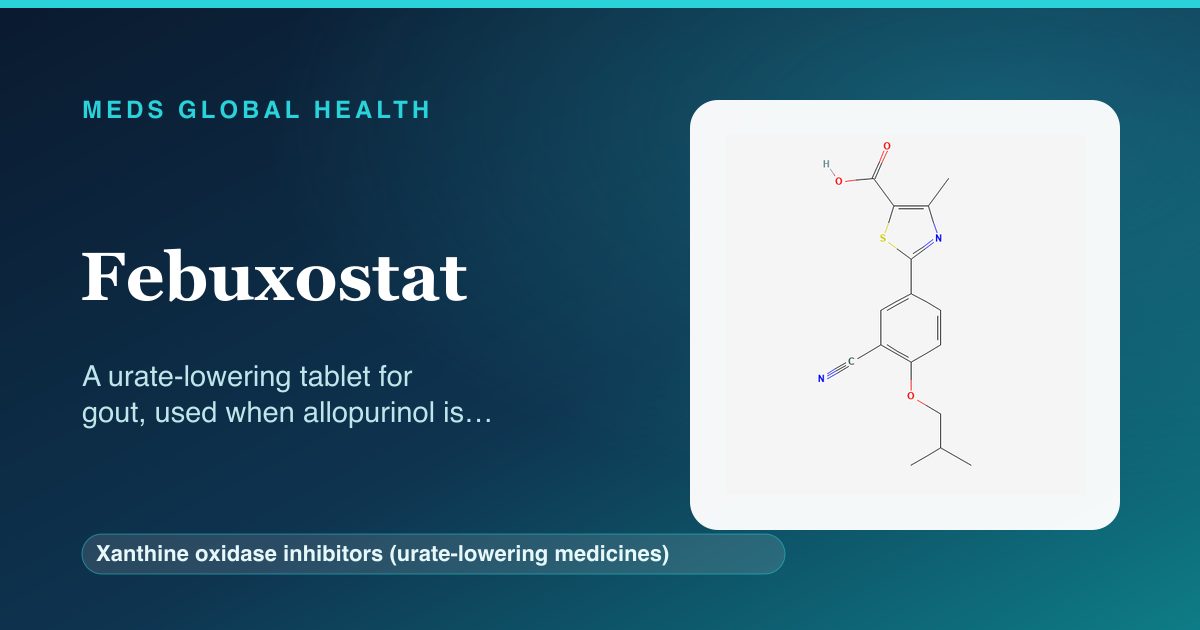
What it is
Febuxostat is a tablet that lowers the level of uric acid in the blood to prevent the painful joint attacks of gout and to dissolve uric-acid crystals over time. It is an alternative to allopurinol, the usual first choice, and is often used when allopurinol cannot be used or has not worked well enough. It is a long-term preventive treatment, not a painkiller for an acute attack.
How it works
Febuxostat blocks an enzyme called xanthine oxidase, which the body uses to make uric acid. With less uric acid being produced, blood levels fall, and over months the crystals that cause gout gradually dissolve. Keeping uric acid low long-term is what prevents future attacks and joint damage.
Company & origin
Originated / developed by: Teijin / Ipsen (originator).
A non-purine xanthine oxidase inhibitor introduced in the late 2000s as an alternative to allopurinol for lowering uric acid.
What it treats
Conditions Febuxostat is used for
Practical use
How to take Febuxostat
General, dose-free guidance — always follow your prescriber's and the leaflet's specific instructions.
- Take it at the same time each day, with or without food.
- Keep taking it during a gout attack — do not stop it when a flare happens.
- Expect possible extra flares early on; these usually settle as treatment continues.
- Drink plenty of fluid and keep up with your blood tests.
- If you miss a dose, take it when you remember unless it is nearly time for the next one — do not double up.
Weighing it up
Advantages & disadvantages of Febuxostat
Advantages
- Effectively lowers uric acid, often reaching target where allopurinol has not.
- A useful option when allopurinol cannot be tolerated or used.
- Mostly cleared by the liver, so it is easier to use than allopurinol in some kidney problems.
Disadvantages
- Can trigger more gout flares in the first months of treatment.
- Used with caution in people with significant heart disease.
- Requires liver-function blood tests and long-term commitment.
Practical use
Good to know
When febuxostat is first started, gout attacks can become more frequent for a while as crystals shift, so cover with another medicine is usually given for the first few months — this is expected and not a sign of failure. You should keep taking it through a flare rather than stopping it. It is used with caution if you have significant heart disease, and your liver function is checked with blood tests. Drinking enough fluid and following advice on diet and alcohol helps it work.
Who should not take it / use with caution
- People with significant heart disease, in whom it is used with caution and weighed carefully.
- People with active liver problems or a previous serious reaction to it.
- Not used to treat a sudden gout attack on its own — it is a long-term preventer.
Monitoring
- Blood uric-acid level to confirm it is reaching target.
- Liver function (blood tests) during treatment.
- Gout flare frequency and any heart symptoms.
Side effects
- More frequent gout flares when first starting, which usually settle.
- Liver-blood-test changes, headache, nausea or diarrhoea.
- Rarely, serious skin reactions — report any widespread rash promptly.
Key interactions
- Azathioprine and mercaptopurine can build up to toxic levels — this combination is generally avoided.
- Other gout and urate-lowering medicines may need review when combined.
- Certain other medicines processed by the same pathways may need monitoring.
Available as: Tablets.
Answers
Febuxostat: frequently asked questions
Why am I getting more gout attacks after starting febuxostat?
Lowering uric acid disturbs existing crystals, which can trigger flares in the first months of treatment. This is expected and does not mean the medicine is failing. Cover with another medicine is usually given early on, and the flares settle as treatment continues.
Should I stop febuxostat during a gout attack?
No. Keep taking it through a flare and treat the attack separately as your team advises. Stopping and restarting urate-lowering treatment can actually provoke more attacks.
How is febuxostat different from allopurinol?
Both lower uric acid by blocking the same enzyme, but they are different medicines. Febuxostat is mainly used when allopurinol is unsuitable or has not worked. It is cleared mostly by the liver, which can make it easier to use in some kidney problems, but it is used with more caution in heart disease.
Do I need blood tests on febuxostat?
Yes. Your uric-acid level is checked to confirm it is reaching target, and liver-function tests are done during treatment. Tell your team about any new rash, yellowing of the skin or eyes, or unusual symptoms.
Is febuxostat safe for my heart?
It is used with caution in people who already have significant heart disease, because of questions raised about cardiovascular risk. Your team weighs this up for you; tell them about any chest pain, breathlessness or palpitations.
The wider class
About Xanthine oxidase inhibitors (urate-lowering medicines)
Febuxostat belongs to the xanthine oxidase inhibitors (urate-lowering medicines) class. For how the class as a whole works, its shared safety principles and monitoring, see the full guide.
Browse by body system
Authoritative sources
- BNF
- NICE CKS
Building a medicines information resource?
We create evidence-led, dose-free drug and formulary references for teams.