A last-line antiepileptic for severe epilepsy
Felbamate
A reserved, last-line antiepileptic used for severe epilepsy when other treatments have failed.
What is Felbamate?
Felbamate is an antiepileptic medicine kept in reserve for severe epilepsy, such as Lennox-Gastaut syndrome, when other treatments have not worked. It can help seizures that are otherwise very hard to control. The dominant reason it is a last choice is that it can, though rarely, cause very serious harm: aplastic anaemia, a severe failure of the bone marrow to make blood cells, and serious liver failure. Because of this it needs regular blood and liver monitoring and usually a signed acknowledgement of the risks. It is started and supervised only by a specialist.
Education and reference only. This is a plain-language guide to Felbamate — it deliberately contains no doses. Doses depend on the person, the brand and the reason for treatment, and belong with your prescriber. Always check the BNF, the product labelling (SmPC) and follow medical advice.
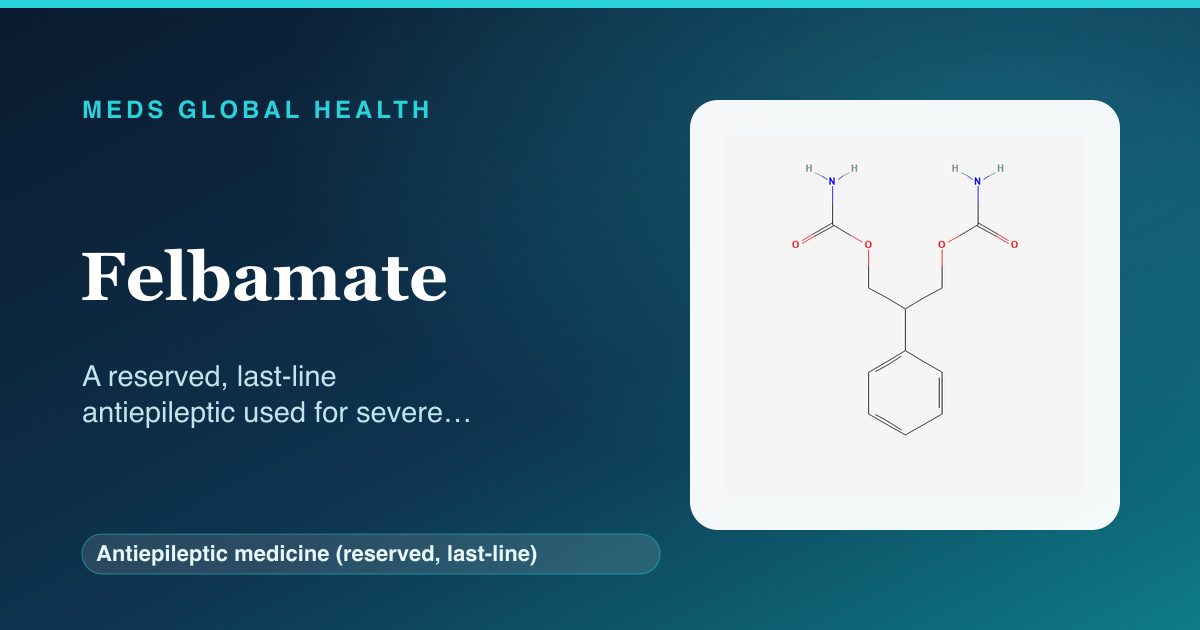
What it is
Felbamate is an antiepileptic medicine used only as a last-line treatment for severe, difficult-to-control epilepsy, including Lennox-Gastaut syndrome, when other medicines have failed to help. It can be effective where other treatments are not, but it is reserved because it carries rare but very serious risks. It is started, prescribed and closely supervised only by an epilepsy specialist, usually after discussing and signing an acknowledgement of these risks. It is taken by mouth over the long term, with regular blood and liver monitoring, as part of carefully managed treatment for severe epilepsy.
How it works
Felbamate calms the excessive electrical activity in the brain that causes seizures, acting on the signalling between nerve cells to make seizures less likely. This can help control severe seizures that other medicines have not managed. However, the way the body processes felbamate can, in a small number of people, lead to serious harm to the bone marrow or the liver, which is why its benefits have to be weighed very carefully against these risks. Because it works steadily, it is taken regularly, and its effects and safety are monitored closely throughout treatment.
Company & origin
A reserved antiepileptic used only for severe epilepsy that has not responded to other treatments, because of serious safety risks.
What it treats
Conditions Felbamate is used for
Practical use
How to take Felbamate
General, dose-free guidance — always follow your prescriber's and the leaflet's specific instructions.
- Take it by mouth exactly as your specialist directs, and only continue it under close specialist supervision.
- Attend all your blood and liver monitoring appointments, as these are essential for using it safely.
- Report urgently any unusual bruising or bleeding, frequent infections, extreme tiredness, yellowing of the skin or eyes, dark urine or tummy pain.
- Do not stop it suddenly, as this can trigger seizures; any change must be made under specialist care.
- Make sure you understand and have acknowledged the risks, as this is part of starting treatment.
Weighing it up
Advantages & disadvantages of Felbamate
Advantages
- Can help control severe epilepsy, such as Lennox-Gastaut syndrome, when other treatments have failed.
- Offers an option where seizures are otherwise very hard to control.
- Taken by mouth as part of specialist-managed treatment.
Disadvantages
- Can rarely cause very serious harm: aplastic anaemia and serious liver failure.
- Needs regular blood and liver monitoring and usually a signed acknowledgement of the risks.
- Reserved as a last-line treatment, used only under specialist supervision.
Practical use
Good to know
The dominant message with felbamate is its safety profile, which is why it is a reserved, last-line medicine. Rarely, it can cause aplastic anaemia, where the bone marrow fails to make enough blood cells, and serious liver failure, both of which can be life-threatening. For this reason it is used only when severe epilepsy has not responded to other treatments, the risks are explained and usually acknowledged in writing, and regular blood counts and liver tests are carried out throughout treatment. Symptoms such as unusual bruising or bleeding, frequent infections, extreme tiredness, yellowing of the skin or eyes, dark urine or tummy pain should be reported urgently. It must not be stopped suddenly, as this can trigger seizures; any change is made under specialist care.
Who should not take it / use with caution
- People who have had a serious allergic reaction to felbamate should not take it.
- It is avoided in people with existing serious blood disorders or significant liver problems.
- It is used only when other treatments have failed, under specialist supervision and with the risks acknowledged.
Monitoring
- Regular blood counts to watch for bone-marrow problems such as aplastic anaemia.
- Regular liver tests to watch for liver injury.
- Reviewing seizure control, side effects and the balance of benefits against risks over time.
Side effects
- Feeling sick, loss of appetite, weight loss, headache or difficulty sleeping.
- Dizziness or drowsiness.
- Rarely but seriously, aplastic anaemia (bone-marrow failure) or liver failure, which need urgent attention and are why monitoring is essential.
Key interactions
- It interacts with several other epilepsy medicines, raising or lowering their levels, so doses are adjusted carefully.
- It can affect, and be affected by, a number of other medicines, so a full medicines list is important.
- Combinations that add to the strain on the liver or blood cells are considered carefully by the specialist.
Available as: Tablets and a liquid taken by mouth.
Answers
Felbamate: frequently asked questions
What is felbamate used for?
It is a reserved, last-line antiepileptic used for severe epilepsy, such as Lennox-Gastaut syndrome, when other treatments have not worked.
Why is it only used when other medicines fail?
It can rarely cause very serious harm, including aplastic anaemia and liver failure, so it is kept for severe epilepsy that has not responded to safer options.
Why do I need regular blood and liver tests?
Regular blood counts and liver tests are essential to catch any sign of bone-marrow or liver problems early, as these are its most serious risks.
What symptoms should I report urgently?
Report unusual bruising or bleeding, frequent infections, extreme tiredness, yellowing of the skin or eyes, dark urine or tummy pain straight away.
Can I stop it suddenly?
No. Stopping it suddenly can trigger seizures, so any change must be made gradually under specialist care.
Authoritative sources
- BNF
- NICE CKS
Building a medicines information resource?
We create evidence-led, dose-free drug and formulary references for teams.