An iron supplement
Ferrous sulfate
A common oral iron supplement used to treat and prevent iron-deficiency anaemia.
What is Ferrous sulfate?
Ferrous sulfate is an iron supplement used to treat and prevent iron-deficiency anaemia, where the body lacks the iron needed to make healthy red blood cells. It is one of three common iron salts (along with ferrous fumarate and ferrous gluconate) that work in the same way but differ in how much iron they contain. It often causes harmless stomach upset, constipation and black stools, which taking it with food or on alternate days can ease. Keep it well away from children, because iron overdose can be very dangerous.
Education and reference only. This is a plain-language guide to Ferrous sulfate — it deliberately contains no doses. Doses depend on the person, the brand and the reason for treatment, and belong with your prescriber. Always check the BNF, the product labelling (SmPC) and follow medical advice.
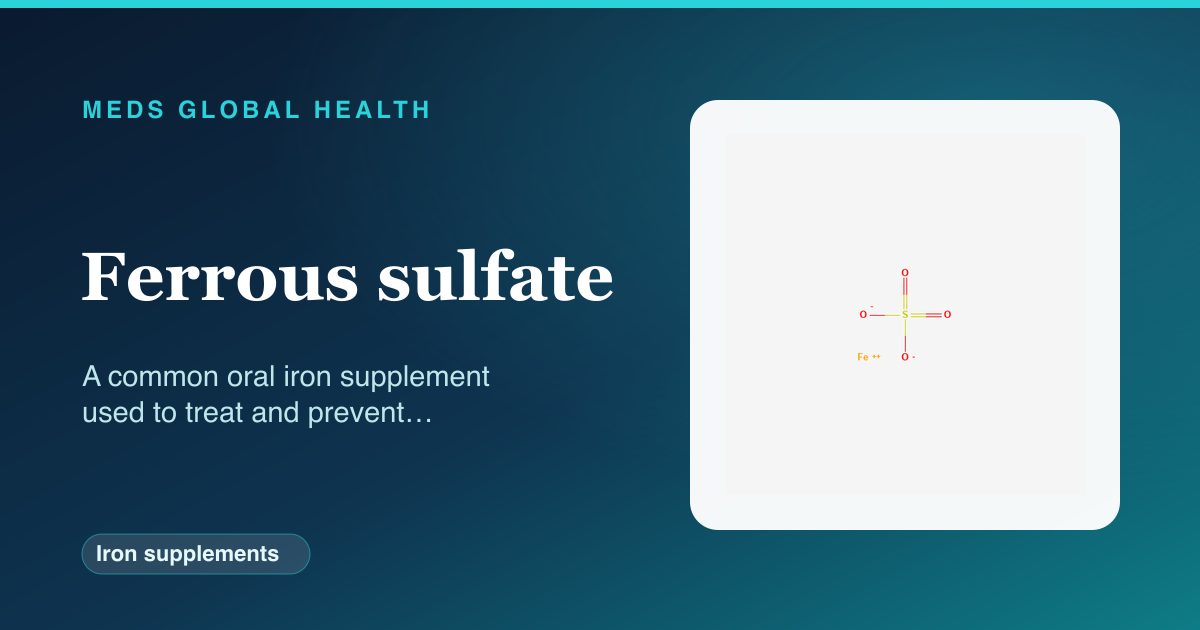
What it is
Ferrous sulfate is an iron supplement taken by mouth to top up the body's iron stores. Iron is needed to make haemoglobin, the part of red blood cells that carries oxygen, so a shortage leads to iron-deficiency anaemia with tiredness, breathlessness and paleness. It is one of the most widely used iron salts in the UK and is taken as a tablet or liquid, usually for several months until stores are rebuilt.
How it works
Ferrous sulfate provides iron in a form the gut can absorb, which the body then uses to make haemoglobin and restore healthy red blood cells. As iron stores refill, symptoms such as tiredness and breathlessness usually improve over weeks. The three common iron salts differ in how much elemental iron they carry, but from a patient's point of view they work in much the same way and cause similar effects.
Company & origin
A long-established oral iron salt used in the UK to treat and prevent iron-deficiency anaemia.
Practical use
How to take Ferrous sulfate
General, dose-free guidance — always follow your prescriber's and the leaflet's specific instructions.
- Take it with or just after food if it upsets your stomach, even though it may be absorbed slightly better on an empty stomach.
- If side effects are troublesome, your prescriber may suggest taking it on alternate days rather than every day, which can be just as effective.
- Separate it by a couple of hours from tea, coffee, milk, calcium supplements and indigestion remedies, which reduce how much iron is absorbed.
- A drink of orange juice or other vitamin C can help your body absorb the iron.
- Keep all iron supplements well out of the sight and reach of children, as an overdose can be very dangerous.
Weighing it up
Advantages & disadvantages of Ferrous sulfate
Advantages
- An effective, inexpensive and widely used way to treat and prevent iron-deficiency anaemia.
- Available as tablets and liquid, and on alternate-day schedules that can ease side effects.
- Symptoms such as tiredness and breathlessness usually improve as iron stores recover.
Disadvantages
- Commonly causes constipation, nausea and stomach upset that some people find hard to tolerate.
- Turns stools black, which can be mistaken for bleeding, and stains teeth if liquid is not taken carefully — dilute liquid iron with water or juice and drink it through a straw.
- Absorption is easily reduced by tea, dairy, calcium and several medicines, so timing matters.
Practical use
Good to know
Black or very dark stools are normal with iron and harmless, but black tarry stools combined with stomach pain should be checked. Stomach upset, nausea and constipation are common; taking it with or just after food, or only on alternate days, often helps and may be absorbed just as well. Tea, coffee, dairy and calcium supplements reduce iron absorption, so it is best separated from them, while vitamin C (such as a glass of orange juice) can help iron be absorbed. Crucially, iron must be kept out of reach of children, as an overdose can be extremely dangerous. A short course is usually continued for a while after blood counts recover, to rebuild stores fully.
Who should not take it / use with caution
- People with conditions that cause iron overload, such as haemochromatosis, should not take iron unless advised.
- It is generally avoided in people who have repeated blood transfusions unless a doctor recommends it.
- Used with caution in active inflammatory bowel disease or known intolerance to oral iron.
Monitoring
- Blood tests to check haemoglobin and iron stores improve over the course of treatment.
- Reviewing whether side effects can be managed by timing, food or alternate-day dosing.
- Looking for an underlying cause of the iron deficiency, especially if anaemia returns.
Side effects
- Constipation, nausea, stomach cramps and dark or black stools are common and usually harmless.
- Diarrhoea or heartburn in some people, often easing if taken with food or on alternate days.
- Liquid forms can stain teeth; rarely, severe stomach pain or black tarry stools need urgent checking.
Key interactions
- Reduces absorption of levothyroxine and some antibiotics such as tetracyclines and quinolones, so separate the timing.
- Calcium supplements, antacids and tea bind iron and lower how much is absorbed.
- Vitamin C can increase iron absorption, while iron can affect certain Parkinson's and bisphosphonate medicines.
Available as: Tablets and oral liquid taken by mouth.
Answers
Ferrous sulfate: frequently asked questions
Why have my stools turned black?
Iron normally darkens stools and this is harmless; however, black tarry stools with stomach pain should be checked in case of bleeding.
Should I take iron with food?
Iron is absorbed slightly better on an empty stomach, but taking it with or after food often reduces nausea and stomach upset and is a reasonable choice.
Can I take it with my morning tea?
It is best to separate iron from tea, coffee, milk and calcium by a couple of hours, as these reduce how much iron your body absorbs.
How long will I need to take it?
Treatment is usually continued for a while after your blood count recovers, to rebuild iron stores fully; your prescriber will advise.
Is iron dangerous to children?
Yes. Iron overdose can be very serious in children, so keep all supplements well out of their sight and reach.
The wider class
About Iron supplements
Ferrous sulfate belongs to the iron supplements class. For how the class as a whole works, its shared safety principles and monitoring, see the full guide.
Browse by body system
Authoritative sources
- BNF
- NICE CKS
Building a medicines information resource?
We create evidence-led, dose-free drug and formulary references for teams.