The first all-tablet treatment for African sleeping sickness
Fexinidazole
A specialist tablet, the first all-by-mouth treatment for African sleeping sickness, taken with food under specialist care.
What is Fexinidazole?
Fexinidazole is a specialist medicine and the first treatment for African sleeping sickness (human African trypanosomiasis) that can be given entirely by mouth, rather than by injection into a vein. It is taken with food, which is important for it to be absorbed properly. The most common effects are nausea, vomiting and dizziness, and it can also cause effects on mood, sleep and the nervous system, as well as changes in the heart's electrical rhythm (the QT interval). It is prescribed and supervised by a specialist team.
Education and reference only. This is a plain-language guide to Fexinidazole — it deliberately contains no doses. Doses depend on the person, the brand and the reason for treatment, and belong with your prescriber. Always check the BNF, the product labelling (SmPC) and follow medical advice.
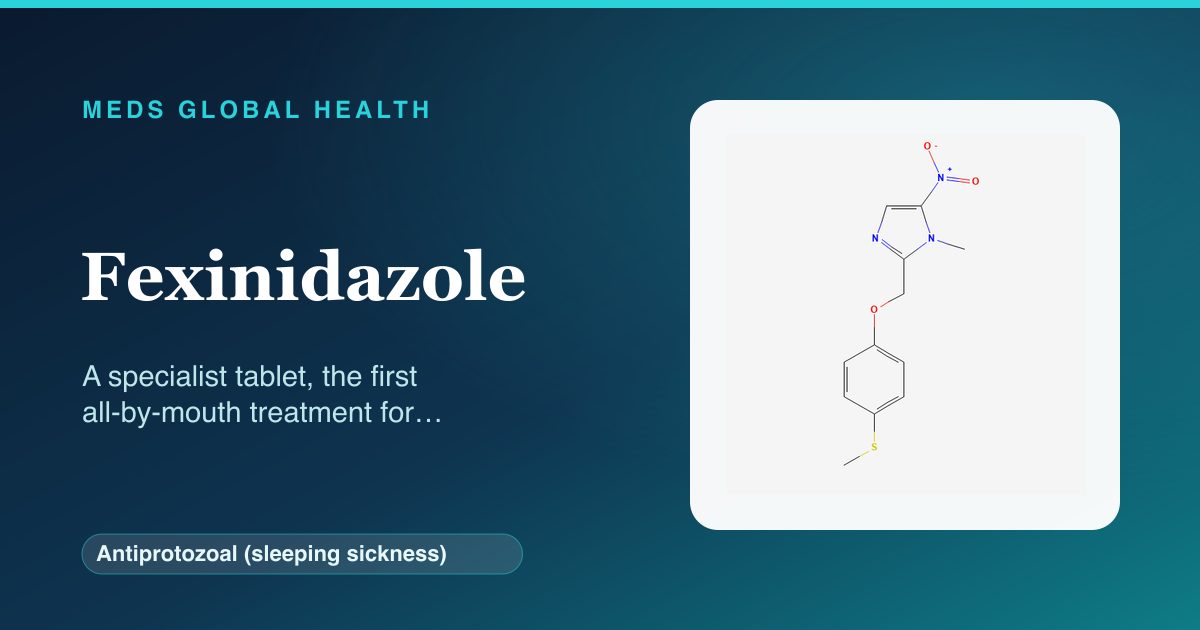
What it is
Fexinidazole is a medicine used to treat African sleeping sickness, a serious infection caused by a parasite spread by the bite of the tsetse fly. Its big advantage is that it is the first treatment for this infection that can be taken entirely as tablets by mouth, avoiding the need for injections into a vein that older treatments required. It is taken with food and used under close specialist supervision, because the infection is serious and the medicine needs careful handling. It treats the infection itself.
How it works
Fexinidazole is taken up by the parasite that causes African sleeping sickness and is then changed inside it into active forms that damage the parasite, so the infection can be cleared. It is taken as a course over several days, and taking each dose with food is important because food greatly improves how well it is absorbed from the gut into the body. Because the infection can affect the brain, being able to take an effective treatment by mouth makes it possible to treat people without needing them to be on a drip. It works against the parasite rather than easing symptoms alone.
Company & origin
A specialist medicine used as the first all-by-mouth treatment for African sleeping sickness, a parasitic infection spread by the tsetse fly.
Practical use
How to take Fexinidazole
General, dose-free guidance — always follow your prescriber's and the leaflet's specific instructions.
- Take it with food, as this is important for the medicine to be absorbed and to work properly.
- Take it as a complete course over the days advised by your specialist team, even if you feel better.
- Report any changes in mood, sleep, thinking or behaviour to your team promptly.
- Tell your team about any heart-rhythm problems and all other medicines you take.
- Avoid driving or operating machinery if it makes you dizzy or affects your alertness.
Weighing it up
Advantages & disadvantages of Fexinidazole
Advantages
- The first treatment for African sleeping sickness that can be taken entirely by mouth.
- Avoids the injections into a vein that older treatments required.
- Makes it possible to treat this serious infection without a hospital drip.
Disadvantages
- Commonly causes nausea, vomiting and dizziness.
- Can affect mood, sleep and the nervous system, and can change the heart's rhythm (the QT interval).
- Must be taken with food and completed as a full course under specialist supervision.
Practical use
Good to know
The most important practical point is to take fexinidazole with food, because it is absorbed far better that way, and missing this can make it less effective. Feeling sick, being sick, and dizziness are common, especially early on. It can also affect the nervous system and mental state, causing effects such as low mood, anxiety, agitation, sleep problems, tremor or, less commonly, more serious mood or behaviour changes, so any such changes should be reported promptly to the specialist team. It can affect the heart's electrical rhythm (the QT interval), which the team takes into account. Because this is a serious tropical infection, the whole course must be completed under specialist supervision, even if you start to feel better.
Who should not take it / use with caution
- People who have had a serious allergic reaction to fexinidazole should not take it.
- It is used with caution in people with certain heart-rhythm problems or those on medicines that affect the QT interval.
- It is used with care, and only on specialist advice, in pregnancy, breastfeeding and in people with liver problems.
Monitoring
- Watching for nausea, vomiting and effects on mood, sleep and the nervous system.
- Checking the heart's rhythm (the QT interval) where appropriate.
- Making sure the full course is taken with food and reviewing the response to treatment.
Side effects
- Nausea, vomiting and dizziness, especially early in the course.
- Headache, weakness or tremor.
- Effects on mood, sleep and behaviour, such as low mood, anxiety, agitation or sleep problems.
- Changes in the heart's electrical rhythm (the QT interval), and rarely more serious neuropsychiatric reactions.
Key interactions
- Medicines that affect the heart's QT interval should be reviewed when taking fexinidazole.
- It can interact with several other medicines, so give your team a full medicines list.
- Alcohol should generally be avoided during and shortly after treatment, on specialist advice.
Available as: Tablets taken by mouth, with food.
Answers
Fexinidazole: frequently asked questions
What is fexinidazole used for?
It is a specialist medicine used to treat African sleeping sickness, a serious infection caused by a parasite spread by the tsetse fly.
Why does it have to be taken with food?
Food greatly improves how well fexinidazole is absorbed, so taking it with food is important for it to work properly.
Why is it considered a breakthrough?
It is the first treatment for African sleeping sickness that can be taken entirely by mouth, avoiding the injections into a vein that older treatments needed.
Can it affect my mood or sleep?
Yes. It can affect mood, sleep and the nervous system, so report any changes such as low mood, anxiety, agitation or sleep problems to your team promptly.
Should I finish the whole course?
Yes. This is a serious infection, so the full course must be completed with food under specialist supervision, even if you start to feel better.
Authoritative sources
- BNF
- NICE CKS
Building a medicines information resource?
We create evidence-led, dose-free drug and formulary references for teams.