A targeted antibiotic for C. difficile gut infection
Fidaxomicin
A narrow, targeted oral antibiotic used to treat Clostridioides difficile (C. difficile) gut infection.
What is Fidaxomicin?
Fidaxomicin is an antibiotic used to treat Clostridioides difficile (C. difficile) infection, a gut infection that causes diarrhoea and is often linked to recent antibiotic use. It is taken by mouth and works mainly in the gut itself, with very little absorbed into the rest of the body, so it targets the infection where it is. It is narrow-spectrum, meaning it spares many of the helpful gut bacteria, which may help reduce the chance of the infection coming back. It is generally well tolerated, and it is taken as a course by mouth.
Education and reference only. This is a plain-language guide to Fidaxomicin — it deliberately contains no doses. Doses depend on the person, the brand and the reason for treatment, and belong with your prescriber. Always check the BNF, the product labelling (SmPC) and follow medical advice.
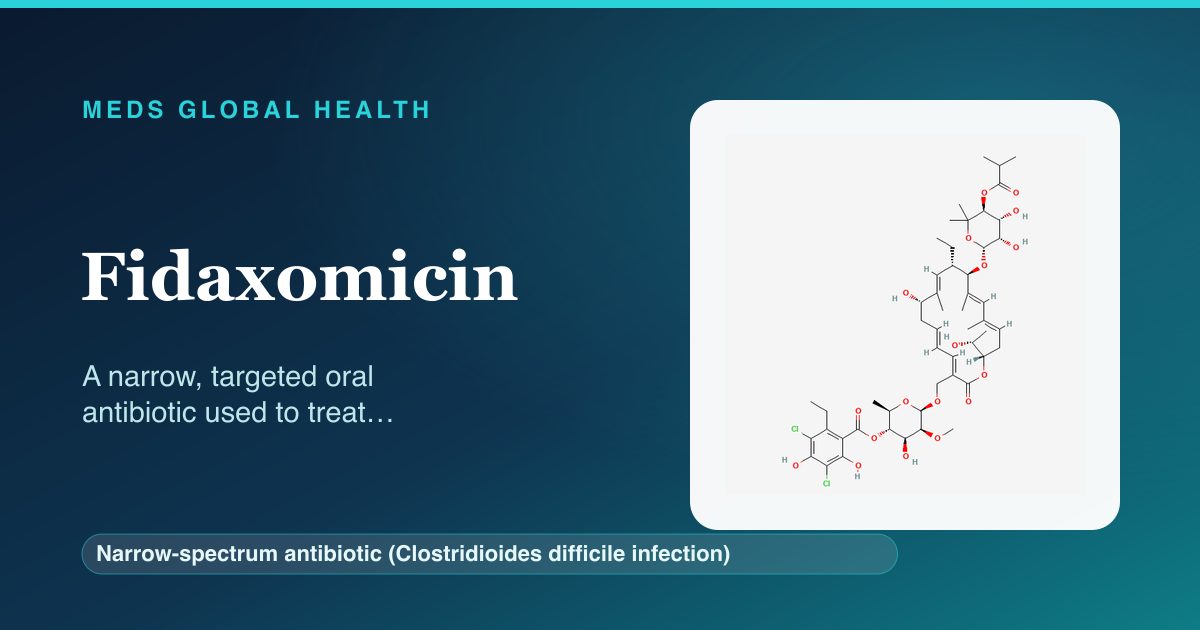
What it is
Fidaxomicin is an antibiotic used specifically to treat Clostridioides difficile (often shortened to C. difficile or C. diff) infection, an infection of the large bowel that causes diarrhoea and tummy pain, often after a course of other antibiotics has upset the natural balance of gut bacteria. It is taken by mouth as a tablet and is described as narrow-spectrum, meaning it targets the C. difficile bacteria while sparing many other gut bacteria. It is one of the treatments recommended for this infection, particularly where keeping recurrences down matters.
How it works
Fidaxomicin kills C. difficile bacteria by stopping them making the proteins they need to grow. A key feature is that very little of it is absorbed into the bloodstream — it stays and acts mainly inside the gut, which is exactly where the infection is. Because it is narrow-spectrum, it disturbs fewer of the helpful gut bacteria than some other antibiotics, which helps the normal balance of the bowel recover and may reduce the chance of the infection returning after treatment finishes.
Company & origin
An antibiotic used in the UK to treat Clostridioides difficile (C. difficile) infection of the gut.
Practical use
How to take Fidaxomicin
General, dose-free guidance — always follow your prescriber's and the leaflet's specific instructions.
- Take it by mouth as prescribed, swallowing the tablets with water.
- Finish the whole course, even once your diarrhoea has settled, so the infection is fully cleared.
- Drink plenty of fluids if you have diarrhoea, to avoid becoming dehydrated.
- Tell your team if your diarrhoea is severe, returns, or does not improve.
- Mention any other antibiotics you are taking, as these may have contributed to the infection.
Weighing it up
Advantages & disadvantages of Fidaxomicin
Advantages
- Targets C. difficile in the gut, where the infection is, with very little absorbed into the body.
- Narrow-spectrum, so it spares many helpful gut bacteria.
- Generally well tolerated, and may help reduce the chance of the infection coming back.
Disadvantages
- Used specifically for C. difficile infection rather than infections elsewhere in the body.
- Can occasionally cause nausea, vomiting or tummy discomfort.
- Like all antibiotics, it should be taken as a full course under medical advice.
Practical use
Good to know
The useful things to know about fidaxomicin are that it works mainly in the gut, where the infection is, with very little getting into the rest of the body, and that it is narrow-spectrum, so it spares many of the helpful gut bacteria. This targeted action may help reduce the chance of the C. difficile infection coming back compared with some other treatments. It is generally well tolerated, with side effects such as nausea, vomiting or tummy discomfort being relatively uncommon. It is important to finish the full course even once the diarrhoea settles, so the infection is properly cleared. Because the infection often follows a course of antibiotics, your team may also review whether any other antibiotics you are taking are still needed.
Who should not take it / use with caution
- People who have had a serious allergic reaction to fidaxomicin should not take it.
- It is used with care in pregnancy and breastfeeding, under medical advice.
- It should be used as advised by your prescriber for C. difficile infection.
Monitoring
- Reviewing how your diarrhoea and tummy symptoms respond to treatment.
- Watching for any return of the infection after the course finishes.
- Making sure you stay hydrated while you have diarrhoea.
Side effects
- Nausea, vomiting or tummy discomfort in some people.
- Constipation in some people.
- Rarely, allergic-type reactions, which should be reported.
Key interactions
- Because very little is absorbed into the body, important medicine interactions are few.
- Tell your prescriber about all your medicines so anything relevant can be checked.
- Your team may review other antibiotics you take, as these can contribute to C. difficile infection.
Available as: Tablets taken by mouth (and a liquid form for those who need it).
Answers
Fidaxomicin: frequently asked questions
What is fidaxomicin used for?
It is an antibiotic used to treat Clostridioides difficile (C. difficile) infection, a gut infection that causes diarrhoea and is often linked to recent antibiotic use.
Why does it mainly work in the gut?
Very little fidaxomicin is absorbed into the bloodstream, so it stays and acts mainly inside the gut, which is exactly where the C. difficile infection is.
Why is it called narrow-spectrum?
It targets C. difficile while sparing many of the helpful gut bacteria, which helps the normal balance of the bowel recover and may reduce recurrences.
Should I finish the whole course?
Yes. Finish the full course even once your diarrhoea has settled, so the infection is properly cleared.
Is it well tolerated?
It is generally well tolerated; side effects such as nausea or tummy discomfort are relatively uncommon, but report anything troublesome.
Authoritative sources
- BNF
- NICE CKS
Building a medicines information resource?
We create evidence-led, dose-free drug and formulary references for teams.