A JAK inhibitor tablet for rheumatoid arthritis and ulcerative colitis
Filgotinib
A daily tablet that calms an overactive immune system to treat rheumatoid arthritis and ulcerative colitis.
What is Filgotinib?
Filgotinib is a specialist immune-modulating medicine used to treat rheumatoid arthritis and ulcerative colitis when other treatments have not worked well enough. It belongs to a group called JAK inhibitors and works by dampening down overactive immune signals that cause joint inflammation or bowel inflammation. It is taken as a tablet by mouth once a day. Because it lowers part of the immune response, it can raise the risk of infections and needs regular blood-test monitoring, and the specialist team checks for risks such as blood clots before starting it.
Education and reference only. This is a plain-language guide to Filgotinib — it deliberately contains no doses. Doses depend on the person, the brand and the reason for treatment, and belong with your prescriber. Always check the BNF, the product labelling (SmPC) and follow medical advice.
What it is
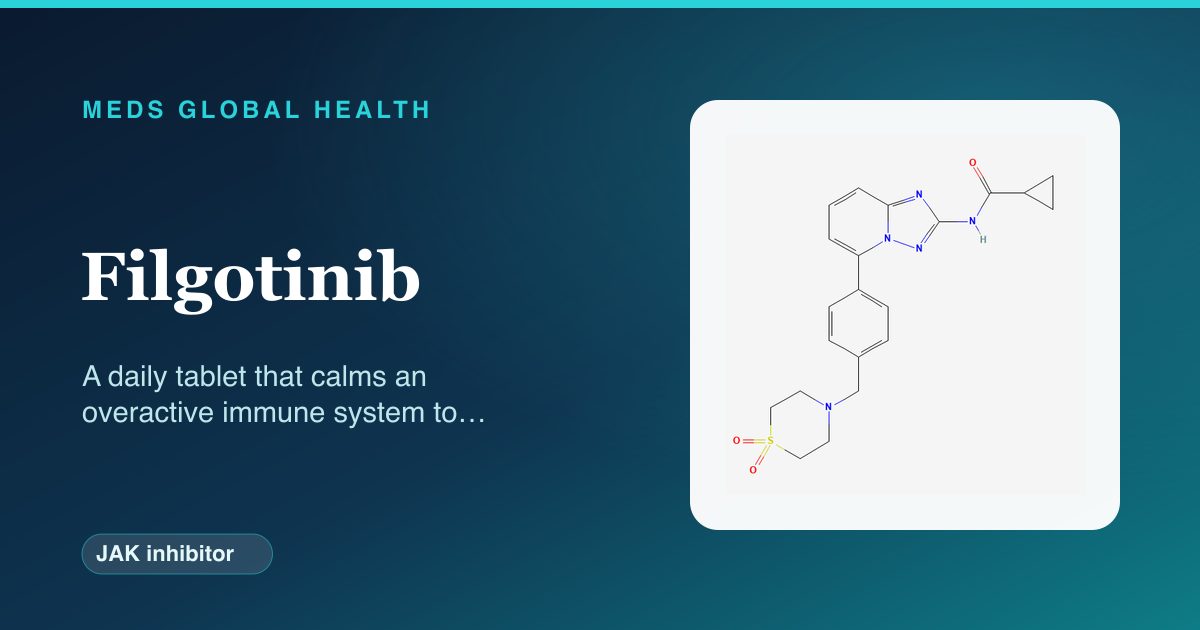
Filgotinib is a medicine used to treat rheumatoid arthritis, a condition where the immune system attacks the joints, and ulcerative colitis, a condition where the immune system inflames the large bowel. It belongs to a group of medicines called JAK inhibitors, which work inside cells to turn down overactive immune signalling. It is usually used when other treatments, such as standard disease-modifying medicines, have not controlled the condition well enough. It is taken by mouth as a daily tablet and is prescribed and supervised by a specialist team, often a rheumatology or gastroenterology service.
How it works
In rheumatoid arthritis and ulcerative colitis, the immune system sends out too many inflammatory signals, which damage the joints or the lining of the bowel. Many of these signals work through proteins inside cells called Janus kinases, or JAKs. Filgotinib blocks these JAK proteins, so the inflammatory messages are turned down and the inflammation eases. By calming this overactive signalling, it reduces joint pain and swelling or bowel inflammation and helps keep the condition under control. Because it works on the immune system, the same action that reduces inflammation can also make infections a little more likely.
Company & origin
A specialist immune-modulating medicine used in the UK for rheumatoid arthritis and ulcerative colitis, taken as a daily tablet.
What it treats
Conditions Filgotinib is used for
Practical use
How to take Filgotinib
General, dose-free guidance — always follow your prescriber's and the leaflet's specific instructions.
- Take one tablet by mouth each day, with or without food, as your specialist team directs.
- Keep up with your blood-test appointments, as monitoring is an important part of treatment.
- Tell your team promptly about signs of infection, such as fever, chills or a persistent cough.
- Check before having any vaccinations, as some live vaccines should be avoided while taking it.
- Report symptoms such as a swollen painful leg, chest pain or breathlessness urgently, as these can signal a clot.
Weighing it up
Advantages & disadvantages of Filgotinib
Advantages
- An effective oral option for rheumatoid arthritis and ulcerative colitis when other treatments have not worked.
- Taken as a daily tablet rather than as an injection or infusion.
- Can quickly improve joint pain, swelling and stiffness or bowel symptoms for many people.
Disadvantages
- Lowers part of the immune response, so it can make infections more likely.
- Carries possible risks of blood clots and heart problems, especially in older people and smokers.
- Needs regular blood-test monitoring and careful checks before starting.
Practical use
Good to know
Because filgotinib calms part of the immune system, it can make infections more likely, so it is important to tell your team about any fever, persistent cough or other signs of infection, and to stay up to date with recommended vaccinations, avoiding certain live vaccines while on it. Before starting, the team checks for hidden infections such as tuberculosis and reviews your risk of blood clots and heart problems, as JAK inhibitors can carry these risks, particularly in older people and smokers. Regular blood tests are needed to keep an eye on blood counts, liver function and cholesterol. It can also affect fertility in some situations, which the team will discuss. As with other treatments in this group, it is generally used after weighing the benefits against these risks, especially in people with extra risk factors.
Who should not take it / use with caution
- People who have had a serious allergic reaction to filgotinib should not take it.
- It is not used in people with a serious active infection, including untreated tuberculosis.
- It is used with caution, or avoided, in people at higher risk of blood clots, heart problems or some cancers, and is not used in pregnancy.
Monitoring
- Checks before starting, including for hidden infections such as tuberculosis and for clot and heart risks.
- Regular blood tests to monitor blood counts, liver function and cholesterol.
- Watching for signs of infection, blood clots and how well the condition is responding.
Side effects
- Infections, such as chest, urine or upper-airway infections, because the immune response is lowered.
- Nausea, headache or dizziness in some people.
- Changes in blood tests, including blood counts, liver function and cholesterol.
- Rarely but seriously, blood clots, serious infections such as shingles, or other significant problems, which need urgent attention.
Key interactions
- It is generally not combined with other strong immune-suppressing or biologic medicines because of the infection risk.
- Some live vaccines should be avoided while taking it, so check before any vaccination.
- Tell your team about all your medicines, as some can affect filgotinib or add to its risks.
Available as: Tablets taken by mouth.
Answers
Filgotinib: frequently asked questions
What is filgotinib used for?
It is used to treat rheumatoid arthritis and ulcerative colitis when other treatments have not worked well enough, by calming overactive immune signals that cause inflammation.
How does it work?
It is a JAK inhibitor, which blocks proteins inside cells called Janus kinases that carry inflammatory messages, so the inflammation in the joints or bowel eases.
Does it make infections more likely?
Yes. Because it lowers part of the immune response, it can make infections more likely, so tell your team about any fever, cough or other signs of infection.
Why do I need regular blood tests?
Blood tests keep an eye on your blood counts, liver function and cholesterol, which the medicine can affect, so monitoring helps keep treatment safe.
Are there risks of blood clots?
JAK inhibitors can carry a risk of blood clots and heart problems, especially in older people and smokers, so this is checked before starting and watched during treatment.
Authoritative sources
- BNF
- NICE CKS
Building a medicines information resource?
We create evidence-led, dose-free drug and formulary references for teams.