An oral MS disease-modifying medicine
Fingolimod
A once-daily capsule for relapsing multiple sclerosis that needs heart-rate monitoring with the first dose and eye and infection checks.
What is Fingolimod?
Fingolimod is a once-daily capsule used to reduce relapses in highly active relapsing multiple sclerosis. It works by trapping certain immune cells in the lymph nodes so fewer reach the nerves to cause damage. The first dose can slow the heart rate, so it is taken under observation with heart-rate monitoring on the day you start. It needs eye checks for a problem called macular oedema, raises the risk of infections including chickenpox, and must not be stopped suddenly because the disease can flare badly afterwards (rebound).
Education and reference only. This is a plain-language guide to Fingolimod — it deliberately contains no doses. Doses depend on the person, the brand and the reason for treatment, and belong with your prescriber. Always check the BNF, the product labelling (SmPC) and follow medical advice.
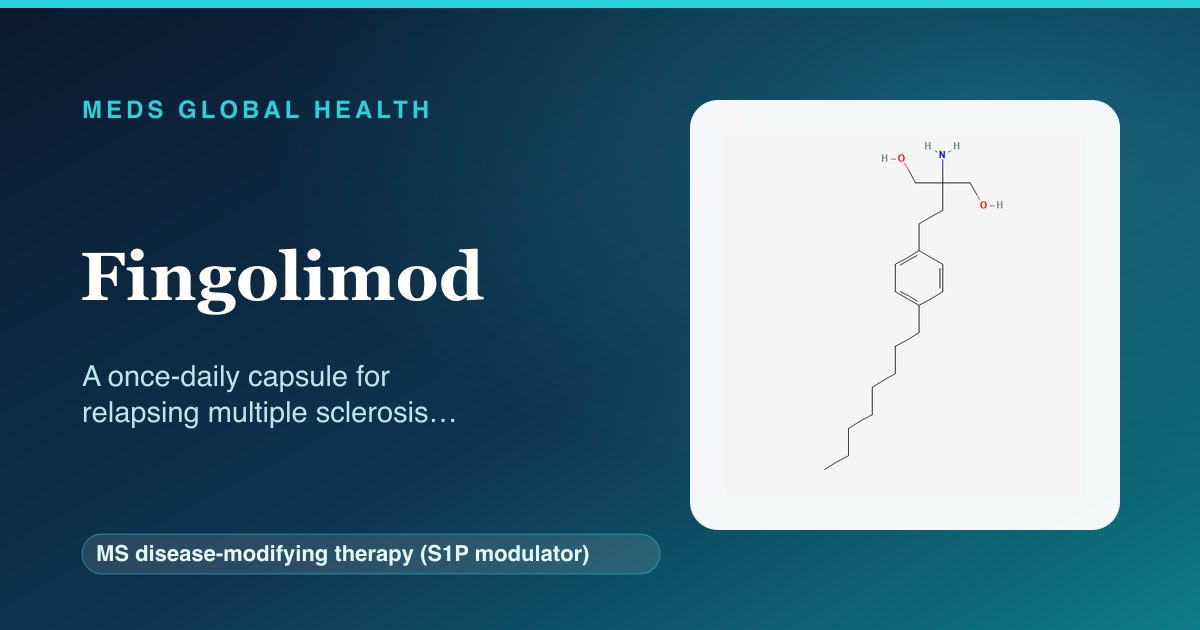
What it is
Fingolimod is an oral disease-modifying therapy for relapsing multiple sclerosis, a condition where the immune system attacks the protective covering of nerves. It belongs to a group called S1P modulators and is taken as a capsule once a day over the long term. It is generally used when the disease is highly active or when other treatments have not worked well enough. It reduces relapses and slows the build-up of damage but does not cure MS.
How it works
Fingolimod holds certain immune cells (lymphocytes) inside the lymph nodes, so fewer of them travel in the blood to attack the nerves. This reduces inflammation, relapses and new areas of damage on scans. Because it acts on the same signalling system found in the heart, the very first dose can briefly slow the heart rate, which is why monitoring is needed at the start. Its effect on circulating immune cells also explains the higher infection risk and the need to be careful when stopping, as the disease can rebound.
Company & origin
Originated / developed by: Novartis.
An oral disease-modifying treatment used in the UK for highly active relapsing multiple sclerosis.
Practical use
How to take Fingolimod
General, dose-free guidance — always follow your prescriber's and the leaflet's specific instructions.
- Take one capsule by mouth once a day, with or without food.
- Expect to take the very first dose under supervision with heart-rate monitoring, and to repeat this if you have a break in treatment.
- Do not stop the medicine suddenly or run out; speak to your MS team first, as stopping can cause a severe flare (rebound).
- Make sure your chickenpox immunity has been checked and any vaccines completed before starting, as advised.
- Attend eye checks to look for swelling at the back of the eye, and report any blurring or vision changes.
- Report fevers, infections, breathlessness or new neurological symptoms promptly.
Weighing it up
Advantages & disadvantages of Fingolimod
Advantages
- A once-daily capsule that is effective in highly active relapsing multiple sclerosis.
- Avoids the need for regular injections or infusions.
- Works in a distinct way by keeping immune cells out of the circulation.
Disadvantages
- The first dose can slow the heart rate, so monitoring is needed when starting.
- Must not be stopped suddenly because of the risk of a severe disease flare (rebound).
- Raises infection risk and needs eye checks for swelling at the back of the eye.
Practical use
Good to know
Two features stand out with fingolimod. First, the first dose can slow the heart rate and affect heart rhythm, so the starting dose is given with heart-rate monitoring over several hours, and this is repeated if treatment is interrupted for a while. Second, the medicine must not be stopped abruptly, because some people experience a severe return of disease activity, sometimes worse than before, known as rebound. It also lowers circulating immune cells, raising the risk of infections, so chickenpox (varicella) immunity is checked and vaccination considered before starting, and serious infections including a rare brain infection (PML) have been reported. Eye checks are needed because it can cause swelling at the back of the eye (macular oedema). Tell your team about any new vision changes, infections, breathlessness or unusual symptoms.
Who should not take it / use with caution
- People with certain heart-rhythm problems or recent heart events should not take it without specialist heart assessment.
- It is avoided in those with a serious active infection or severely weakened immune system until reviewed.
- It is generally avoided in pregnancy and breastfeeding, and reliable contraception is advised during treatment.
Monitoring
- Heart-rate and rhythm monitoring with the first dose and after any treatment break.
- Eye checks for macular oedema, plus blood counts and liver-function tests.
- Checking chickenpox immunity before starting and watching for infections during treatment.
Side effects
- A slow heart rate after the first dose, headache and a higher chance of infections.
- Swelling at the back of the eye (macular oedema) affecting vision, and changes in liver tests.
- Rarely, serious infections including a brain infection (PML), and a severe flare of MS if stopped abruptly.
Key interactions
- Medicines that slow the heart, such as certain heart-rhythm or blood-pressure drugs, can add to the heart-rate effect.
- Other immune-suppressing medicines increase the risk of infection and need specialist guidance.
- Live vaccines are generally avoided during and for a time after treatment.
Available as: Capsules taken by mouth.
Answers
Fingolimod: frequently asked questions
Why is my first dose given in a clinic?
The first dose can slow your heart rate, so it is taken under observation with heart-rate monitoring for several hours to make sure you are safe.
Can I just stop taking it if I want to?
No. Stopping suddenly can cause a severe return of MS activity (rebound), so always talk to your MS team before making any change.
Why do I need eye checks?
Fingolimod can cause swelling at the back of the eye (macular oedema), so eye checks help catch this early; report any blurred vision.
Do I need to worry about chickenpox?
Yes; because the medicine affects your immune system, your chickenpox immunity is checked and vaccination considered before starting, and you should report any exposure or infection.
Will it cure my MS?
No. It reduces relapses and slows damage in relapsing MS but does not cure the condition or reverse existing damage.
Authoritative sources
- BNF
- NICE CKS
Building a medicines information resource?
We create evidence-led, dose-free drug and formulary references for teams.