A gabapentinoid (controlled drug)
Gabapentin
A medicine for nerve pain and epilepsy that calms over-excitable nerves — effective for many, but a controlled drug with real risks of drowsiness, dependence and dangerous interaction with opioids.
What is Gabapentin?
Gabapentin is a gabapentinoid used mainly for nerve (neuropathic) pain, such as the burning or shooting pain of diabetic neuropathy, shingles or sciatica, and as an add-on treatment in some forms of epilepsy. It calms overactive nerve signalling.
Education and reference only. This is a plain-language guide to Gabapentin — it deliberately contains no doses. Doses depend on the person, the brand and the reason for treatment, and belong with your prescriber. Always check the BNF, the product labelling (SmPC) and follow medical advice.
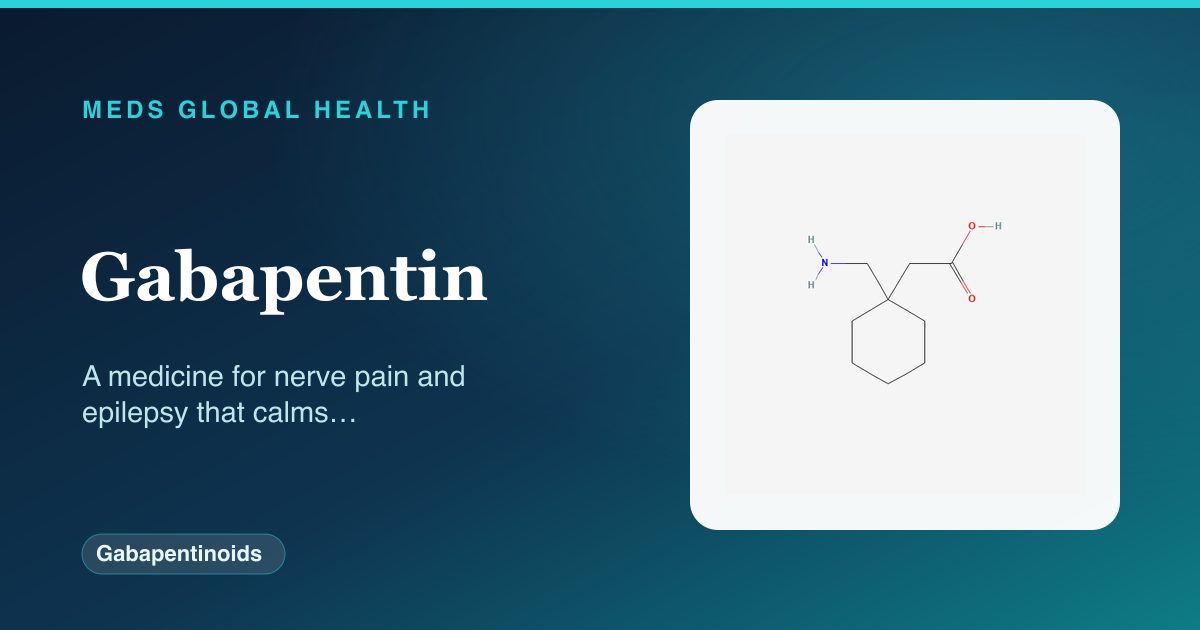
What it is
Gabapentin is used mainly for nerve (neuropathic) pain — such as the burning, shooting or tingling pain of diabetic neuropathy, shingles nerve pain or sciatica — and as an add-on treatment for certain types of epilepsy. It works on over-active nerve signalling rather than on inflammation, which is why it suits nerve pain that ordinary painkillers do not touch. In the UK it is a controlled drug (Class C, Schedule 3), reflecting growing recognition that it can be misused and can cause dependence, so it is prescribed and monitored more carefully than ordinary painkillers.
How it works
Gabapentin attaches to a particular part of the calcium channels on nerve endings (the alpha-2-delta subunit) and dampens the release of the chemical messengers that carry pain and seizure signals. By quietening this over-excitable signalling, it reduces the abnormal firing that causes neuropathic pain and helps stabilise the electrical activity behind seizures. It does not work like a traditional painkiller blocking inflammation; instead it calms the nervous system itself, which also explains its sedating effects and why it is taken regularly rather than just when pain strikes.
Company & origin
Originated / developed by: Parke-Davis (Warner-Lambert; now Pfizer).
Gabapentin was developed as a GABA analogue by researchers at Parke-Davis (a division of Warner-Lambert) in the 1970s. It received US FDA approval in late 1993 as the anticonvulsant Neurontin; Warner-Lambert was later acquired by Pfizer.
What it treats
Conditions Gabapentin is used for
Practical use
How to take Gabapentin
General, dose-free guidance — always follow your prescriber's and the leaflet's specific instructions.
- Usually started low and built up gradually to reduce side effects, so follow the titration plan you are given.
- Can be taken with or without food, spaced through the day as directed.
- Do not stop it suddenly, as this can cause withdrawal effects or, in epilepsy, trigger seizures; reduce gradually with advice.
- It can cause drowsiness and dizziness, especially at first, so take care with driving until you know how it affects you, and avoid alcohol.
- If you miss a dose, take it when you remember unless the next is nearly due; do not double up.
Weighing it up
Advantages & disadvantages of Gabapentin
Advantages
- Effective for many types of nerve pain that ordinary painkillers do not help.
- Useful add-on for some forms of epilepsy.
- Can be adjusted gradually to balance benefit and side effects.
- Taken by mouth and generally well tolerated when introduced slowly.
Disadvantages
- Can cause drowsiness, dizziness and unsteadiness, particularly early on.
- Carries a risk of dependence and misuse and is a controlled drug in the UK.
- Must not be stopped abruptly because of withdrawal and seizure risk.
- Dangerous if combined with opioids or other sedatives, with a risk of serious breathing problems.
Practical use
Good to know
Gabapentin is started low and built up gradually to let the body adjust and to limit drowsiness and dizziness, which are common early on. Because it is a controlled drug, there are extra rules around prescriptions, and it should be treated with respect: it can cause physical dependence, and stopping it suddenly can trigger withdrawal or, in people with epilepsy, seizures — so it is always tapered down slowly. The most important safety point is that combining it with opioids (or other sedatives) can dangerously slow breathing, a combination that has caused deaths and needs real caution.
Who should not take it / use with caution
- People with a history of substance misuse or dependence need careful assessment, as gabapentin can be misused and cause dependence.
- Used with particular caution alongside opioids and other sedating medicines because of the risk of seriously slowed breathing.
- The amount is reduced and built up especially carefully in people with reduced kidney function, as the body clears it through the kidneys, and care is needed in older or frail people.
Monitoring
- Response and side effects, especially when building up the amount
- Signs of dependence, misuse or excessive sedation
- Kidney function where relevant, and breathing if used with opioids
Side effects
- Drowsiness, dizziness and unsteadiness — most common when starting or increasing, and a falls risk in older people.
- Weight gain, fluid retention (swollen ankles), blurred vision and dry mouth.
- Less commonly, mood changes, and — importantly — slowed or shallow breathing when combined with opioids or other sedatives, which can be life-threatening.
Key interactions
- Opioids markedly increase the risk of slowed breathing, sedation and death — the most serious interaction, requiring caution and monitoring.
- It adds to drowsiness from alcohol, benzodiazepines, sleeping tablets and other sedating medicines.
- Certain antacids can reduce how much is absorbed if taken at the same time, so they are best separated.
Available as: Capsules, tablets and an oral solution (liquid) for those who cannot manage capsules or tablets.
Answers
Gabapentin: frequently asked questions
Why is gabapentin a controlled drug?
Gabapentin was reclassified as a Class C, Schedule 3 controlled drug in the UK because evidence showed it can be misused and can cause dependence. This means there are stricter rules around prescribing and dispensing it. It does not mean it is unsafe when used as directed — it is a useful medicine — but it does mean it should be taken exactly as prescribed and not shared.
Can I stop gabapentin suddenly if it is not helping?
No — stopping gabapentin abruptly can cause withdrawal symptoms and, in people with epilepsy, can trigger seizures. If it is not helping or you want to stop, your prescriber will reduce it gradually over time. Always discuss coming off it rather than stopping on your own.
Why am I warned about taking gabapentin with strong painkillers?
Combining gabapentin with opioids (such as codeine, morphine or tramadol) or other sedatives can dangerously slow your breathing, and this combination has led to deaths. If you are prescribed both, it will be done cautiously and you should watch for excessive drowsiness or slow, shallow breathing and seek urgent help if they occur.
Will gabapentin make me drowsy or unsteady?
Drowsiness, dizziness and unsteadiness are the most common effects, particularly when you first start or increase it, which is why it is built up slowly. These often ease as your body adjusts. Until you know how it affects you, take care with driving, ladders and anything where a momentary loss of balance could be dangerous.
What is the difference between gabapentin and Neurontin?
They are the same medicine — gabapentin is the generic (active-ingredient) name and Neurontin is a brand name. Generic gabapentin contains the identical active ingredient and works in the same way. Whichever you receive, the same controlled-drug status and safety advice apply.
The wider class
About Gabapentinoids
Gabapentin belongs to the gabapentinoids class. For how the class as a whole works, its shared safety principles and monitoring, see the full guide.
Browse by body system
Authoritative sources
- BNF: Gabapentin.
- electronic Medicines Compendium (SmPC): Gabapentin (Neurontin).
- NICE CKS: Gabapentin.
- MHRA: Gabapentin and pregabalin - risk of respiratory depression and reclassification as controlled drugs.
Building a medicines information resource?
We create evidence-led, dose-free drug and formulary references for teams.