A GnRH antagonist injection used in IVF
Ganirelix
An injection used during IVF to prevent the ovaries releasing an egg too early in the treatment cycle.
What is Ganirelix?
Ganirelix is a hormone medicine (a GnRH antagonist) used during IVF and other assisted-conception treatment. It is given as a small injection under the skin to stop the body from releasing an egg (ovulating) too early, so eggs can be collected at the right time. It is used for a short stretch of the treatment cycle alongside the medicines that stimulate the ovaries. It is generally well tolerated, with the most common effect being a mild reaction where the injection is given. It is used under the care of a fertility clinic.
Education and reference only. This is a plain-language guide to Ganirelix — it deliberately contains no doses. Doses depend on the person, the brand and the reason for treatment, and belong with your prescriber. Always check the BNF, the product labelling (SmPC) and follow medical advice.
What it is
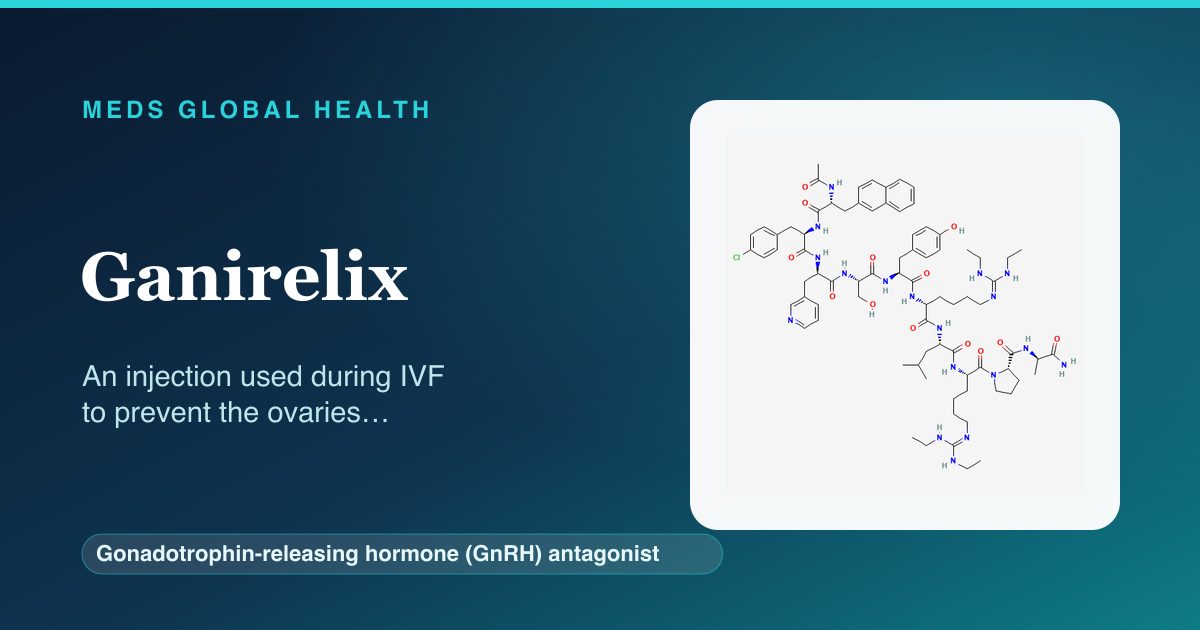
Ganirelix is a gonadotrophin-releasing hormone (GnRH) antagonist, a medicine used as part of IVF and assisted-conception treatment. During these cycles, the ovaries are stimulated to grow several eggs, and there is a risk the body will release them too early before they can be collected. Ganirelix is given as a small daily injection under the skin during part of the cycle to prevent this early release. It is a short-course treatment used alongside the ovary-stimulating injections, prescribed and supervised by a fertility clinic.
How it works
Normally the brain sends a surge of hormone signals that triggers the ovaries to release an egg. Ganirelix quickly blocks the receptors in the brain that respond to GnRH, switching off the natural surge of luteinising hormone (LH) that would cause ovulation. This holds the eggs in place while they finish maturing, so the clinic can time egg collection precisely. Because it works fast and wears off when stopped, it is used only during the days when early release is a risk, and the egg-maturing and collection steps are then triggered deliberately at the right moment.
Company & origin
A fertility medicine used in the UK during IVF and assisted conception to stop the body releasing an egg too early.
Practical use
How to take Ganirelix
General, dose-free guidance — always follow your prescriber's and the leaflet's specific instructions.
- Inject it under the skin on the days and at the time your fertility clinic tells you, as timing is important.
- Use the injection technique the clinic has shown you, rotating the injection site to reduce irritation.
- Keep to your clinic appointments for scans and blood tests so the cycle can be timed correctly.
- Tell the clinic if you miss a dose or are unsure when to take it, rather than guessing.
- Let the clinic know if you have a reaction to the injection or think you might be pregnant.
Weighing it up
Advantages & disadvantages of Ganirelix
Advantages
- Reliably prevents the ovaries releasing eggs too early so they can be collected at the right time.
- Used for only a short part of the cycle, with a quick onset of action.
- Generally well tolerated and can be self-injected at home after training.
Disadvantages
- Has to be given as an injection, usually daily, during part of the cycle.
- Commonly causes a mild reaction where the injection is given.
- Must be timed precisely, which means keeping closely to the clinic's instructions.
Practical use
Good to know
Ganirelix is a short-course injection used during a carefully timed IVF cycle, so taking it exactly as the clinic instructs, on the right days and at about the same time, is important for the treatment to work. It is given as a small injection under the skin, often by the person themselves after being shown how. It is generally well tolerated, and the most common side effect is a mild reaction where the injection is given, such as redness or swelling, which usually settles quickly. It is used alongside other fertility medicines, and the clinic monitors the cycle with scans and blood tests to time egg collection. Tell the clinic if you have had a reaction to similar medicines or if you might already be pregnant, as it is not used in pregnancy.
Who should not take it / use with caution
- People who have had a serious allergic reaction to ganirelix or similar GnRH medicines should not use it.
- It is not used in pregnancy or breastfeeding.
- It is used with care in people with significant liver or kidney problems, under specialist guidance.
- It should only be used as part of supervised fertility treatment.
Monitoring
- Scans and blood tests during the cycle to follow how the ovaries are responding.
- Timing egg collection based on this monitoring.
- Checking the injections are being given correctly and on the right days.
Side effects
- Redness, swelling or irritation where the injection is given, usually settling quickly.
- Headache or feeling sick in some people.
- Occasionally, symptoms linked to the fertility cycle itself, such as bloating or tummy discomfort.
- Rarely, allergic-type reactions.
Key interactions
- There are few well-established routine medicine interactions, but tell the clinic about all your medicines.
- It is used as part of a planned combination of fertility medicines, timed by the clinic.
- Tell the clinic about any allergies to similar hormone medicines before starting.
Available as: A solution for injection under the skin, often given by the patient.
Answers
Ganirelix: frequently asked questions
What is ganirelix used for?
It is used during IVF and assisted-conception treatment to stop the ovaries releasing an egg too early, so eggs can be collected at the right time.
How is it given?
It is given as a small injection under the skin, often by the person themselves after the clinic has shown them how, on the specific days set by the clinic.
Why does timing matter so much?
The whole cycle is carefully timed, so taking ganirelix on the right days and at about the same time helps make sure egg collection happens at the best moment.
Is it well tolerated?
Yes, it is generally well tolerated; the most common effect is a mild reaction where the injection is given, which usually settles quickly.
Can I use it if I might be pregnant?
No. Ganirelix is not used in pregnancy, so tell your clinic if you think you might already be pregnant before using it.
Authoritative sources
- BNF
- NICE CKS
Building a medicines information resource?
We create evidence-led, dose-free drug and formulary references for teams.