A targeted cancer tablet
Gefitinib
A targeted cancer tablet for EGFR-mutated lung cancer, started and monitored by oncology teams.
What is Gefitinib?
Gefitinib is a targeted cancer tablet that blocks a signal called EGFR. It is used for non-small-cell lung cancer that has an EGFR mutation. It is started and monitored by a cancer specialist but taken regularly at home, once a day. The most common effects are a skin rash and diarrhoea. A rarer but important risk is inflammation of the lungs, so report any new or worsening breathlessness. Your liver is monitored with blood tests, it has several drug interactions, and pregnancy must be avoided.
Education and reference only. This is a plain-language guide to Gefitinib — it deliberately contains no doses. Doses depend on the person, the brand and the reason for treatment, and belong with your prescriber. Always check the BNF, the product labelling (SmPC) and follow medical advice.
What it is
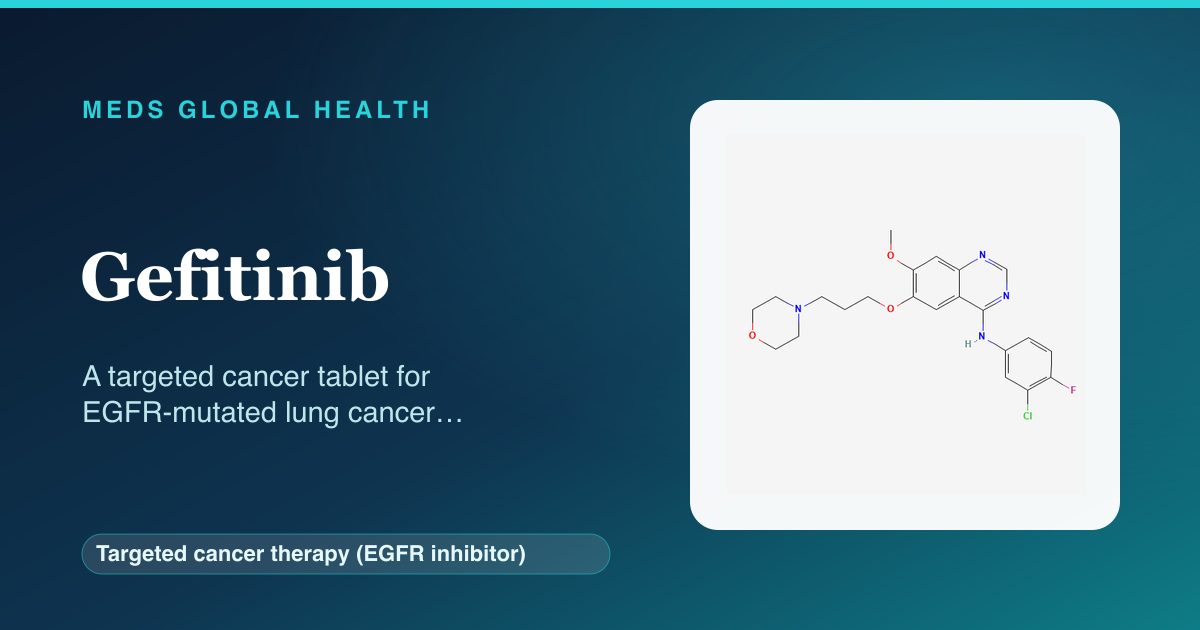
Gefitinib is a targeted cancer therapy known as an EGFR inhibitor. EGFR is a growth signal on the surface of some cancer cells, and in certain lung cancers a gene change keeps it switched on. Gefitinib blocks this signal. It is used to treat non-small-cell lung cancer with an EGFR mutation. It is a tablet taken once a day at home, started and supervised by an oncology team who check how the cancer responds.
How it works
In EGFR-mutated lung cancer, the EGFR signal is permanently active, driving the cancer cells to grow. Gefitinib blocks this receptor, slowing or stopping the cancer's growth. Because EGFR is also involved in the skin and gut, blocking it commonly causes a rash and diarrhoea. It is taken continuously, and the team monitors the response with scans and keeps an eye on the liver and lungs.
Company & origin
Originated / developed by: Originally AstraZeneca (now also generic).
A targeted cancer tablet used in the UK for non-small-cell lung cancer with an EGFR mutation.
Practical use
How to take Gefitinib
General, dose-free guidance — always follow your prescriber's and the leaflet's specific instructions.
- Take it once a day, with or without food, at around the same time each day, exactly as prescribed.
- Do not change or stop it on your own, even if the rash or diarrhoea is troublesome, without telling your team.
- Avoid grapefruit and grapefruit juice, which can affect the level of the medicine.
- Check with your team or pharmacist before starting any new medicine, especially indigestion or acid-reducing treatments.
- Report new or worsening breathlessness, cough, fever, severe diarrhoea or signs of infection promptly.
Weighing it up
Advantages & disadvantages of Gefitinib
Advantages
- A targeted tablet that can work well in lung cancer driven by an EGFR mutation.
- Taken at home once a day rather than given as an infusion, while overseen by specialists.
- Works on a specific cancer signal, which can control the disease for a period of time.
Disadvantages
- Commonly causes a skin rash and diarrhoea.
- Can rarely cause inflammation of the lungs, which can be serious.
- Needs liver monitoring and has several drug and grapefruit interactions.
Practical use
Good to know
The common effects of gefitinib are a skin rash, often acne-like, and diarrhoea, both linked to blocking EGFR in the skin and gut; your team can advise on skin care, sun protection and treatments to manage them. A less common but important risk is inflammation of the lung tissue (sometimes called interstitial lung disease), so report any new or worsening breathlessness, cough or fever straight away. Your liver is checked with blood tests, as it can be affected. It has several drug interactions, including acid-reducing medicines that lower its absorption, and grapefruit is best avoided. Do not stop it without advice, and avoid pregnancy.
Who should not take it / use with caution
- It must not be used in pregnancy, and effective contraception is needed because it can harm an unborn baby.
- It is used with caution, and extra monitoring, in people with liver problems or existing lung disease.
- People taking medicines that strongly interact with it, such as some acid-reducers, may need those adjusted.
Monitoring
- Regular reviews and scans to check how the cancer is responding.
- Blood tests for liver function and watching for breathlessness that could mean lung inflammation.
- Managing the rash and diarrhoea and checking for eye problems.
Side effects
- A skin rash, dry or itchy skin, and diarrhoea are very common.
- Loss of appetite, nausea, mouth soreness, tiredness and nail changes can occur.
- Less commonly, lung inflammation (report breathlessness), liver changes or eye problems that need prompt review.
Key interactions
- Processed by the same liver enzyme as many medicines, so some antibiotics, antifungals and epilepsy drugs can change its level.
- Acid-reducing and indigestion medicines can lower how much is absorbed, and grapefruit can affect its level.
- It can affect blood thinners such as warfarin, so monitoring may be needed.
Available as: Tablets taken by mouth.
Answers
Gefitinib: frequently asked questions
What should I do if I become breathless?
New or worsening breathlessness, cough or fever can rarely be a sign of lung inflammation with gefitinib, so report these to your team straight away.
Is the rash normal?
A skin rash is a common effect of gefitinib from blocking the EGFR signal in the skin; your team can advise on gentle skin care, sun protection and treatments to manage it.
Why is my liver being checked?
Gefitinib can affect the liver, so blood tests are done to monitor liver function during treatment and pick up any changes early.
Can I take it with indigestion tablets?
Acid-reducing and indigestion medicines can lower how much gefitinib is absorbed, so check with your pharmacist or team about timing or alternatives.
Can I stop it if the side effects bother me?
Tell your team rather than stopping on your own; they can help manage side effects, and any change to the medicine should be decided together.
Authoritative sources
- BNF
- NICE CKS
Building a medicines information resource?
We create evidence-led, dose-free drug and formulary references for teams.