An azapirone antidepressant related to buspirone
Gepirone
A newer antidepressant, related to buspirone, used to treat depression; it is of limited availability.
What is Gepirone?
Gepirone is an antidepressant in a group called the azapirones, which are related to the anxiety medicine buspirone. It is used to treat depression and works on serotonin signalling in the brain to help lift mood. Common effects include dizziness and nausea, and it can affect the heart's electrical rhythm (the QT interval). It is a newer medicine with limited availability, and is taken by mouth. As with all antidepressants, it should not be stopped suddenly, and younger people are watched for any worsening of mood or suicidal thoughts when starting.
Education and reference only. This is a plain-language guide to Gepirone — it deliberately contains no doses. Doses depend on the person, the brand and the reason for treatment, and belong with your prescriber. Always check the BNF, the product labelling (SmPC) and follow medical advice.
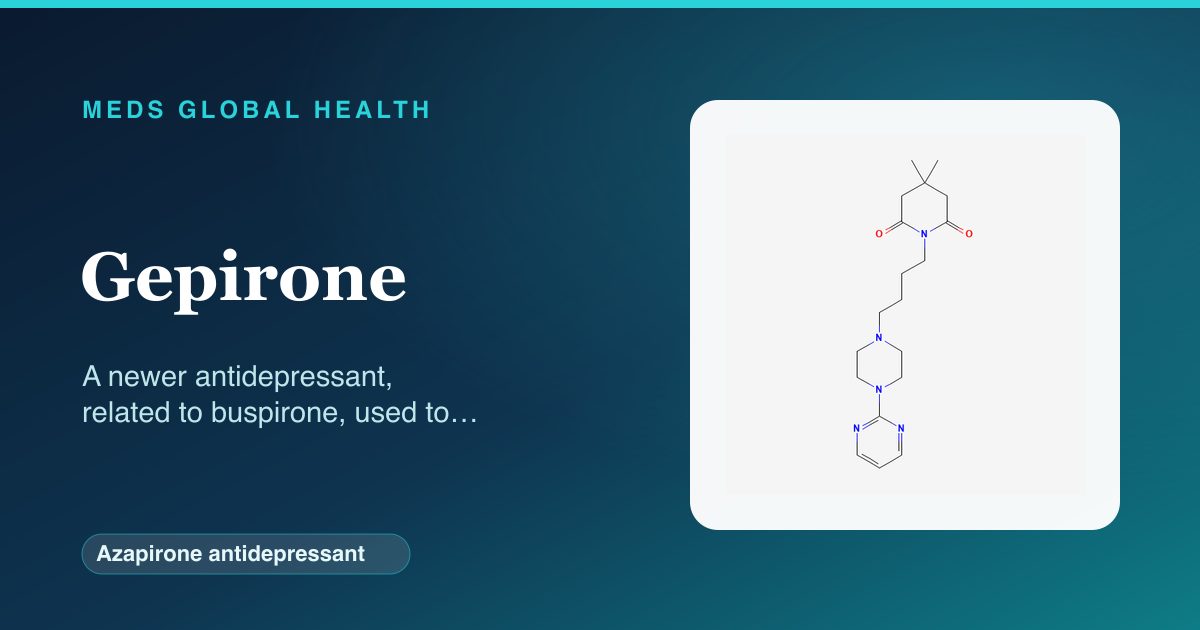
What it is
Gepirone is an antidepressant medicine belonging to a group called the azapirones, the same family as buspirone, which is mainly used for anxiety. Gepirone is used to treat depression. It is one of the newer antidepressants and is of limited availability, so it is not a common choice in the UK. It is taken by mouth, usually as a once-daily extended-release tablet, and is used under medical supervision like other antidepressants.
How it works
Gepirone acts on serotonin, one of the brain chemicals involved in mood. As an azapirone, it works mainly on a particular serotonin receptor (the 5-HT1A receptor), nudging serotonin signalling in a way that, over a few weeks, helps to lift low mood. Because the effect builds gradually, it is taken regularly rather than as a quick fix, and improvement is usually judged over several weeks. Its action on serotonin is different from the more familiar SSRIs, which is part of why its side-effect pattern differs.
Company & origin
A newer antidepressant in the azapirone group, related to the anxiety medicine buspirone; it is of limited availability in the UK.
What it treats
Conditions Gepirone is used for
Practical use
How to take Gepirone
General, dose-free guidance — always follow your prescriber's and the leaflet's specific instructions.
- Take it by mouth as prescribed, usually once a day, and swallow extended-release tablets whole.
- Give it a few weeks to work, as the benefit on mood builds gradually.
- Do not stop it suddenly; if it needs to be stopped, your prescriber will usually reduce it slowly.
- Tell your prescriber about any heart-rhythm problems or other medicines that affect the heart's rhythm.
- Seek help promptly if your mood worsens or you have thoughts of harming yourself, especially early in treatment.
Weighing it up
Advantages & disadvantages of Gepirone
Advantages
- Offers another option for treating depression, with a different action from the common SSRIs.
- Usually taken once a day by mouth.
- May suit people who have not done well on other antidepressants.
Disadvantages
- Commonly causes dizziness and nausea, especially early on.
- Can affect the heart's electrical rhythm (the QT interval).
- A newer medicine with limited availability, so less widely used and less familiar.
Practical use
Good to know
Gepirone is a newer antidepressant with limited availability, so most people in the UK will be more familiar with other options. The most common side effects are dizziness and nausea, which often ease over the first couple of weeks. An important safety point is that it can affect the heart's electrical rhythm (the QT interval), so it is used with care in people with heart-rhythm problems or who take other medicines that do the same. Like all antidepressants, it takes a few weeks to work, should not be stopped abruptly because this can cause withdrawal effects, and carries a need for closer watching of younger people early in treatment, as mood or suicidal thoughts can occasionally worsen before they improve.
Who should not take it / use with caution
- People who have had a serious allergic reaction to gepirone should not take it.
- It is used with caution in people with certain heart-rhythm problems or who take medicines that affect the QT interval.
- It should not be combined with MAOI antidepressants, and care is needed in pregnancy and breastfeeding.
Monitoring
- Reviewing mood and how well treatment is working over the first weeks.
- Watching younger people closely for any worsening of mood or suicidal thoughts early on.
- Checking the heart's rhythm where there are risk factors or other QT-affecting medicines.
Side effects
- Dizziness or light-headedness.
- Nausea or stomach upset.
- Headache or trouble sleeping.
- Less commonly, changes in the heart's rhythm (the QT interval).
Key interactions
- Other medicines that affect the heart's QT interval should be reviewed before use.
- It should not be taken with MAOI antidepressants because of the risk of a serious reaction.
- Some medicines can change its level in the blood, so tell your prescriber everything you take.
Available as: Extended-release tablets taken by mouth.
Answers
Gepirone: frequently asked questions
What is gepirone used for?
It is an antidepressant used to treat depression, working on serotonin signalling in the brain to help lift low mood.
How is it related to buspirone?
Both belong to the azapirone group and act on a similar serotonin receptor, but gepirone is used for depression while buspirone is used mainly for anxiety.
How long does it take to work?
Like other antidepressants, it usually takes a few weeks for the benefit on mood to build, so it is taken regularly rather than as a quick fix.
Does it affect the heart?
It can affect the heart's electrical rhythm (the QT interval), so it is used with care if you have heart-rhythm problems or take other medicines that do the same.
Can I stop it suddenly?
No. Antidepressants should not be stopped abruptly, as this can cause withdrawal effects; your prescriber will usually reduce the dose slowly.
Authoritative sources
- BNF
- NICE CKS
Building a medicines information resource?
We create evidence-led, dose-free drug and formulary references for teams.