A progestogen used in combined contraceptive pills
Gestodene
A progestogen hormone used in combined contraceptive pills to help prevent pregnancy.
What is Gestodene?
Gestodene is a progestogen, a man-made version of a natural female hormone, used as one of the two ingredients in several combined oral contraceptive pills, such as Femodene and Millinette. Combined with an oestrogen, it helps prevent pregnancy mainly by stopping the ovaries releasing an egg. It is taken as a daily pill, usually following the pattern on the packet. Like other combined pills it carries a small risk of blood clots, and it is not suitable for everyone, so a health check is done before it is prescribed.
Education and reference only. This is a plain-language guide to Gestodene — it deliberately contains no doses. Doses depend on the person, the brand and the reason for treatment, and belong with your prescriber. Always check the BNF, the product labelling (SmPC) and follow medical advice.
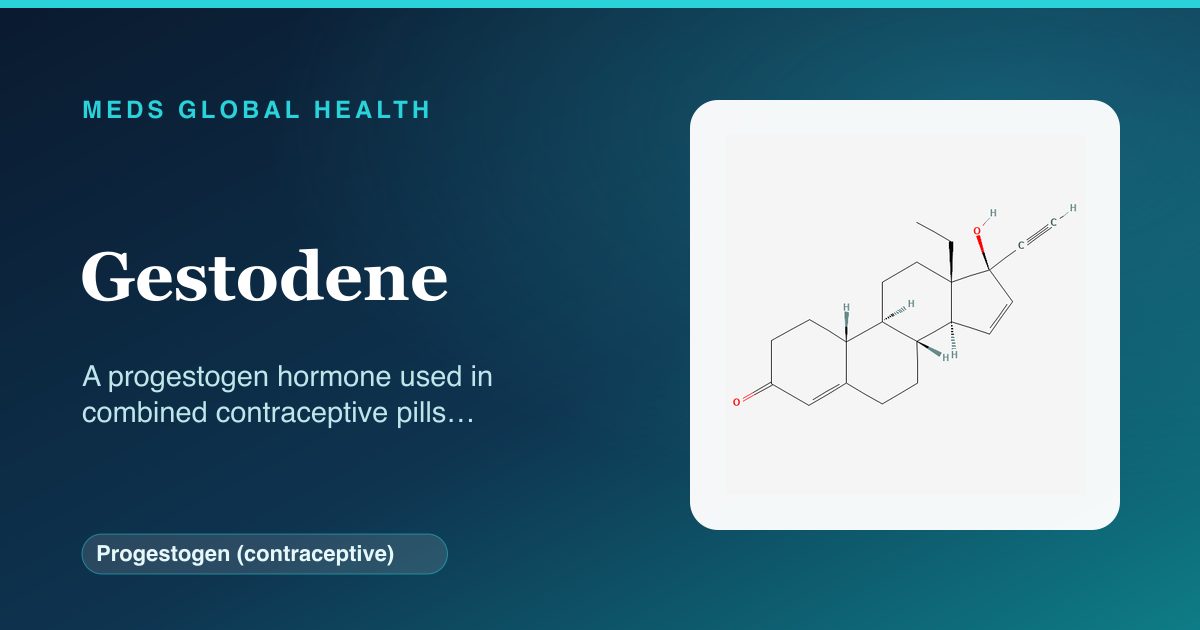
What it is
Gestodene is a progestogen, which is a man-made hormone similar to the natural hormone progesterone. It is used as one of the two active ingredients in several combined oral contraceptive pills, where it is paired with an oestrogen. These pills, sold under names such as Femodene, Millinette and Katya, are taken to prevent pregnancy and are among the commonly used combined pills in the UK. Gestodene is not usually given on its own; it works as part of the combined pill. The pills are prescribed after a health check to make sure they are suitable.
How it works
Combined pills containing gestodene work mainly by stopping the ovaries from releasing an egg each month, so there is no egg for sperm to fertilise. They also thicken the mucus at the neck of the womb, making it harder for sperm to get through, and change the lining of the womb so a pregnancy is less likely to take hold. The oestrogen and the progestogen gestodene work together to give this effect. Because the protection depends on the hormones being topped up regularly, the pill needs to be taken according to the pattern on the packet to work well.
Company & origin
A progestogen hormone used in the UK as one of the two ingredients in several combined oral contraceptive pills.
Practical use
How to take Gestodene
General, dose-free guidance — always follow your prescriber's and the leaflet's specific instructions.
- Take one pill by mouth each day, following the pattern shown on the packet for your particular pill.
- Try to take it at about the same time each day to build a routine that keeps it effective.
- Read the missed-pill advice in the leaflet and follow it if you forget a pill, using extra protection if needed.
- Remember it does not protect against sexually transmitted infections, so use condoms for that.
- Tell your prescriber if your health changes, for example if you start smoking, gain weight or develop migraines.
Weighing it up
Advantages & disadvantages of Gestodene
Advantages
- An effective and reversible way to prevent pregnancy when taken correctly.
- Can make periods lighter, more regular and less painful for many people.
- Taken as a simple daily pill that is easy to stop when you want to try for a baby.
Disadvantages
- Carries a small increased risk of blood clots, as do all combined pills.
- Must be taken regularly and is less reliable if pills are missed or if you are unwell with vomiting or diarrhoea.
- Does not protect against sexually transmitted infections.
Practical use
Good to know
Taking the pill regularly, following the pattern on the packet, is what keeps it working, so it helps to build it into a daily routine and to know what to do if you miss a pill. Like all combined pills, those containing gestodene carry a small increased risk of blood clots in the legs or lungs, which is why a health check covering things like smoking, weight, migraines and family history is done before starting. Some people notice early side effects such as headaches, breast tenderness, mood changes or irregular bleeding, which often settle over the first few months. It is important to know that the pill does not protect against sexually transmitted infections, so condoms are still needed for that. Seek urgent advice for symptoms such as a swollen, painful leg, chest pain, breathlessness or a sudden severe headache.
Who should not take it / use with caution
- People who have had a blood clot in the leg or lung, or certain heart or circulation problems, should not use combined pills.
- People with migraine with aura, or who smoke and are older, are usually advised against combined pills because of the clot risk.
- People with certain liver conditions, some cancers, or who are pregnant should not use it, and a health check decides suitability.
Monitoring
- A health check before starting, covering blood pressure, weight, smoking, migraines and family history of clots.
- Regular reviews, including blood pressure checks, while you continue the pill.
- Reviewing suitability over time as your health or risk factors change.
Side effects
- Headaches, breast tenderness, nausea or mood changes, which often settle in the first few months.
- Irregular bleeding or spotting, especially early on.
- A small increased risk of blood clots, which is why a health check is done first.
- Rarely but seriously, signs of a clot such as a swollen painful leg, chest pain or breathlessness, which need urgent help.
Key interactions
- Some medicines, such as certain epilepsy treatments and the herbal remedy St John's wort, can make the pill less effective.
- Some antibiotics and other medicines may need extra precautions, so check with your prescriber or pharmacist.
- Always tell whoever prescribes you any medicine that you take a combined contraceptive pill.
Available as: Tablets taken by mouth as part of a combined contraceptive pill.
Answers
Gestodene: frequently asked questions
What is gestodene?
It is a progestogen hormone used as one of the two ingredients in several combined contraceptive pills, such as Femodene and Millinette, to help prevent pregnancy.
How does the pill prevent pregnancy?
It mainly stops the ovaries releasing an egg, and also thickens mucus at the neck of the womb and changes the womb lining to make pregnancy less likely.
What should I do if I miss a pill?
Follow the missed-pill advice in the leaflet, which depends on how many you have missed and when; you may need extra protection such as condoms for a while.
Does it protect against infections?
No. The pill prevents pregnancy but does not protect against sexually transmitted infections, so condoms are still needed for that.
Is there a risk of blood clots?
All combined pills carry a small increased risk of blood clots, which is why a health check is done first; seek urgent help for a swollen painful leg, chest pain or breathlessness.
Authoritative sources
- BNF
- NICE CKS
Building a medicines information resource?
We create evidence-led, dose-free drug and formulary references for teams.