A joint supplement
Glucosamine
A joint supplement taken for osteoarthritis, though the evidence for it is limited and uncertain.
What is Glucosamine?
Glucosamine is a supplement taken by people with osteoarthritis in the hope of easing joint pain and stiffness. It is a natural building block found in cartilage, and is often derived from shellfish. The evidence that it helps is weak and uncertain, and it is not routinely recommended within the NHS. It is generally safe, but people with a shellfish allergy should be cautious and those on warfarin may need extra monitoring.
Education and reference only. This is a plain-language guide to Glucosamine — it deliberately contains no doses. Doses depend on the person, the brand and the reason for treatment, and belong with your prescriber. Always check the BNF, the product labelling (SmPC) and follow medical advice.
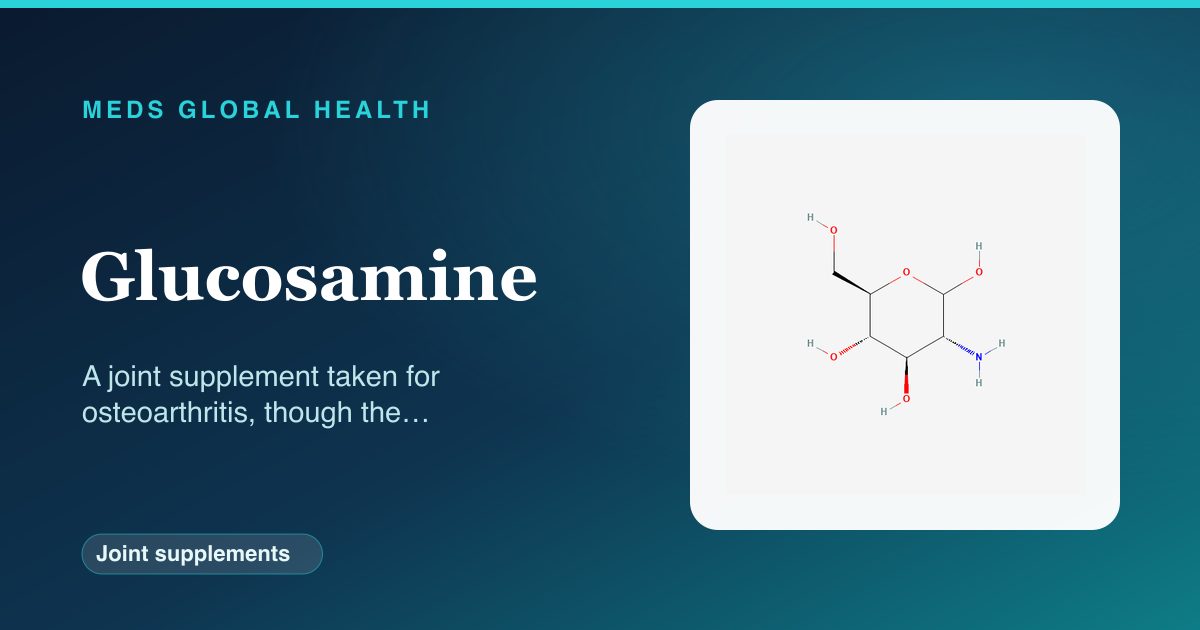
What it is
Glucosamine is a substance found naturally in the body that helps form and repair cartilage, the cushioning tissue in joints. As a supplement it is taken by people with osteoarthritis hoping to reduce joint pain and stiffness. Most glucosamine supplements are made from shellfish, which matters for people with shellfish allergy. It is sold over the counter and is not usually prescribed within the NHS.
How it works
The idea behind glucosamine is that providing a building block of cartilage might support joint repair and reduce pain in osteoarthritis. In practice, the scientific evidence that it changes the course of the disease or reliably relieves symptoms is weak and inconsistent. Because of this uncertainty, it is best seen as something some people choose to try rather than a proven treatment.
Company & origin
A supplement taken for osteoarthritis joint symptoms; not routinely recommended within the NHS because the evidence is weak.
What it treats
Conditions Glucosamine is used for
Practical use
How to take Glucosamine
General, dose-free guidance — always follow your prescriber's and the leaflet's specific instructions.
- Take it as directed on the product, usually once a day, with or without food.
- If you have a shellfish allergy, check whether the product is shellfish-derived and avoid it if so.
- If you have diabetes, monitor your blood sugar as advised, as it may have a small effect.
- If you take warfarin, tell your anticoagulant team, as it can affect your INR and need extra checks.
- Give it a fair trial period and stop it if you notice no benefit, since the evidence overall is weak.
Weighing it up
Advantages & disadvantages of Glucosamine
Advantages
- Generally well tolerated, with few side effects in most people.
- Some individuals report that their joint symptoms feel easier.
- Available over the counter without a prescription.
Disadvantages
- The evidence that it actually helps osteoarthritis is weak and uncertain.
- Not routinely recommended within the NHS, so it is bought at the person's own cost.
- Usually derived from shellfish and can complicate warfarin and diabetes monitoring.
Practical use
Good to know
It is honest to say that the evidence for glucosamine in osteoarthritis is limited and conflicting, which is why guidelines and the NHS do not routinely recommend it. Some people feel it helps their joints, while trials often show little benefit beyond placebo. Most products are derived from shellfish, so anyone with a shellfish allergy should check the source or avoid it. It may affect blood sugar, so people with diabetes should monitor as advised, and it can interfere with warfarin control, so those on warfarin may need closer INR checks. It is not a substitute for proven measures such as exercise, weight management and pain relief.
Who should not take it / use with caution
- People with shellfish allergy should avoid shellfish-derived products.
- Those on warfarin should use it only with anticoagulant-team awareness and extra monitoring.
- People with poorly controlled diabetes should be cautious and monitor blood sugar.
Monitoring
- Reviewing whether it provides any genuine benefit before continuing long term.
- Closer INR monitoring for people taking warfarin.
- Blood sugar monitoring for people with diabetes if advised.
Side effects
- Usually mild; occasional nausea, indigestion or diarrhoea.
- Headache or drowsiness in some people.
- Rarely, allergic reactions, particularly in those sensitive to shellfish.
Key interactions
- Can affect warfarin control, so INR may need closer monitoring.
- May have a small effect on blood sugar, relevant in diabetes.
- Combination products may also contain chondroitin, which shares similar cautions.
Available as: Tablets and capsules taken by mouth.
Answers
Glucosamine: frequently asked questions
Does glucosamine actually work for arthritis?
The evidence is weak and conflicting; some people feel it helps, but trials often show little benefit beyond placebo, which is why it is not routinely recommended within the NHS.
Is it safe if I am allergic to shellfish?
Most glucosamine is derived from shellfish, so people with shellfish allergy should check the source and avoid it if it is shellfish-based.
Can I take it with warfarin?
It can affect warfarin control, so tell your anticoagulant team, as you may need closer INR monitoring.
Will the NHS prescribe it?
It is not routinely recommended or prescribed within the NHS because the evidence for benefit is limited; people who want to try it usually buy it themselves.
Is it a replacement for my other arthritis treatment?
No. It is not a substitute for proven measures such as exercise, weight management and recommended pain relief.
The wider class
About Joint supplements
Glucosamine belongs to the joint supplements class. For how the class as a whole works, its shared safety principles and monitoring, see the full guide.
Browse by body system
Authoritative sources
- BNF
- NICE CKS
Building a medicines information resource?
We create evidence-led, dose-free drug and formulary references for teams.