A long-acting antimuscarinic (LAMA) inhaler
Glycopyrronium
A long-acting antimuscarinic maintenance inhaler that keeps the airways open in COPD, also available combined with other inhaled medicines.
What is Glycopyrronium?
Glycopyrronium is a long-acting antimuscarinic (LAMA) maintenance inhaler used in COPD. It is taken regularly, usually once a day, to keep the airways relaxed and open and ease breathlessness. It is a preventer-type inhaler, not a reliever, so it does not work quickly enough for sudden symptoms.
Education and reference only. This is a plain-language guide to Glycopyrronium — it deliberately contains no doses. Doses depend on the person, the brand and the reason for treatment, and belong with your prescriber. Always check the BNF, the product labelling (SmPC) and follow medical advice.
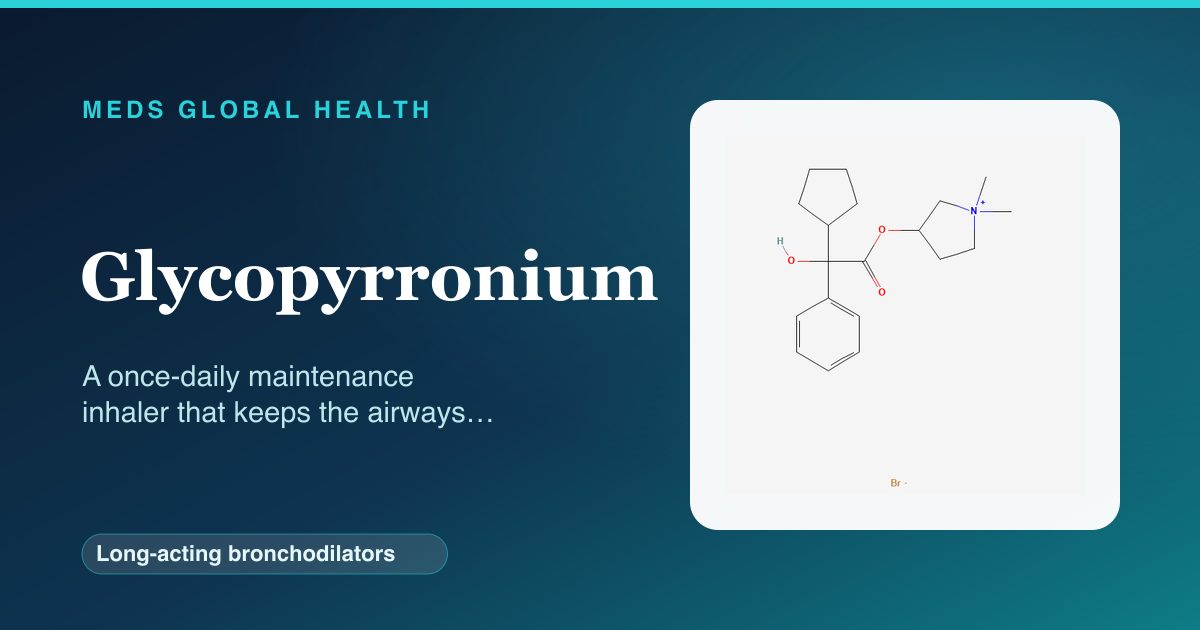
What it is
Glycopyrronium, sold as Seebri, is a long-acting antimuscarinic (LAMA) inhaler used in chronic obstructive pulmonary disease (COPD). It is a maintenance inhaler taken on a regular schedule.
How it works
It blocks muscarinic receptors in the airways, where the chemical messenger acetylcholine would normally tighten the surrounding muscle. By blocking this signal the airway muscle relaxes and stays open for many hours, making breathing easier over the day.
Company & origin
Originated / developed by: Novartis.
What it treats
Conditions Glycopyrronium is used for
Practical use
How to take Glycopyrronium
General, dose-free guidance — always follow your prescriber's and the leaflet's specific instructions.
- Use it regularly, usually once a day, even on days you feel well.
- Take it at about the same time each day.
- Use the correct inhaler technique and check the device is loaded properly.
- Do not use it for sudden breathlessness; keep using your reliever inhaler for that.
- Ask your nurse or pharmacist to check your inhaler technique from time to time.
Weighing it up
Advantages & disadvantages of Glycopyrronium
Advantages
- Once-daily maintenance dosing is convenient.
- Keeps the airways open and eases day-to-day breathlessness.
- Inhaled delivery means relatively little is absorbed into the body.
Disadvantages
- It is not a reliever and does not help sudden breathlessness quickly.
- Dry mouth is common.
- Correct inhaler technique is essential for it to work.
Practical use
Good to know
It is a regular, daily maintenance inhaler that works steadily in the background, so it must not be relied on for sudden breathlessness, which still needs a separate reliever (rescue) inhaler. A common effect is a dry mouth. Getting the inhaler technique right matters, so ask your nurse or pharmacist to check it.
Who should not take it / use with caution
- People who have had an allergic reaction to glycopyrronium.
- It should be used with caution in narrow-angle glaucoma.
- It should be used with caution in those with urinary retention or an enlarged prostate.
- It is licensed for COPD, not for asthma.
Monitoring
- Symptoms and breathlessness are reviewed at regular checks.
- Inhaler technique is checked.
- Be alert for eye pain or trouble passing urine.
Side effects
- Dry mouth.
- Throat irritation or cough.
- Headache and urine or sinus infections.
- Rarely, blurred vision, eye pain (possible glaucoma) or difficulty passing urine, which should be reported.
Key interactions
- Using it with other antimuscarinic medicines can add to effects like dry mouth and urinary problems.
- It is generally not combined with another LAMA inhaler.
- Tell your team about all your inhalers and medicines so they can be reviewed.
Available as: Available as an inhaler device for breathing in.
Answers
Glycopyrronium: frequently asked questions
Is this a reliever inhaler?
No. Glycopyrronium is a maintenance (preventer-type) inhaler taken regularly to keep the airways open. For sudden breathlessness you still need your separate reliever inhaler.
How often do I use it?
It is usually used once a day, at about the same time each day, even when you feel well.
Why do I get a dry mouth?
Dry mouth is a common effect of this type of inhaler. Sipping water or sugar-free sweets can help; tell your team if it is troublesome.
Can I use it if I have glaucoma?
It should be used with caution if you have narrow-angle glaucoma. Report any eye pain, redness or blurred vision promptly.
Why does inhaler technique matter so much?
If the inhaler is not used correctly, the medicine may not reach your airways, so it will not work as well. Ask your nurse or pharmacist to check your technique.
The wider class
About Long-acting bronchodilators
Glycopyrronium belongs to the long-acting bronchodilators class. For how the class as a whole works, its shared safety principles and monitoring, see the full guide.
Browse by body system
Authoritative sources
- BNF
- NICE CKS
Building a medicines information resource?
We create evidence-led, dose-free drug and formulary references for teams.