An injection that protects against hepatitis B
Hepatitis B vaccine
A vaccine given to protect against hepatitis B; it prevents infection rather than treating it.
What is Hepatitis B vaccine?
The hepatitis B vaccine protects against hepatitis B, a virus that can damage the liver. It is a preventive vaccine, not a treatment for an existing infection. In the UK it is given to babies as part of the routine childhood schedule, and to older children and adults who are at higher risk. It is given as an injection, usually as a course of more than one dose, to build lasting protection. Side effects are usually mild, such as soreness where the injection is given and short-lived flu-like feelings. For exact timings, follow the UK immunisation schedule and your healthcare team's advice.
Education and reference only. This is a plain-language guide to Hepatitis B vaccine — it deliberately contains no doses. Doses depend on the person, the brand and the reason for treatment, and belong with your prescriber. Always check the BNF, the product labelling (SmPC) and follow medical advice.
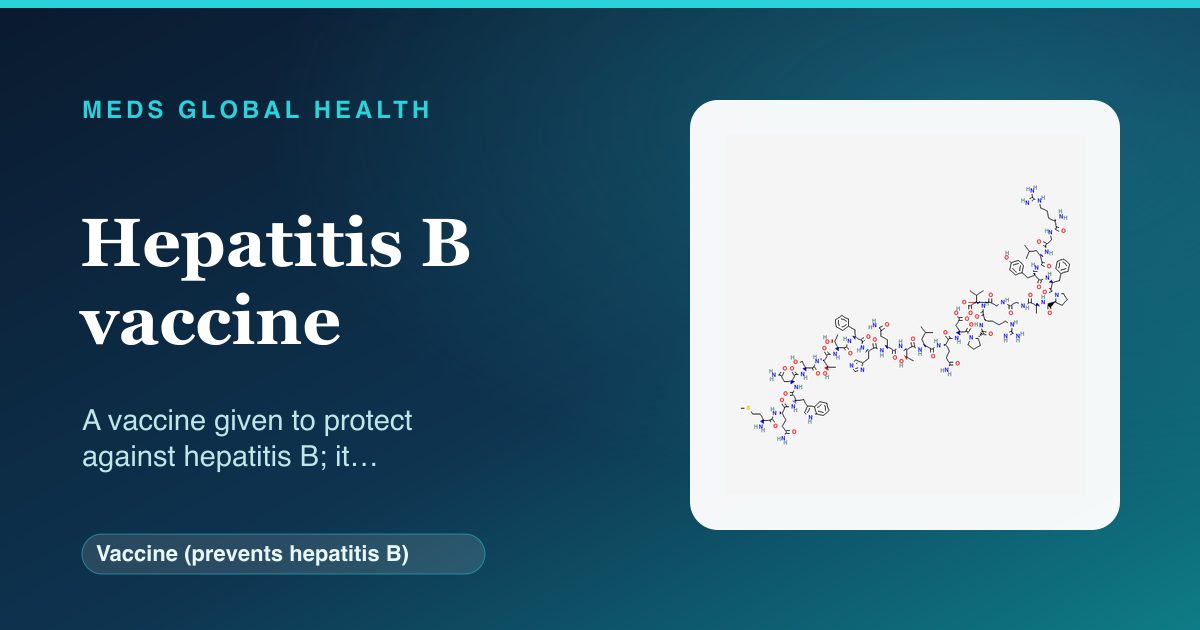
What it is
The hepatitis B vaccine is an injection that protects against hepatitis B, a virus spread through blood and body fluids that can infect and damage the liver, sometimes leading to long-term liver disease. It is a preventive vaccine: it is given to stop people catching the virus, not to treat someone who is already infected. In the UK it is part of the routine vaccinations given to babies and is also offered to older children and adults who are at higher risk, such as certain healthcare workers and household contacts of people with hepatitis B. It is given by healthcare staff.
How it works
The hepatitis B vaccine contains a harmless part of the virus's surface that cannot cause the infection. When it is given, the immune system recognises this as foreign and learns to make antibodies against it. If the vaccinated person later meets the real hepatitis B virus, their immune system remembers it and can respond quickly to stop an infection taking hold. Because protection builds up over a course of doses, the vaccine is usually given as more than one injection over time, which helps create strong, lasting immunity.
Company & origin
A vaccine used in the UK to protect against hepatitis B, given as part of the routine childhood programme and to people at higher risk.
Practical use
How to take Hepatitis B vaccine
General, dose-free guidance — always follow your prescriber's and the leaflet's specific instructions.
- It is given by a healthcare professional as an injection, usually into the upper arm (or thigh in babies).
- Complete the full course of doses, as protection builds up over more than one injection.
- Follow the UK immunisation schedule and your healthcare team's advice for the number of doses and timing.
- Tell the team about any allergies or past reactions to vaccines beforehand.
- Mention if you are unwell with a high temperature on the day, as the appointment may be delayed.
Weighing it up
Advantages & disadvantages of Hepatitis B vaccine
Advantages
- Protects against hepatitis B, a virus that can cause serious long-term liver disease.
- Part of the routine UK childhood programme and offered to people at higher risk.
- Side effects are usually mild and short-lived, and serious reactions are very rare.
Disadvantages
- It prevents hepatitis B but does not treat an infection someone already has.
- Usually needs a course of more than one dose to build full protection.
- Can cause mild, short-lived effects such as a sore arm or flu-like feelings.
Practical use
Good to know
The key thing to understand is that the hepatitis B vaccine prevents infection rather than treating it, so it is given before someone is exposed to the virus. It is given as a course of more than one dose to build lasting protection, and completing the full course matters for the best immunity. The exact number of doses and the timing depend on your age and circumstances, so the simplest guide is to follow the UK immunisation schedule and your healthcare team's advice. Side effects are usually mild and short-lived, most commonly soreness, redness or swelling where the injection is given, and sometimes a mild fever, tiredness or aching. Serious allergic reactions are very rare, and vaccination is done where staff can manage them. Some people, such as certain healthcare workers, may have a blood test afterwards to check they have responded.
Who should not take it / use with caution
- People who have had a serious allergic reaction to a previous dose or to an ingredient should not have it.
- If you are unwell with a high temperature, the vaccination is usually postponed until you are better.
- It is given under medical advice in pregnancy and in particular health conditions, following the UK immunisation schedule.
Monitoring
- Making sure the full course of doses is completed for lasting protection.
- A short wait after the injection in case of any immediate reaction.
- In some at-risk groups, a blood test afterwards to check the immune response.
Side effects
- Soreness, redness or swelling where the injection is given.
- A mild fever, tiredness, headache or aching that settles within a day or two.
- Very rarely, a serious allergic reaction, which staff are trained to treat.
Key interactions
- It can usually be given alongside other vaccines, as guided by your healthcare team.
- Tell the team if you take medicines that affect the immune system, as your response may be checked.
- Mention all your medicines and health conditions so the right approach is taken.
Available as: A liquid given as an injection, usually into the upper arm or thigh.
Answers
Hepatitis B vaccine: frequently asked questions
What is the hepatitis B vaccine for?
It protects against hepatitis B, a virus that can damage the liver. It prevents infection rather than treating an existing one.
How many doses do I need?
It is usually given as a course of more than one dose; the exact number and timing depend on your age and circumstances, so follow the UK immunisation schedule and your team's advice.
Is it part of the routine UK vaccinations?
Yes, in the UK it is given to babies as part of the routine childhood programme and is also offered to older children and adults at higher risk.
What side effects might I get?
Usually mild and short-lived ones, such as a sore arm, mild fever or tiredness; serious reactions are very rare.
Can it treat hepatitis B if I already have it?
No. It is a preventive vaccine given to stop people catching the virus, not a treatment for someone who is already infected.
The wider class
About Vaccine (prevents hepatitis B)
Hepatitis B vaccine belongs to the vaccine (prevents hepatitis b) class. For how the class as a whole works, its shared safety principles and monitoring, see the full guide.
Browse by body system
Authoritative sources
- BNF
- NICE CKS
Building a medicines information resource?
We create evidence-led, dose-free drug and formulary references for teams.