A skin-lightening cream for dark patches
Hydroquinone
A skin-lightening cream used to fade areas of darkened skin, such as melasma or other patches of extra pigment.
What is Hydroquinone?
Hydroquinone is a skin-lightening, or depigmenting, cream used to fade areas of skin that have become darker than the surrounding skin, such as melasma and other patches of extra pigment. It works by reducing how much melanin, the pigment that colours skin, the skin makes. It is applied to the affected patches, usually for a limited course under supervision. It can irritate the skin and makes skin more sensitive to sunlight, so daily sunscreen is essential, and prolonged use carries a rare risk of permanent darkening called ochronosis.
Education and reference only. This is a plain-language guide to Hydroquinone — it deliberately contains no doses. Doses depend on the person, the brand and the reason for treatment, and belong with your prescriber. Always check the BNF, the product labelling (SmPC) and follow medical advice.
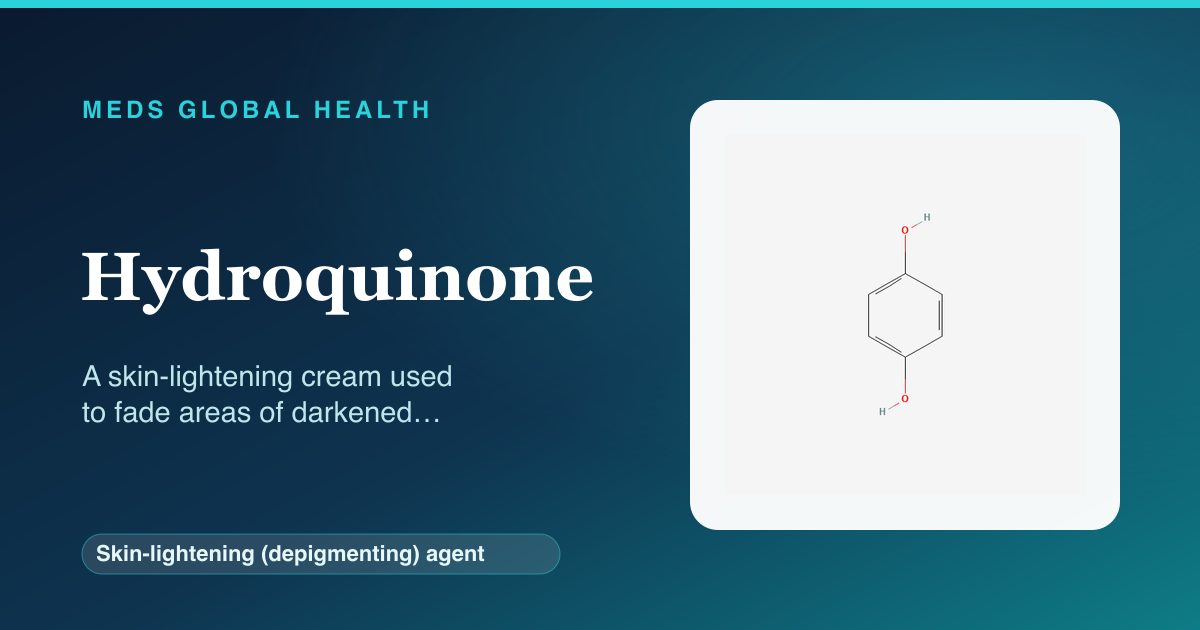
What it is
Hydroquinone is a skin-lightening agent used to treat patches of skin that have become darker than normal, a problem called hyperpigmentation. A common reason for its use is melasma, where brownish patches develop, often on the face. It works by slowing the skin's production of melanin, the pigment that gives skin its colour, so darker areas gradually fade towards the surrounding skin tone. In the UK it is generally used under medical or specialist supervision rather than bought freely, applied as a cream to the affected areas for a limited time.
How it works
The colour of skin comes mainly from a pigment called melanin, made by special cells in the skin. Hydroquinone interferes with the process these cells use to make melanin, so less new pigment is produced in the treated area. Over weeks, as old pigmented skin cells are shed and replaced with less-pigmented ones, the dark patches gradually lighten. Because it works on pigment production rather than removing pigment instantly, results build slowly, and because it makes the skin more vulnerable to the sun, careful sun protection is part of how treatment works and lasts.
Company & origin
A skin-lightening cream used in the UK to fade dark patches such as melasma, usually under medical or specialist supervision.
Practical use
How to take Hydroquinone
General, dose-free guidance — always follow your prescriber's and the leaflet's specific instructions.
- Apply it only to the darkened patches being treated, avoiding the eyes, lips and broken skin.
- Use a high-protection sunscreen every day and limit sun exposure, as the skin becomes more sun-sensitive.
- Use it for the limited course you are given rather than indefinitely, and attend reviews.
- Expect some mild redness, stinging or dryness at first, which usually settles.
- Stop and seek advice if the skin becomes very irritated or starts to darken further.
Weighing it up
Advantages & disadvantages of Hydroquinone
Advantages
- An effective way to fade dark patches such as melasma and other hyperpigmentation.
- Applied directly to the affected skin, so it targets the problem area.
- Works gradually to even out skin tone when used as directed with sun protection.
Disadvantages
- Makes the skin more sensitive to sunlight, so daily sunscreen is essential.
- Can cause redness, stinging, dryness or irritation, especially at first.
- Prolonged or excessive use carries a rare risk of permanent darkening (ochronosis).
Practical use
Good to know
Two practical points make the biggest difference with hydroquinone. First, sun protection is essential: the skin becomes more sensitive to sunlight during treatment, and sun exposure can both irritate the skin and undo the lightening by triggering more pigment, so daily sunscreen and sun avoidance are part of the treatment, not an optional extra. Second, it is meant for limited, supervised courses rather than indefinite use. Mild redness, stinging or dryness when starting is common and usually settles. The most important long-term concern is a rare condition called ochronosis, where prolonged or excessive use causes a bluish-black darkening of the skin that can be hard to reverse, which is exactly why open-ended use is avoided. It is applied only to the patches being treated, kept away from the eyes and broken skin, and reviewed by the prescriber.
Who should not take it / use with caution
- It should not be used on broken, sunburnt or irritated skin.
- It is generally avoided in pregnancy and breastfeeding unless a specialist advises.
- People who have had a reaction to it or to ingredients in the cream should not use it.
- It should not be used indefinitely or over large areas without supervision.
Monitoring
- Reviewing how the patches respond and whether to continue or stop.
- Watching for skin irritation and for any unusual darkening.
- Checking that sun protection is being used and the course is not running on too long.
Side effects
- Redness, stinging, dryness or irritation of the treated skin.
- Increased sensitivity to sunlight, which can lead to sunburn or worsening of the patches.
- Rarely, with prolonged or heavy use, a bluish-black permanent darkening called ochronosis.
- Occasionally, lightening of normal skin around the treated patch.
Key interactions
- Other strong creams used on the same area may add to irritation, so check before combining.
- Sun exposure works against the treatment, so sunscreen and sun avoidance are important.
- Tell your prescriber about any other skin treatments you are using.
Available as: Cream applied to the affected skin.
Answers
Hydroquinone: frequently asked questions
What is hydroquinone used for?
It is a skin-lightening cream used to fade patches of darkened skin, such as melasma, by reducing how much pigment the skin makes in the treated area.
Why do I need sunscreen with it?
It makes the skin more sensitive to sunlight, and sun exposure can both irritate the skin and trigger more pigment, undoing the lightening, so daily sunscreen is essential.
How long can I use it?
It is meant for limited, supervised courses rather than indefinite use, because prolonged or excessive use carries a rare risk of permanent darkening.
What is ochronosis?
Ochronosis is a rare bluish-black darkening of the skin that can follow prolonged or heavy use of hydroquinone and can be hard to reverse, which is why open-ended use is avoided.
Is some irritation normal?
Mild redness, stinging or dryness when starting is common and usually settles; if the skin becomes very irritated, stop and seek advice.
Authoritative sources
- BNF
- NICE CKS
Building a medicines information resource?
We create evidence-led, dose-free drug and formulary references for teams.