An oral antifungal tablet for vaginal thrush
Ibrexafungerp
An antifungal tablet taken by mouth to treat vaginal thrush (a yeast infection).
What is Ibrexafungerp?
Ibrexafungerp is an antifungal medicine taken as a tablet by mouth to treat vaginal thrush, a common yeast infection that causes itching, soreness and discharge. It works by damaging the wall of the yeast cells so the infection clears. It is taken as a short course rather than long term. The most common side effects are tummy-related, such as nausea, diarrhoea or tummy pain. A very important point is that it can harm an unborn baby, so it must not be used in pregnancy and effective contraception is needed while taking it.
Education and reference only. This is a plain-language guide to Ibrexafungerp — it deliberately contains no doses. Doses depend on the person, the brand and the reason for treatment, and belong with your prescriber. Always check the BNF, the product labelling (SmPC) and follow medical advice.
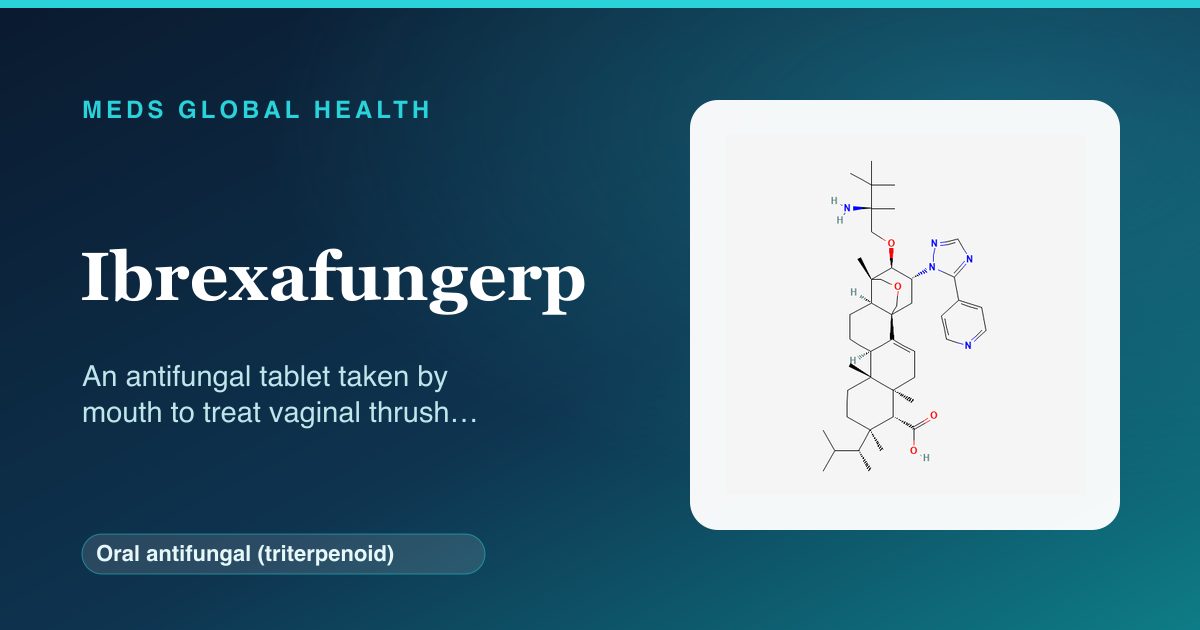
What it is
Ibrexafungerp is a newer antifungal medicine, taken by mouth as a tablet, used to treat vaginal thrush, an infection caused by an overgrowth of a yeast called Candida that leads to itching, soreness and discharge. It offers an alternative to the more familiar antifungal tablets and creams, and works in a different way from some of them, which can be useful when an infection is hard to clear. It is taken as a short course rather than as an ongoing treatment, and is prescribed when it is the right choice for the infection.
How it works
Ibrexafungerp works by blocking the yeast's ability to build part of its cell wall, the protective outer layer that holds the cell together. Without a properly formed wall the yeast cells become unstable and die, so the infection clears. Because it acts on the cell wall in a different way from some older antifungals, it can work against yeast that is harder to treat. It is taken as a short course, which is enough to deal with the infection without the need for long-term treatment.
Company & origin
A newer oral antifungal medicine used to treat vaginal thrush, offering an alternative to the more familiar antifungal tablets and creams.
Practical use
How to take Ibrexafungerp
General, dose-free guidance — always follow your prescriber's and the leaflet's specific instructions.
- Take the tablets by mouth exactly as prescribed, usually as a short course over a day.
- You can take it with or without food, swallowing the tablets whole with water.
- Do not take it if you are or could be pregnant; use effective contraception while taking it.
- Finish the short course you are given, even if symptoms start to settle.
- Speak to your prescriber if symptoms do not improve or thrush keeps returning.
Weighing it up
Advantages & disadvantages of Ibrexafungerp
Advantages
- An effective oral treatment for vaginal thrush, taken as a short, convenient course.
- Works in a different way from some older antifungals, which can help with hard-to-clear infections.
- Avoids the need for creams or pessaries for those who prefer a tablet.
Disadvantages
- Must not be used in pregnancy because it can harm an unborn baby, and contraception is needed.
- Commonly causes tummy-related side effects such as nausea, diarrhoea or tummy pain.
- A newer medicine, so it is used in specific situations rather than as the routine first choice for everyone.
Practical use
Good to know
The single most important thing to understand about ibrexafungerp is that it can harm an unborn baby, so it must not be taken during pregnancy, and effective contraception is needed while taking it; pregnancy is usually checked before starting and you should avoid becoming pregnant during treatment. The most common side effects are tummy-related, such as nausea, diarrhoea or tummy pain, and these are usually mild and short-lived. It is taken as a short course by mouth, which some people find more convenient than creams or pessaries. If symptoms do not improve, or keep coming back, it is worth speaking to your prescriber, as recurring thrush sometimes needs a different plan. Tell your prescriber about other medicines you take, as some can affect how it works.
Who should not take it / use with caution
- It must not be used in pregnancy because it can harm an unborn baby.
- People who have had a serious allergic reaction to ibrexafungerp should not take it.
- It is used with care in people on certain other medicines that can affect how it works.
Monitoring
- Checking that the thrush has cleared and symptoms have settled.
- Confirming pregnancy is avoided and contraception is in place during treatment.
- Reviewing recurring infections, which may need a different approach.
Side effects
- Tummy-related effects such as nausea, diarrhoea, tummy pain or vomiting.
- Headache or dizziness in some people.
- Rarely, allergic-type reactions, which should be reported promptly.
Key interactions
- Some medicines can raise or lower the level of ibrexafungerp in the body, so tell your prescriber what you take.
- Medicines that strongly affect the liver's drug-handling enzymes may need to be reviewed.
- Always give a full list of your medicines, including anything bought without a prescription.
Available as: Tablets taken by mouth.
Answers
Ibrexafungerp: frequently asked questions
What is ibrexafungerp used for?
It is an antifungal tablet taken by mouth to treat vaginal thrush, a common yeast infection that causes itching, soreness and discharge.
Can I take it if I might be pregnant?
No. Ibrexafungerp can harm an unborn baby, so it must not be used in pregnancy and effective contraception is needed while taking it.
How long do I take it for?
It is taken as a short course rather than long term, exactly as your prescriber directs; finish the course even if symptoms start to settle.
What are the most common side effects?
The most common side effects are tummy-related, such as nausea, diarrhoea or tummy pain, and these are usually mild.
What if my thrush keeps coming back?
Speak to your prescriber, as recurring thrush sometimes needs a different plan or further checks.
Authoritative sources
- BNF
- NICE CKS
Building a medicines information resource?
We create evidence-led, dose-free drug and formulary references for teams.