A targeted cancer tablet
Ibrutinib
A targeted cancer tablet for some leukaemias and lymphomas, with particular attention to bleeding and heart rhythm.
What is Ibrutinib?
Ibrutinib is a targeted cancer tablet known as a BTK inhibitor. It is used for some blood cancers, including chronic lymphocytic leukaemia (CLL) and mantle cell lymphoma. It is started and monitored by a blood-cancer specialist but taken regularly at home. Two important risks are bleeding (so tell doctors and dentists before any surgery or procedure) and heart-rhythm problems such as atrial fibrillation. It can also raise the risk of infections and high blood pressure. It has many drug interactions, grapefruit must be avoided, and pregnancy must be avoided.
Education and reference only. This is a plain-language guide to Ibrutinib — it deliberately contains no doses. Doses depend on the person, the brand and the reason for treatment, and belong with your prescriber. Always check the BNF, the product labelling (SmPC) and follow medical advice.
What it is
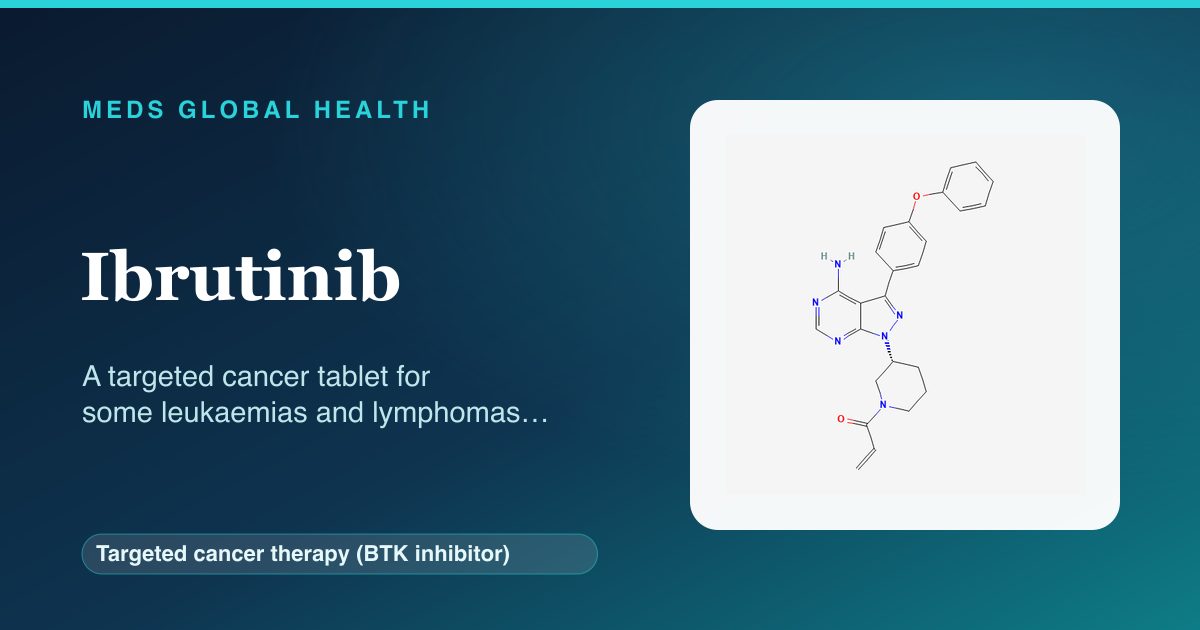
Ibrutinib is a targeted cancer therapy called a BTK inhibitor (it blocks an enzyme called Bruton's tyrosine kinase). This enzyme helps certain cancerous white blood cells survive and grow, so blocking it can control the disease. It is used for some leukaemias and lymphomas, such as chronic lymphocytic leukaemia and mantle cell lymphoma. It is a capsule or tablet taken at home, started and supervised by a haematology team.
How it works
Some blood cancers rely on the BTK enzyme to receive growth and survival signals. Ibrutinib blocks BTK, cutting off these signals so the cancerous cells stop multiplying and gradually die off. Because BTK is also involved in how platelets help blood to clot, blocking it can increase the risk of bleeding. It is taken continuously, and the team monitors the disease response along with bleeding, heart rhythm, blood pressure and infections.
Company & origin
Originated / developed by: Janssen / AbbVie.
A targeted cancer tablet used in the UK for certain leukaemias and lymphomas, taken at home under specialist care.
Practical use
How to take Ibrutinib
General, dose-free guidance — always follow your prescriber's and the leaflet's specific instructions.
- Take it once a day, with a glass of water, at around the same time each day, swallowing the capsules whole.
- Take it exactly as prescribed and do not change or stop it on your own, even if you feel well.
- Avoid grapefruit, grapefruit juice and Seville oranges, which can raise the level of the medicine.
- Tell any doctor, surgeon or dentist that you take ibrutinib before any operation or procedure, as it may need to be paused.
- Report unusual bleeding or bruising, palpitations, dizziness, severe headache or signs of infection promptly.
Weighing it up
Advantages & disadvantages of Ibrutinib
Advantages
- An effective targeted tablet for several blood cancers, taken at home rather than as an infusion.
- Works on a specific cancer survival signal, which can bring the disease under good control.
- Often used continuously while overseen by a blood-cancer team.
Disadvantages
- Increases the risk of bleeding, which matters around surgery and dental work.
- Can cause heart-rhythm problems such as atrial fibrillation and raise blood pressure.
- Raises the risk of infections and has many drug and grapefruit interactions.
Practical use
Good to know
Two effects deserve special attention with ibrutinib. First, it increases the risk of bleeding, so tell any doctor or dentist that you take it before surgery or procedures — it is often paused around these — and report unusual bruising, nosebleeds, blood in urine or stools, or a severe headache. Second, it can cause heart-rhythm problems such as atrial fibrillation (an irregular or fast heartbeat) and can raise blood pressure, so tell your team about palpitations, dizziness or breathlessness. It can also lower your defences against infection, so report fevers or signs of infection. It has many drug interactions and grapefruit must be avoided. Do not stop it without advice, and avoid pregnancy.
Who should not take it / use with caution
- It must not be used in pregnancy, and effective contraception is needed because it can harm an unborn baby.
- It is used with caution, and closer monitoring, in people with heart-rhythm problems, high blood pressure or bleeding risks.
- People taking blood thinners or medicines that strongly interact with it may need those changed or carefully managed.
Monitoring
- Regular blood tests to track the disease response and check blood counts.
- Watching for bleeding, checking heart rhythm and measuring blood pressure.
- Reviewing for signs of infection and managing other side effects at each visit.
Side effects
- Bruising and bleeding, diarrhoea, tiredness, joint or muscle aches and rash are common.
- Heart-rhythm problems such as atrial fibrillation, raised blood pressure and infections, which are monitored.
- Less commonly, more serious bleeding or infection, low blood counts or other heart problems that need prompt review.
Key interactions
- Processed by the same liver enzyme as many medicines, so some antibiotics, antifungals, epilepsy and heart drugs can change its level.
- Grapefruit, grapefruit juice and Seville oranges can raise its level and must be avoided.
- It adds to the bleeding risk of blood thinners, aspirin and some anti-inflammatory painkillers and supplements such as fish oil.
Available as: Capsules and tablets taken by mouth.
Answers
Ibrutinib: frequently asked questions
Why must I tell my dentist or surgeon I take ibrutinib?
Ibrutinib increases the risk of bleeding, so it is often paused around operations and dental procedures; always tell the team in advance so they can plan safely.
What heart problems can it cause?
It can cause heart-rhythm problems such as atrial fibrillation (an irregular or fast heartbeat) and raise blood pressure, so report palpitations, dizziness or breathlessness to your team.
What bleeding signs should I watch for?
Tell your team about unusual bruising, nosebleeds, blood in your urine or stools, or a sudden severe headache, as ibrutinib raises the risk of bleeding.
Why must I avoid grapefruit?
Grapefruit, grapefruit juice and Seville oranges affect the liver enzyme that processes ibrutinib and can raise its level in the body, so they must be avoided.
Can I take it if I feel well, or stop it?
Keep taking it as prescribed even when you feel well; stopping on your own can let the cancer return, so any change should be decided with your specialist team.
Authoritative sources
- BNF
- NICE CKS
Building a medicines information resource?
We create evidence-led, dose-free drug and formulary references for teams.