A self-injection for acute hereditary angioedema attacks
Icatibant
A self-injection used to treat an acute attack of hereditary angioedema, a condition causing sudden severe swelling.
What is Icatibant?
Icatibant is a specialist self-injection used to treat an acute attack of hereditary angioedema, a rare condition that causes sudden, severe swelling of the skin, the gut or the airway. It works by blocking bradykinin, a chemical that drives this swelling, so an attack settles more quickly. It is given under the skin, usually by the person themselves once they have been trained, when an attack starts. It treats attacks rather than preventing them, and any swelling involving the throat or airway is an emergency that needs urgent medical help.
Education and reference only. This is a plain-language guide to Icatibant — it deliberately contains no doses. Doses depend on the person, the brand and the reason for treatment, and belong with your prescriber. Always check the BNF, the product labelling (SmPC) and follow medical advice.
What it is
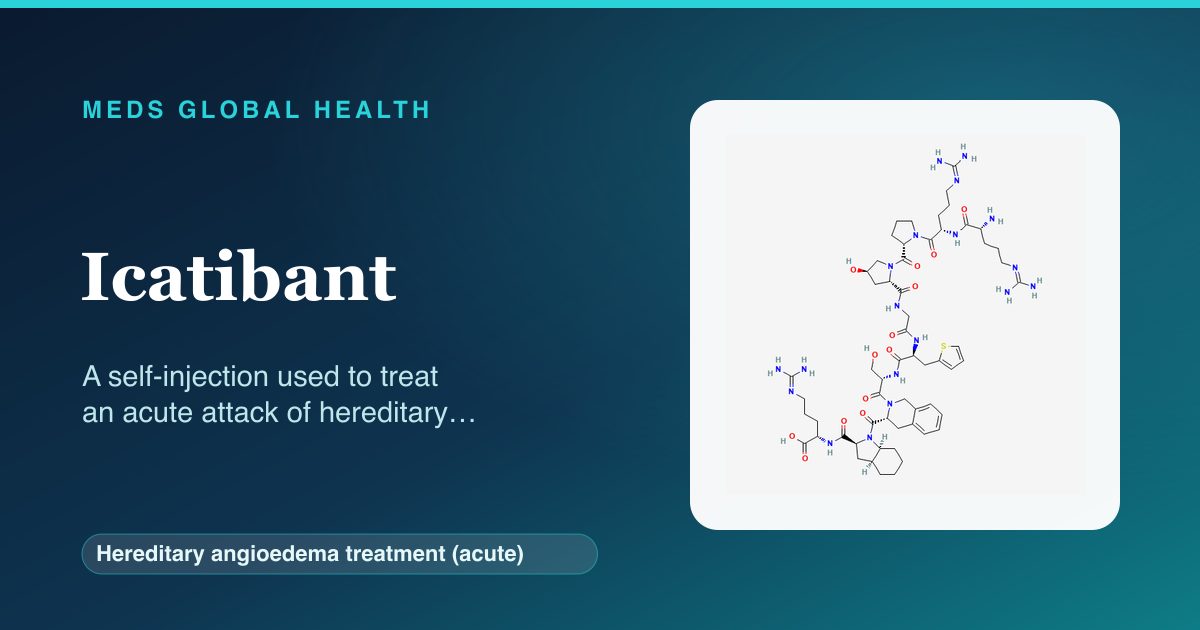
Icatibant is a medicine used to treat sudden attacks of hereditary angioedema, an inherited condition in which people have episodes of severe swelling that can affect the skin, the gut (causing pain) or, most dangerously, the airway. It is given as an injection under the skin, often by patients themselves after training, so an attack can be treated quickly at home. It is an attack treatment, used when symptoms come on, not a regular preventer. It is prescribed and supervised by a specialist service.
How it works
Attacks of hereditary angioedema are driven by a build-up of a chemical called bradykinin, which makes blood vessels leak fluid and causes swelling. Icatibant blocks the receptor that bradykinin acts on, so the swelling stops getting worse and starts to settle. Because it is a self-injection that works fairly quickly, it lets people treat an attack soon after it begins, which is important since early treatment usually means faster relief. It is used each time an attack happens rather than taken regularly.
Company & origin
A specialist injection used in the UK to treat sudden attacks of hereditary angioedema, often given by patients themselves.
Practical use
How to take Icatibant
General, dose-free guidance — always follow your prescriber's and the leaflet's specific instructions.
- Use it to treat an attack when symptoms start, injecting it under the skin as your specialist team has trained you.
- Inject it as soon as an attack begins, as early treatment usually works better.
- Carry it with you so it is available when an attack happens, since attacks can be unpredictable.
- Seek emergency help straight away if an attack involves your throat, mouth or breathing, even after using icatibant.
- Follow your specialist's plan on how many doses you may use and when to go to hospital.
Weighing it up
Advantages & disadvantages of Icatibant
Advantages
- Treats acute hereditary angioedema attacks and can be given by the person themselves at home.
- Works fairly quickly to settle swelling when used early in an attack.
- Lets people manage attacks without always needing to wait for hospital treatment.
Disadvantages
- Treats attacks but does not prevent them, so attacks can still happen.
- Commonly causes redness, swelling or itching at the injection site.
- Needs training to use, and attacks involving the airway still require emergency help.
Practical use
Good to know
The most important thing to understand is the difference between treating an attack and preventing one: icatibant is for treating an attack that is happening, not for stopping future attacks. Knowing how and when to inject it, and carrying it so it is available when an attack starts, is part of living well with hereditary angioedema. The most common side effect is a reaction where the injection is given, with redness, swelling or itching, which usually settles on its own. A crucial safety point is that any attack involving the throat or airway is a medical emergency: icatibant can be given, but emergency help should be sought at the same time, because airway swelling can be life-threatening. Your specialist team will train you, give you a plan for how many doses you can use, and advise when to seek hospital care.
Who should not take it / use with caution
- People who have had a serious allergic reaction to icatibant should not use it.
- It is used with care, and under specialist guidance, in pregnancy.
- It should only be used under a specialist hereditary angioedema service that provides training and a treatment plan.
Monitoring
- Reviewing how well attacks respond and how many doses are being used.
- Checking the person is confident and trained in self-injection.
- Reviewing the overall attack pattern, which may prompt a discussion about preventive treatment.
Side effects
- Redness, swelling, warmth or itching where the injection is given, usually settling on its own.
- Dizziness, headache or a temporary feeling of warmth in some people.
- Rarely, more troublesome reactions; airway involvement during an attack always needs emergency care.
Key interactions
- It may interact with certain blood-pressure medicines known as ACE inhibitors, so tell your specialist what you take.
- There are few well-established routine interactions, but always tell your team about all your medicines.
- It is used alongside, not instead of, emergency care when the airway is involved.
Available as: A solution for injection under the skin, often given by the patient.
Answers
Icatibant: frequently asked questions
What is icatibant used for?
It is used to treat an acute attack of hereditary angioedema, blocking the chemical bradykinin that drives the sudden severe swelling.
Does it prevent attacks?
No. Icatibant treats an attack that is happening; it does not prevent future attacks, which is the role of preventive medicines.
Can I inject it myself?
Yes, many people inject it themselves under the skin once their specialist team has trained them, so an attack can be treated quickly at home.
What should I do if my throat swells?
Swelling involving the throat or breathing is an emergency; seek urgent medical help straight away, even if you have used icatibant.
Why does the injection site go red?
Redness, swelling or itching where the injection is given is the most common side effect and usually settles on its own.
Authoritative sources
- BNF
- NICE CKS
Building a medicines information resource?
We create evidence-led, dose-free drug and formulary references for teams.