A targeted tablet for certain leukaemias and lymphomas
Idelalisib
A targeted tablet used for chronic lymphocytic leukaemia and some lymphomas, given with close monitoring for liver, bowel, lung and infection problems.
What is Idelalisib?
Idelalisib is a specialist targeted cancer medicine used to treat chronic lymphocytic leukaemia and certain lymphomas, usually after other treatments. It is taken by mouth as a tablet under the care of a blood-cancer team. It carries several serious safety issues that need close monitoring: serious and sometimes fatal liver inflammation, severe diarrhoea or inflammation of the bowel (colitis), inflammation of the lungs (pneumonitis), and serious infections, including ones the body usually keeps in check. Because of this, preventive antibiotics and regular blood tests are part of treatment.
Education and reference only. This is a plain-language guide to Idelalisib — it deliberately contains no doses. Doses depend on the person, the brand and the reason for treatment, and belong with your prescriber. Always check the BNF, the product labelling (SmPC) and follow medical advice.
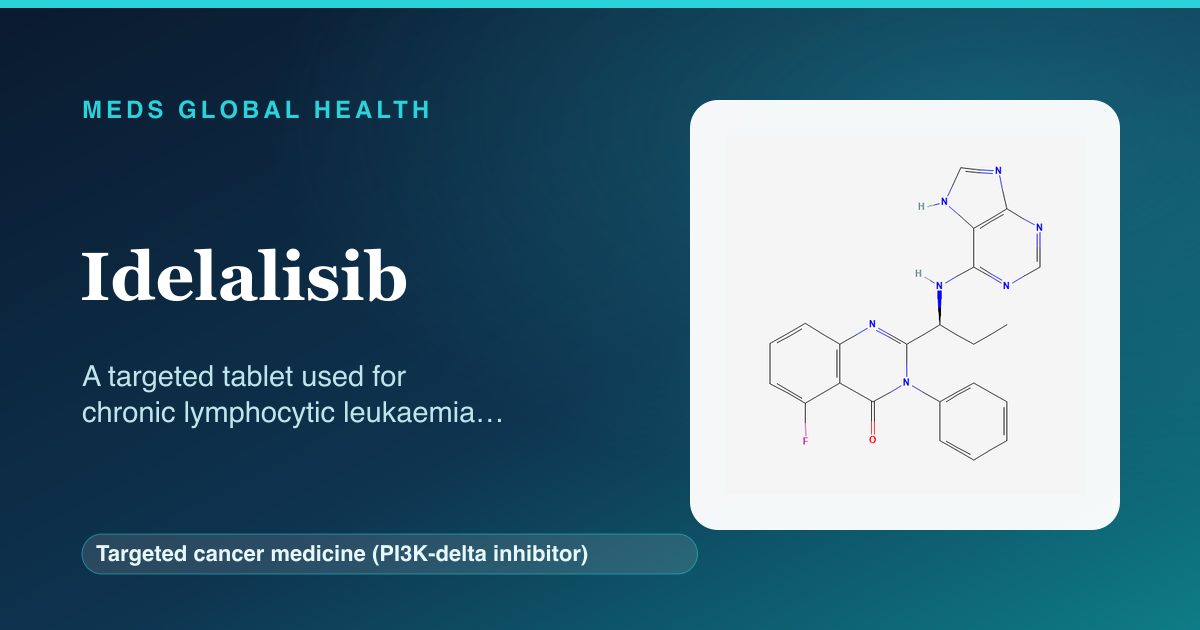
What it is
Idelalisib is a targeted treatment for certain blood cancers, including chronic lymphocytic leukaemia (a cancer of a type of white blood cell) and some lymphomas (cancers of the lymph system). It is generally used after other treatments have been tried, as part of a plan made by a specialist blood-cancer team. It is taken by mouth as a tablet. Because it can cause serious side effects, it is used with close monitoring, including regular blood tests and measures to prevent certain infections.
How it works
Idelalisib blocks a protein called PI3K-delta, which the cancerous white blood cells rely on to grow, survive and stay in the tissues where they cause harm. By switching off this signal, it helps reduce the number of cancer cells and control the disease. Because PI3K-delta is also involved in the normal immune system, blocking it can affect how the body controls inflammation and fights infection, which helps explain some of its serious side effects and why monitoring and infection prevention are so important.
Company & origin
A specialist cancer medicine used in the UK to treat chronic lymphocytic leukaemia and certain lymphomas, usually after other treatments.
Practical use
How to take Idelalisib
General, dose-free guidance — always follow your prescriber's and the leaflet's specific instructions.
- Take the tablets by mouth as your blood-cancer team prescribes, swallowed whole at about the same times each day.
- Take the preventive antibiotic you are given to protect against a lung infection (PCP), as advised.
- Report severe or ongoing diarrhoea straight away, as it can be a sign of serious bowel inflammation.
- Report any new or worsening cough or breathlessness promptly, as these can signal lung inflammation.
- Attend all appointments for regular blood tests, especially liver checks, and tell your team about any signs of infection.
Weighing it up
Advantages & disadvantages of Idelalisib
Advantages
- Targets a protein the cancer cells depend on, offering a treatment option after other therapies.
- Taken by mouth as a tablet rather than given by infusion.
- Can help control chronic lymphocytic leukaemia and certain lymphomas.
Disadvantages
- Can cause serious, sometimes fatal, liver inflammation needing frequent blood tests.
- Can cause severe diarrhoea or bowel inflammation (colitis) and lung inflammation (pneumonitis).
- Raises the risk of serious infections, so preventive antibiotics and close monitoring are needed.
Practical use
Good to know
The dominant theme with idelalisib is its serious side effects, which need close attention. It can cause serious and occasionally fatal inflammation of the liver, so liver blood tests are checked frequently, especially early on. It can cause severe diarrhoea or inflammation of the bowel (colitis), which can come on after some time on treatment, so any persistent or severe diarrhoea must be reported. It can cause inflammation of the lungs (pneumonitis), so new or worsening cough or breathlessness should be reported promptly. It also raises the risk of serious infections, including ones the body normally keeps in check, so preventive antibiotics (for a lung infection called PCP) are usually given and the team watches for a virus called CMV. Because of all this, treatment involves regular blood tests and clear advice on symptoms to report straight away.
Who should not take it / use with caution
- People who have had a serious allergic reaction to idelalisib should not take it.
- It is used with great caution, or avoided, in people with significant existing liver problems or active serious infection.
- It should only be used under a specialist blood-cancer service with the necessary monitoring in place.
Monitoring
- Frequent liver blood tests, especially early in treatment.
- Watching for severe diarrhoea or colitis, and for lung inflammation through cough or breathlessness.
- Blood counts and checks for serious infections, including measures to prevent PCP and watch for CMV.
Side effects
- Diarrhoea, which can become severe, and inflammation of the bowel (colitis).
- Changes in liver blood tests, which can reflect serious liver inflammation.
- Fever, cough or breathlessness, which may signal a serious infection or lung inflammation, and rashes.
Key interactions
- Some medicines change the levels of idelalisib, so a full medicines list is important.
- It can change the levels of certain other medicines, so combinations are checked carefully.
- Other medicines that affect the liver or the immune system need particular care alongside it.
Available as: Tablets taken by mouth.
Answers
Idelalisib: frequently asked questions
What is idelalisib used for?
It is used to treat chronic lymphocytic leukaemia and certain lymphomas, usually after other treatments, under the care of a blood-cancer team.
Why are frequent liver tests needed?
Idelalisib can cause serious and sometimes fatal liver inflammation, so liver blood tests are checked frequently, particularly in the early months.
What should I do about diarrhoea?
Severe or ongoing diarrhoea can be a sign of serious bowel inflammation (colitis) and must be reported straight away rather than treated at home alone.
Why do I need a preventive antibiotic?
Idelalisib raises the risk of serious infections, so a preventive antibiotic against a lung infection called PCP is usually given, and the team watches for a virus called CMV.
What lung symptoms should I report?
New or worsening cough or breathlessness should be reported promptly, as idelalisib can cause inflammation of the lungs (pneumonitis).
Authoritative sources
- BNF
- NICE CKS
Building a medicines information resource?
We create evidence-led, dose-free drug and formulary references for teams.