An alpha-blocker
Indoramin
An alpha-blocker used for the urinary symptoms of an enlarged prostate and, less often, for high blood pressure.
What is Indoramin?
Indoramin is an alpha-blocker used to ease the urinary symptoms of an enlarged prostate (benign prostatic hyperplasia) and, less commonly, to help lower high blood pressure. It relaxes muscle in the prostate, bladder neck and blood vessels. A common drawback is that it often makes people drowsy, so it is best to avoid alcohol, which adds to the sedation. It is an older medicine and newer alpha-blockers are often preferred, but it still has a place for some people.
Education and reference only. This is a plain-language guide to Indoramin — it deliberately contains no doses. Doses depend on the person, the brand and the reason for treatment, and belong with your prescriber. Always check the BNF, the product labelling (SmPC) and follow medical advice.
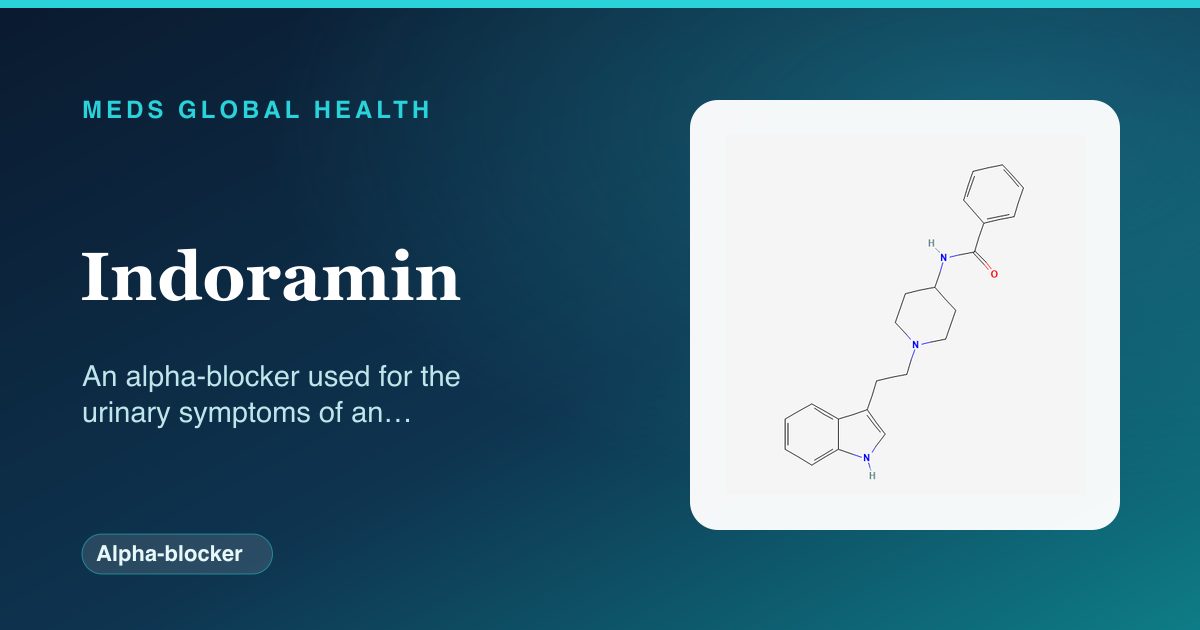
What it is
Indoramin is an older medicine in the alpha-blocker family. It is used mainly to relieve the urinary symptoms of an enlarged prostate gland (benign prostatic hyperplasia), such as a weak stream, hesitancy and needing to pass urine often, and it can also be used to help lower high blood pressure. It works by relaxing muscle in the prostate, bladder neck and the walls of blood vessels. Because it tends to cause drowsiness, it is often taken at night, and newer alpha-blockers are frequently chosen instead.
How it works
Indoramin blocks alpha-1 receptors on muscle in the prostate, bladder neck and blood vessel walls. Relaxing the muscle in the prostate and bladder neck opens up the bladder outflow so urine passes more easily, easing prostate symptoms. Relaxing the muscle in blood vessels widens them and lowers blood pressure, which is why it can also be used in hypertension. The same actions, together with effects on the brain, explain why it often causes drowsiness.
Company & origin
An older alpha-blocker used in the UK for the urinary symptoms of an enlarged prostate and, less commonly, for high blood pressure.
What it treats
Conditions Indoramin is used for
Practical use
How to take Indoramin
General, dose-free guidance — always follow your prescriber's and the leaflet's specific instructions.
- Take it as prescribed, often at night because it can make you drowsy, at about the same time each day.
- Swallow the tablets with a drink of water.
- Avoid or limit alcohol, as it adds to the drowsiness this medicine can cause.
- See how it affects you before driving or operating machinery, as it can make you sleepy.
- Stand up slowly, especially when you first start, to reduce dizziness or light-headedness.
Weighing it up
Advantages & disadvantages of Indoramin
Advantages
- Eases the urinary symptoms of an enlarged prostate and can also help lower high blood pressure.
- A long-established option that can suit people who do not get on with other treatments.
- Works by relaxing muscle in the prostate, bladder neck and blood vessels.
Disadvantages
- Commonly causes drowsiness, which can affect driving and daily activities.
- Can cause dizziness or light-headedness, especially when standing.
- An older medicine often taken more than once a day, with newer alpha-blockers frequently preferred.
Practical use
Good to know
The main thing to expect with indoramin is drowsiness, which is common and can affect driving and concentration, so it is sensible to see how it affects you before driving or operating machinery. Alcohol adds to this sedation, so it is best avoided or kept to a minimum. As with other alpha-blockers, it can cause dizziness or light-headedness, especially when standing up, particularly at the start. It is an older medicine, and many people are now offered newer alpha-blockers that cause less drowsiness, but indoramin can still suit some people. If you are due cataract or other eye surgery, it is worth telling the eye surgeon you take an alpha-blocker.
Who should not take it / use with caution
- It is generally avoided in people with certain heart-failure problems or a history of depression, and used cautiously in Parkinson's disease.
- It should be used with care in older people, who may be more sensitive to drowsiness and dizziness.
- People taking monoamine-oxidase-inhibitor antidepressants should not take it.
Monitoring
- Reviewing whether urinary symptoms or blood pressure have improved.
- Checking how much drowsiness or dizziness you get and whether it is tolerable.
- Watching blood pressure, particularly when standing, in older people.
Side effects
- Drowsiness is common, along with dizziness or light-headedness, especially when standing.
- Dry mouth, a blocked nose, weight gain or, in men, reduced ejaculation can occur.
- Less often, palpitations, depression or fainting.
Key interactions
- Alcohol and other sedating medicines add to its drowsiness.
- Other blood-pressure-lowering medicines can add to dizziness or low blood pressure.
- It must not be combined with monoamine-oxidase-inhibitor antidepressants, which can raise its effects dangerously.
Available as: Tablets taken by mouth.
Answers
Indoramin: frequently asked questions
Why does indoramin make me sleepy?
Drowsiness is a common effect of indoramin. It is often taken at night for this reason, and you should see how it affects you before driving or using machinery.
Can I drink alcohol with it?
It is best to avoid or limit alcohol, as it adds to the drowsiness this medicine can cause.
Is it used for blood pressure as well as the prostate?
Yes. It is mainly used for the urinary symptoms of an enlarged prostate but can also be used, less commonly, to help lower high blood pressure.
Why might I be offered a newer alpha-blocker instead?
Indoramin is an older medicine that often causes drowsiness and is taken more than once a day, so newer alpha-blockers that cause less sedation are frequently preferred.
Does it cause dizziness when I stand up?
It can cause dizziness or light-headedness, especially when standing and particularly at the start, so rise slowly until you know how it affects you.
The wider class
About Alpha-blocker
Indoramin belongs to the alpha-blocker class. For how the class as a whole works, its shared safety principles and monitoring, see the full guide.
Browse by body system
Authoritative sources
- BNF
- NICE CKS
Building a medicines information resource?
We create evidence-led, dose-free drug and formulary references for teams.