A fast-acting mealtime insulin
Insulin glulisine
A fast-acting mealtime insulin that lowers the rise in blood sugar after eating, used in type 1 and type 2 diabetes.
What is Insulin glulisine?
Insulin glulisine is a rapid-acting insulin, a man-made version of the hormone insulin designed to work quickly. It is taken around mealtimes to control the rise in blood sugar that comes from eating, and is used in both type 1 and type 2 diabetes. It starts working soon after injection, so it is given just before or with a meal. The main risk, as with all insulins, is blood sugar dropping too low (a hypo), so people are taught to recognise and treat this. It is given by injection under the skin, and the amount is matched to meals and blood sugar levels by the diabetes team.
Education and reference only. This is a plain-language guide to Insulin glulisine — it deliberately contains no doses. Doses depend on the person, the brand and the reason for treatment, and belong with your prescriber. Always check the BNF, the product labelling (SmPC) and follow medical advice.
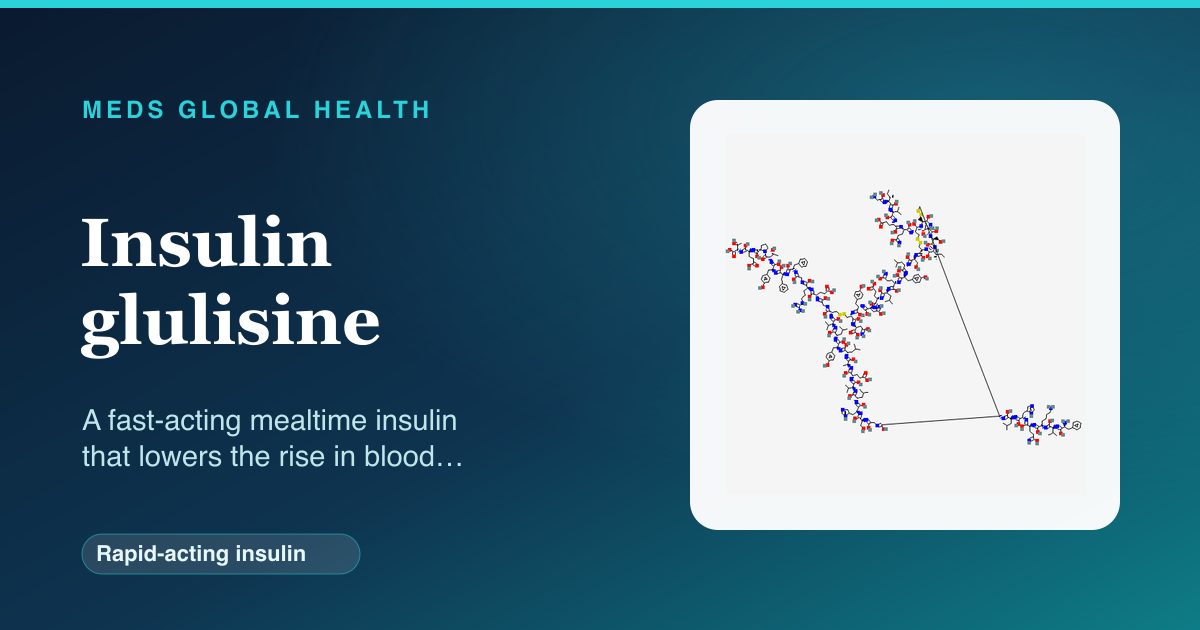
What it is
Insulin glulisine is a rapid-acting insulin analogue, meaning it is a slightly altered form of human insulin that the body absorbs and uses quickly. It is a mealtime insulin: it is used to deal with the surge in blood sugar that happens when you eat. People with type 1 diabetes use it as part of their daily insulin alongside a longer-acting insulin, and some people with type 2 diabetes use it too when mealtime control is needed. It is given as an injection under the skin, usually with a pen device, and can also be used in an insulin pump under specialist care.
How it works
Insulin is the hormone that lets the body's cells take in sugar from the blood for energy and keeps blood sugar from rising too high after food. In diabetes, the body either does not make enough insulin or cannot use it well. Insulin glulisine replaces that mealtime insulin: because it acts quickly and for a fairly short time, it matches the rise in blood sugar that follows eating, then tails off. This is why it is given close to a meal, and why it is usually combined with a longer-acting insulin that covers blood sugar between meals and overnight.
Company & origin
Originated / developed by: Sanofi.
A rapid-acting insulin used in the UK to control blood sugar around meals in people with type 1 or type 2 diabetes.
What it treats
Conditions Insulin glulisine is used for
Practical use
How to take Insulin glulisine
General, dose-free guidance — always follow your prescriber's and the leaflet's specific instructions.
- Inject it under the skin just before, or with, your meal as your diabetes team advises.
- Always carry a fast-acting sugar source and learn the early signs of a hypo so you can treat it quickly.
- Do not skip or delay the meal after taking it, as this can make your blood sugar drop too low.
- Rotate your injection sites to keep the skin healthy and the insulin absorbing reliably.
- Check your blood sugar as advised and adjust with your team rather than changing things alone.
Weighing it up
Advantages & disadvantages of Insulin glulisine
Advantages
- Works quickly to control the rise in blood sugar that comes from eating.
- Its short, fast action makes it well suited to dosing around individual meals.
- Can be used in both type 1 and type 2 diabetes, and in an insulin pump under specialist care.
Disadvantages
- Like all insulins, it can cause blood sugar to drop too low (a hypo) if meals, activity or amounts are mismatched.
- It must be timed closely with meals, which takes planning and learning.
- It is given by injection and needs regular blood sugar checks.
Practical use
Good to know
The most important thing to understand is timing: because it works quickly, insulin glulisine is given just before, or sometimes right after, a meal so that it matches the food you eat. The main risk is a hypo, where blood sugar drops too low, causing shakiness, sweating, hunger or confusion; learning to recognise and quickly treat this, and always carrying a fast sugar source, is essential. Skipping or delaying a meal after taking it, drinking alcohol, or unusual exercise can all make a hypo more likely. Rotating injection sites helps avoid lumpy skin that can change how insulin is absorbed. The amount you need is personal and matched to your meals, activity and blood sugar readings, and your diabetes team will help you adjust it.
Who should not take it / use with caution
- People who have had a serious allergic reaction to insulin glulisine or its ingredients should not use it.
- It must not be used when blood sugar is already too low (during a hypo).
- It is used with extra care and closer monitoring in pregnancy, illness, and around exercise, guided by the diabetes team.
Monitoring
- Regular blood sugar checks to guide how much is needed with each meal.
- Reviewing longer-term blood sugar control, often with an HbA1c blood test.
- Checking injection sites and reviewing any hypos to adjust the plan safely.
Side effects
- Low blood sugar (a hypo), with shakiness, sweating, hunger, dizziness or confusion.
- Redness, itching or lumpy skin at injection sites, helped by rotating where you inject.
- Weight gain in some people over time.
- Rarely, a serious allergic reaction, which needs urgent medical attention.
Key interactions
- Other diabetes medicines can add to the blood-sugar-lowering effect, raising the risk of a hypo.
- Alcohol can make blood sugar harder to predict and increase the chance of a hypo.
- Some medicines, such as certain steroids, can raise blood sugar, so amounts may need adjusting.
Available as: A solution for injection under the skin, usually given by pen, and usable in an insulin pump.
Answers
Insulin glulisine: frequently asked questions
What is insulin glulisine used for?
It is a fast-acting mealtime insulin used to control the rise in blood sugar after eating, in both type 1 and type 2 diabetes.
When should I inject it?
Because it works quickly, it is given just before or with a meal, so it matches the food you eat; your team will guide the exact timing.
What is a hypo and how do I treat it?
A hypo is when blood sugar drops too low, causing shakiness, sweating, hunger or confusion; treat it quickly with a fast sugar source and follow your team's advice.
Why is it used with another insulin?
It only covers mealtimes, so people with type 1 diabetes usually also use a longer-acting insulin to keep blood sugar steady between meals and overnight.
Does it cause weight gain?
Some people gain a little weight on insulin; balancing food and activity and working with your diabetes team can help manage this.
Authoritative sources
- BNF
- NICE CKS
Building a medicines information resource?
We create evidence-led, dose-free drug and formulary references for teams.