A prokinetic for functional dyspepsia (indigestion)
Itopride
A gut-motility medicine used to relieve the symptoms of functional dyspepsia, such as fullness, bloating and early satiety after eating.
What is Itopride?
Itopride is a prokinetic medicine used for functional dyspepsia, a kind of persistent indigestion where the stomach feels uncomfortably full, bloated or slow to empty even though no ulcer or other cause is found. It works by helping the muscles of the stomach move food along more normally, easing symptoms such as fullness, bloating, early satiety and nausea. It is usually taken by mouth before meals. It is generally well tolerated, with the most common side effects being mild stomach upset, diarrhoea or headache.
Education and reference only. This is a plain-language guide to Itopride — it deliberately contains no doses. Doses depend on the person, the brand and the reason for treatment, and belong with your prescriber. Always check the BNF, the product labelling (SmPC) and follow medical advice.
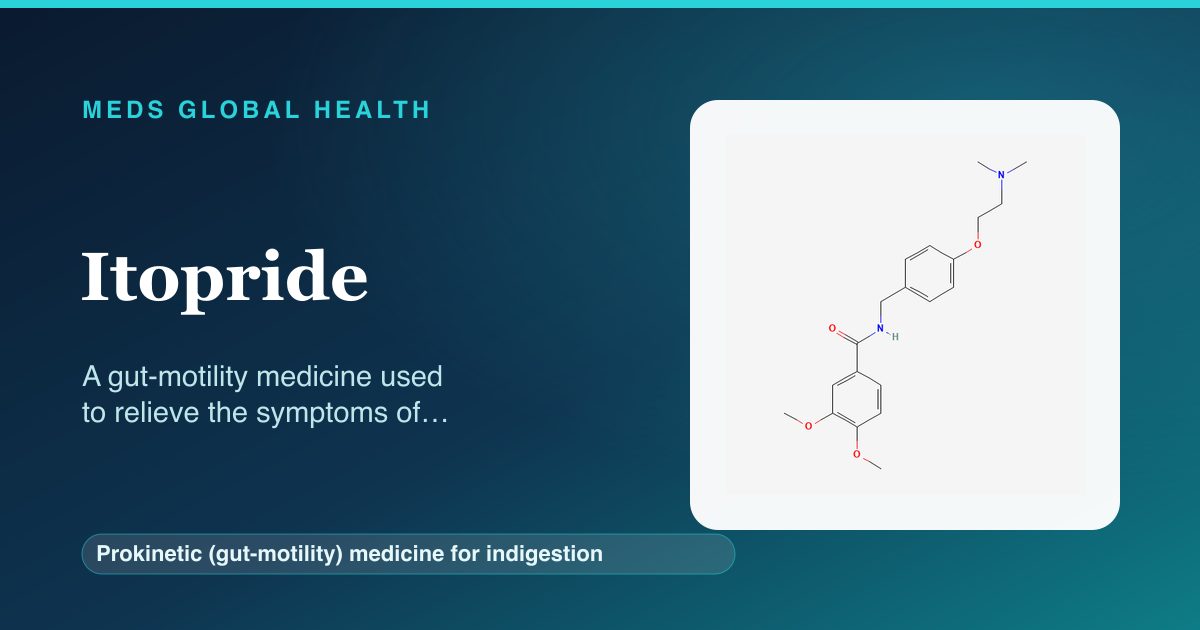
What it is
Itopride is a prokinetic, meaning a medicine that helps the stomach and gut move their contents along more effectively. It is used mainly for functional dyspepsia, a common condition where people have ongoing indigestion symptoms — feeling full quickly, bloating, discomfort in the upper tummy or nausea after eating — without an ulcer or other clear cause being found. By improving how the stomach empties, it aims to reduce these symptoms. It is taken by mouth as a tablet, usually before food, and is generally regarded as a well-tolerated option.
How it works
Itopride encourages the muscles of the stomach to contract and move food onward, helping the stomach empty more normally. It does this in two complementary ways: it increases the activity of acetylcholine, a chemical that drives gut muscle movement, and it blocks dopamine signals that can slow the gut down. The result is that food does not sit in the stomach as long, which eases the feelings of fullness, bloating and discomfort that come with functional dyspepsia. Because it acts on the timing of meals, it is taken before food so it is working while you eat.
Company & origin
A medicine used for functional dyspepsia (persistent indigestion not caused by an ulcer), taken before meals to help the stomach empty.
Practical use
How to take Itopride
General, dose-free guidance — always follow your prescriber's and the leaflet's specific instructions.
- Take it by mouth before meals, as this is when it works best to help the stomach empty.
- Swallow the tablet with water and take it at evenly spaced times across the day as advised.
- Use it for the length of time your prescriber recommends rather than indefinitely without review.
- Tell your prescriber if symptoms do not improve, as further checks may be needed to look for another cause.
- Combine it with eating smaller, regular meals and avoiding triggers that worsen your indigestion.
Weighing it up
Advantages & disadvantages of Itopride
Advantages
- Eases the uncomfortable fullness, bloating and early satiety of functional dyspepsia.
- Generally well tolerated, with mostly mild side effects.
- Taken by mouth before meals, which fits naturally around eating.
Disadvantages
- Treats symptoms rather than curing the underlying tendency, so symptoms can return when stopped.
- Can cause mild stomach upset, diarrhoea or headache in some people.
- Rarely raises the hormone prolactin, which can cause breast tenderness.
Practical use
Good to know
The most useful thing to know about itopride is the timing: it is usually taken before meals so that it is helping the stomach empty while food is going through. It is generally well tolerated, and most people who get side effects notice only mild ones such as a slightly upset stomach, looser stools or a headache, which often settle. Because it gently affects dopamine signalling, in rare cases it can cause a small rise in a hormone called prolactin, which may lead to breast tenderness; this is uncommon and should be mentioned to your prescriber if it happens. It treats symptoms rather than curing the underlying tendency to indigestion, so symptoms can return when it is stopped, and lifestyle measures such as smaller, regular meals can help alongside it.
Who should not take it / use with caution
- People who have had a serious allergic reaction to itopride should not take it.
- It is not suitable where increasing gut movement could be harmful, such as a suspected blockage or bleeding in the gut.
- It is used with care in pregnancy and breastfeeding, only on medical advice.
Monitoring
- Reviewing whether your indigestion symptoms are improving.
- Checking that symptoms are not pointing to another cause that needs investigating.
- Reviewing for uncommon effects such as breast tenderness if they occur.
Side effects
- Mild stomach upset, diarrhoea or tummy pain.
- Headache or dizziness in some people.
- Rarely, a rise in the hormone prolactin, which can cause breast tenderness or discharge.
Key interactions
- Medicines that strongly slow the gut, such as some painkillers and antispasmodics, can work against it.
- Tell your prescriber about all your medicines, as combinations affecting the gut can change how it feels.
- It is generally taken before food, so follow advice on timing around other medicines.
Available as: Tablets taken by mouth.
Answers
Itopride: frequently asked questions
What is itopride used for?
It is used for functional dyspepsia — a persistent indigestion with fullness, bloating and discomfort after eating that has no ulcer or other clear cause — by helping the stomach empty more normally.
Why do I take it before meals?
Itopride helps the stomach move food along, so taking it before meals means it is working while you eat, which is when symptoms tend to arise.
Is it well tolerated?
Yes, it is generally well tolerated; most side effects are mild, such as a slightly upset stomach, looser stools or a headache.
Will my symptoms come back if I stop it?
It eases symptoms rather than curing the underlying tendency to indigestion, so symptoms can return after stopping; lifestyle measures can help too.
Can it affect my hormones?
Rarely it can cause a small rise in a hormone called prolactin, which may lead to breast tenderness; mention this to your prescriber if it happens.
Authoritative sources
- BNF
- NICE CKS
Building a medicines information resource?
We create evidence-led, dose-free drug and formulary references for teams.