A CFTR potentiator for cystic fibrosis
Ivacaftor
A CFTR potentiator that helps the faulty CFTR protein work better in people with certain cystic fibrosis gene changes.
What is Ivacaftor?
Ivacaftor is a cystic fibrosis medicine known as a potentiator, which helps the faulty CFTR protein on the surface of cells work better. It only suits people whose cystic fibrosis is caused by specific gene changes, so a genetic test decides whether it is right for you. It is taken by mouth with fatty food, which helps the body absorb it. It can affect the liver, so blood tests are done, and children also have eye checks for cataracts. It is a specialist medicine started and overseen by a cystic fibrosis team.
Education and reference only. This is a plain-language guide to Ivacaftor — it deliberately contains no doses. Doses depend on the person, the brand and the reason for treatment, and belong with your prescriber. Always check the BNF, the product labelling (SmPC) and follow medical advice.
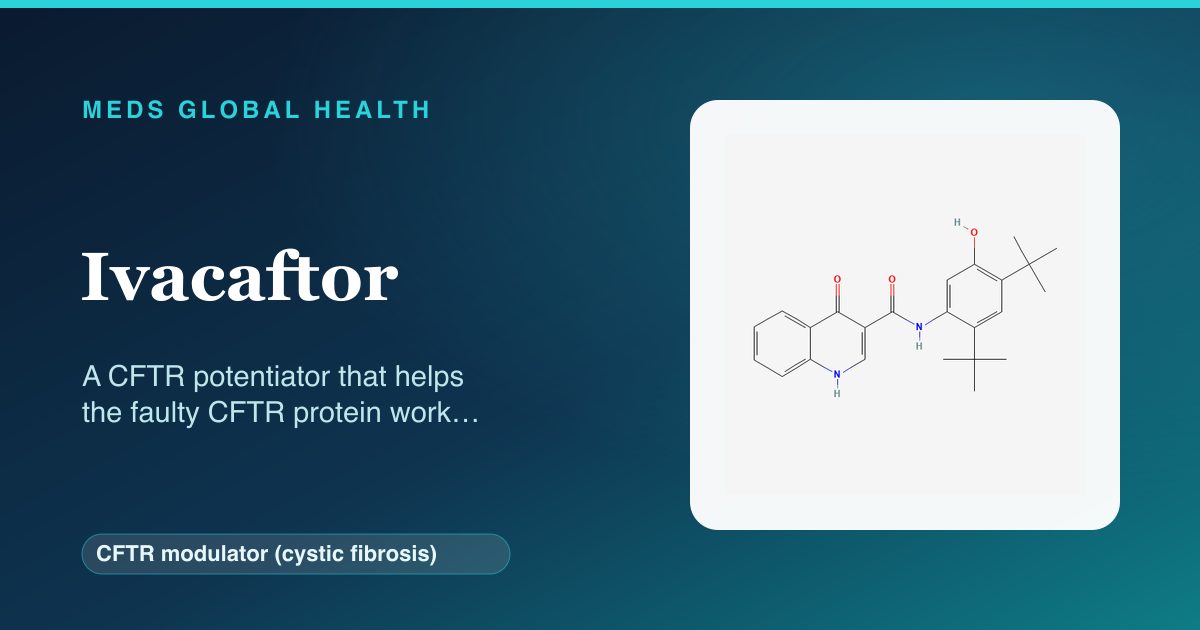
What it is
Ivacaftor is a CFTR modulator used to treat cystic fibrosis, a lifelong inherited condition in which a faulty protein called CFTR leads to thick, sticky mucus in the lungs and digestive system. It is described as a potentiator because it helps CFTR proteins that have reached the cell surface to open properly and let salt and water move as they should. It only works for cystic fibrosis caused by particular gene changes, so genetic testing is needed before it is prescribed. It is taken as a tablet or granules by mouth and is started by a specialist cystic fibrosis team.
How it works
In cystic fibrosis the CFTR protein, which acts like a gate controlling the flow of salt and water across cell surfaces, does not work properly, so mucus becomes thick and sticky. Ivacaftor is a potentiator: where some CFTR protein has reached the cell surface but stays shut, it helps that gate open more of the time. This lets salt and water move more normally, which can thin the mucus, improve lung function and reduce flare-ups. Because it acts on protein that has reached the surface, it only helps people with the specific gene changes that allow this, which is why a genetic test is essential.
Company & origin
Originated / developed by: Vertex Pharmaceuticals.
A targeted cystic fibrosis medicine used in the UK for people with specific changes (mutations) in the CFTR gene.
Practical use
How to take Ivacaftor
General, dose-free guidance — always follow your prescriber's and the leaflet's specific instructions.
- Take it by mouth with food that contains fat, such as a meal or snack with butter, cheese, eggs, full-fat milk, yoghurt or nuts, as this helps your body absorb it.
- Take your doses spaced through the day as your cystic fibrosis team directs, and try to keep to the same routine each day.
- Avoid grapefruit and grapefruit juice while taking it, as they can change the amount in your body.
- Do not take St John's wort, and check with your team or pharmacist before starting any new medicine or supplement.
- Carry on with the rest of your cystic fibrosis care, such as physiotherapy and other treatments, alongside it.
- If you miss a dose, follow the advice you were given rather than doubling up, and ask your team if you are unsure.
Weighing it up
Advantages & disadvantages of Ivacaftor
Advantages
- Targets the underlying protein problem in cystic fibrosis, rather than only treating symptoms, for people with suitable gene changes.
- Can improve lung function, reduce flare-ups and help with weight and wellbeing in those it suits.
- Taken by mouth as a tablet or granules, so it fits alongside other cystic fibrosis treatments.
Disadvantages
- Only works for cystic fibrosis caused by specific gene changes, so it is not suitable for everyone.
- Can affect the liver and, in children, the eyes, so regular blood tests and eye checks are needed.
- Interacts with many medicines, grapefruit and St John's wort, so timing and combinations must be checked carefully.
Practical use
Good to know
Ivacaftor is a gene-change-specific medicine, so a genetic test decides whether it can help you — it does not work for every type of cystic fibrosis. It needs to be taken with fatty food (such as a meal with butter, cheese, eggs, full-fat milk or nuts), because this greatly increases how much your body absorbs. It can affect the liver, so blood tests are taken before and during treatment, and children have regular eye checks because cataracts have been seen in young people taking it. It interacts with many other medicines and with grapefruit and St John's wort, so always tell your cystic fibrosis team and pharmacist about everything you take. It is started and supervised by a specialist team and does not replace other parts of your cystic fibrosis care, such as physiotherapy and other inhaled treatments.
Who should not take it / use with caution
- People whose cystic fibrosis is not caused by a gene change that ivacaftor can act on, as it will not help them.
- Anyone who has had a serious allergic reaction to ivacaftor.
- It is used with extra care and closer monitoring in people with existing liver problems, under specialist guidance.
Monitoring
- Liver blood tests before starting and regularly during treatment.
- Eye (cataract) checks in children and young people.
- Reviewing lung function, weight, flare-ups and overall response with the cystic fibrosis team.
Side effects
- Headache, dizziness, tummy pain, diarrhoea and a blocked or runny nose are among the more common effects.
- Changes in liver blood tests can occur, which is why the liver is monitored.
- Rash can happen; rarely, cataracts have been seen in children, which is why their eyes are checked.
Key interactions
- Medicines and foods that affect the liver enzymes that break it down (such as some antibiotics, antifungals, grapefruit and St John's wort) can raise or lower its levels.
- It can affect the levels of some other medicines, so your team may adjust treatment.
- Always tell your cystic fibrosis team and pharmacist about all medicines, supplements and herbal products you take.
Available as: Tablets and granules taken by mouth with fatty food.
Answers
Ivacaftor: frequently asked questions
How do I know if ivacaftor will work for me?
It only helps cystic fibrosis caused by specific gene changes, so a genetic test is done to see whether it is suitable for you.
Why must I take it with fatty food?
Fat greatly increases how much of the medicine your body absorbs, so it should always be taken with a meal or snack containing fat.
Can I drink grapefruit juice while taking it?
No, avoid grapefruit and grapefruit juice, as they can change the amount of medicine in your body.
Why do children need eye checks?
Cataracts have been seen in some children taking it, so regular eye checks are arranged to pick up any changes early.
Does it replace my other cystic fibrosis treatments?
No, it works on the underlying protein problem but you should keep up your usual care, such as physiotherapy and other inhaled treatments.
Authoritative sources
- BNF
- NICE CKS
Building a medicines information resource?
We create evidence-led, dose-free drug and formulary references for teams.