A targeted tablet for cancers with an IDH1 change
Ivosidenib
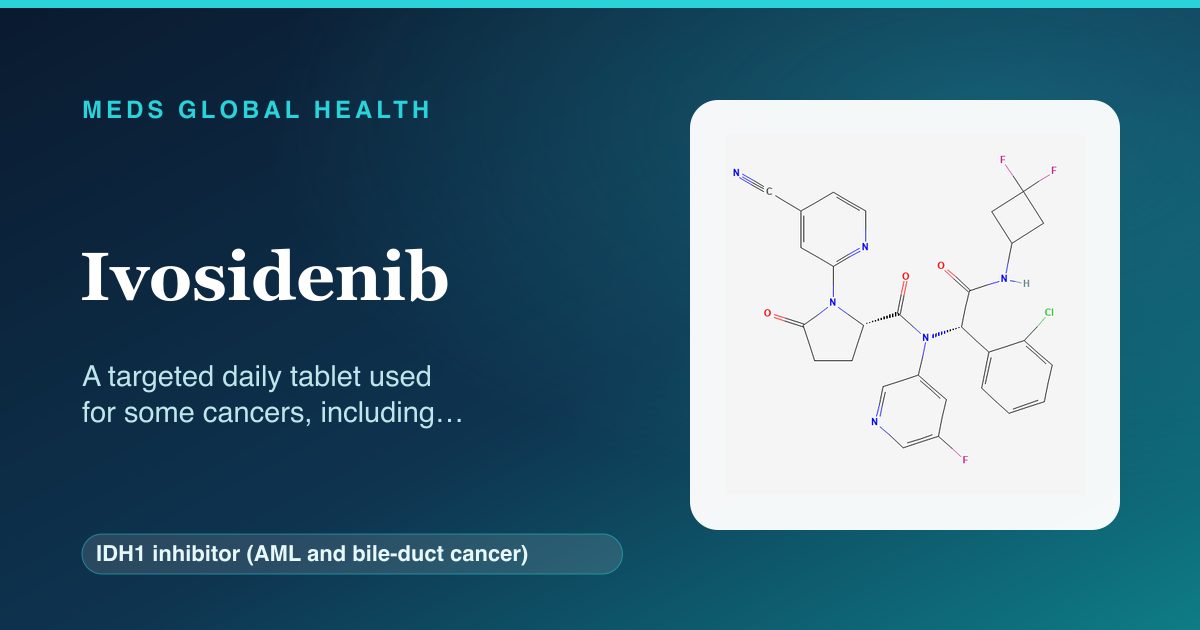
A targeted daily tablet used for some cancers, including acute myeloid leukaemia and bile-duct cancer, that have an IDH1 change.
What is Ivosidenib?
Ivosidenib is a specialist cancer tablet used for certain cancers that carry a particular change (mutation) in a gene called IDH1, including some types of acute myeloid leukaemia (a blood cancer) and cholangiocarcinoma (cancer of the bile ducts). It works by blocking the faulty IDH1 protein, helping cancer cells behave more normally. Important safety points are differentiation syndrome (a reaction as leukaemia cells mature, causing fever, breathlessness and fluid build-up), effects on the heart's rhythm (the QT interval), and a rare nerve condition called Guillain-Barre syndrome. It can also harm an unborn baby, so reliable contraception is essential.
Education and reference only. This is a plain-language guide to Ivosidenib — it deliberately contains no doses. Doses depend on the person, the brand and the reason for treatment, and belong with your prescriber. Always check the BNF, the product labelling (SmPC) and follow medical advice.
What it is
Ivosidenib is a targeted cancer medicine, taken by mouth, used for cancers that carry a specific change in a gene called IDH1. This includes some types of acute myeloid leukaemia, a cancer of the blood, and cholangiocarcinoma, a cancer of the bile ducts. A test is done first to confirm the IDH1 change before treatment is offered. It is prescribed and supervised by a specialist cancer team, with regular blood tests and heart checks. It is taken as a daily tablet, usually for as long as it keeps helping and is tolerated.
How it works
A change in the IDH1 gene makes a faulty protein that produces an abnormal substance, which keeps cancer cells stuck in an immature, fast-growing state. Ivosidenib blocks this faulty IDH1 protein, lowering that abnormal substance and allowing the cancer cells to mature and behave more normally, which slows the cancer. In leukaemia, as the cells mature, this maturing process can itself cause a reaction called differentiation syndrome, which is why people are watched closely, especially in the first weeks of treatment.
Company & origin
A specialist oral medicine used in UK cancer centres for some cancers, including acute myeloid leukaemia and bile-duct cancer, that carry a change in the IDH1 gene.
Practical use
How to take Ivosidenib
General, dose-free guidance — always follow your prescriber's and the leaflet's specific instructions.
- Take it by mouth once a day, at about the same time, as your specialist team advises; follow their guidance about food.
- Report fever, breathlessness, a cough, swelling or sudden weight gain promptly, as these can be signs of differentiation syndrome.
- Tell your team about any heart-rhythm problems and other medicines that can affect the heart's rhythm.
- Report any new numbness, tingling or weakness straight away, as this can rarely signal a nerve problem.
- Use reliable contraception during treatment and for as long as your team advises, as it can harm an unborn baby.
Weighing it up
Advantages & disadvantages of Ivosidenib
Advantages
- A targeted oral option for cancers that carry a specific IDH1 change.
- Helps cancer cells mature and behave more normally rather than acting like broad chemotherapy.
- Taken as a once-daily tablet at home, with specialist monitoring.
Disadvantages
- Can cause differentiation syndrome, which needs prompt treatment, especially early on.
- Can affect the heart's rhythm (the QT interval), needing heart and blood-salt monitoring.
- Rarely can cause a serious nerve condition (Guillain-Barre syndrome) and can harm an unborn baby.
Practical use
Good to know
A few safety points matter with ivosidenib. In leukaemia, it can cause differentiation syndrome as the cancer cells mature: symptoms include fever, breathlessness, a cough, swelling and weight gain, and this needs prompt treatment, so any of these should be reported quickly, especially early on. It can also affect the heart's electrical rhythm by lengthening the QT interval, so the heart's tracing and blood salts such as potassium are checked, and care is taken with other medicines that do the same. Rarely, it can cause a nerve condition called Guillain-Barre syndrome, with numbness, weakness or tingling, which should be reported urgently. It can harm an unborn baby, so reliable contraception is essential during treatment and for a time afterwards. Tell your team about all your other medicines, as some can change how ivosidenib works.
Who should not take it / use with caution
- People who have had a serious allergic reaction to ivosidenib should not take it.
- It is avoided in pregnancy because it can harm the baby, and it is avoided while breastfeeding.
- It is used with great caution in people with heart-rhythm problems or those on other medicines that affect the QT interval.
Monitoring
- Watching for differentiation syndrome, especially in the first weeks of treatment.
- Heart tracing (ECG) and blood salts such as potassium, to watch the QT interval.
- Regular blood tests to check blood counts and general health, and reviewing how the cancer responds.
Side effects
- Differentiation syndrome, with fever, breathlessness, cough, swelling and weight gain, which needs prompt attention.
- Tiredness, nausea, diarrhoea, joint or muscle aches and rash.
- Changes in the heart's rhythm (the QT interval), which monitoring is designed to catch.
- Rarely, a nerve condition (Guillain-Barre syndrome), with numbness, tingling or weakness.
Key interactions
- Other medicines that affect the heart's QT interval can add to the risk, so these are reviewed carefully.
- Some medicines can raise or lower ivosidenib levels, so a full medicines list is important.
- Tell your team about all your medicines, including anything from a pharmacy or herbal products.
Available as: Tablets taken by mouth.
Answers
Ivosidenib: frequently asked questions
What is ivosidenib used for?
It is used for some cancers that carry a change in the IDH1 gene, including some types of acute myeloid leukaemia and bile-duct cancer, confirmed by a test before treatment.
What is differentiation syndrome?
It is a reaction in leukaemia as the cancer cells mature, causing fever, breathlessness, cough, swelling and weight gain; it needs prompt treatment, so report these symptoms quickly.
Why does it affect the heart?
It can lengthen the heart's QT interval, so your heart tracing and blood salts are checked and other QT-affecting medicines are reviewed.
What is the nerve risk I should watch for?
Rarely it can cause a condition called Guillain-Barre syndrome, with numbness, tingling or weakness, which should be reported urgently.
Can I take it in pregnancy?
No. It can harm an unborn baby, so it is avoided in pregnancy and reliable contraception is needed during treatment and for a time afterwards.
Authoritative sources
- BNF
- NICE CKS
Building a medicines information resource?
We create evidence-led, dose-free drug and formulary references for teams.