A general anaesthetic and strong painkiller
Ketamine
An anaesthetic that sends people to sleep for procedures and gives strong pain relief, often used in emergencies, trauma and children.
What is Ketamine?
Ketamine is a general anaesthetic that can send someone to sleep for surgery and also gives strong pain relief. It is given by an anaesthetist or emergency doctor, who monitors breathing, heart rate and consciousness throughout. Unlike many anaesthetics it tends to keep breathing going and supports blood pressure, which makes it useful in emergencies, trauma and in children. As people wake they can have vivid dreams, hallucinations or a strange detached feeling. In much lower amounts it is also used by specialists for some kinds of chronic pain and for treatment-resistant depression. Recreational misuse can seriously damage the bladder.
Education and reference only. This is a plain-language guide to Ketamine — it deliberately contains no doses. Doses depend on the person, the brand and the reason for treatment, and belong with your prescriber. Always check the BNF, the product labelling (SmPC) and follow medical advice.
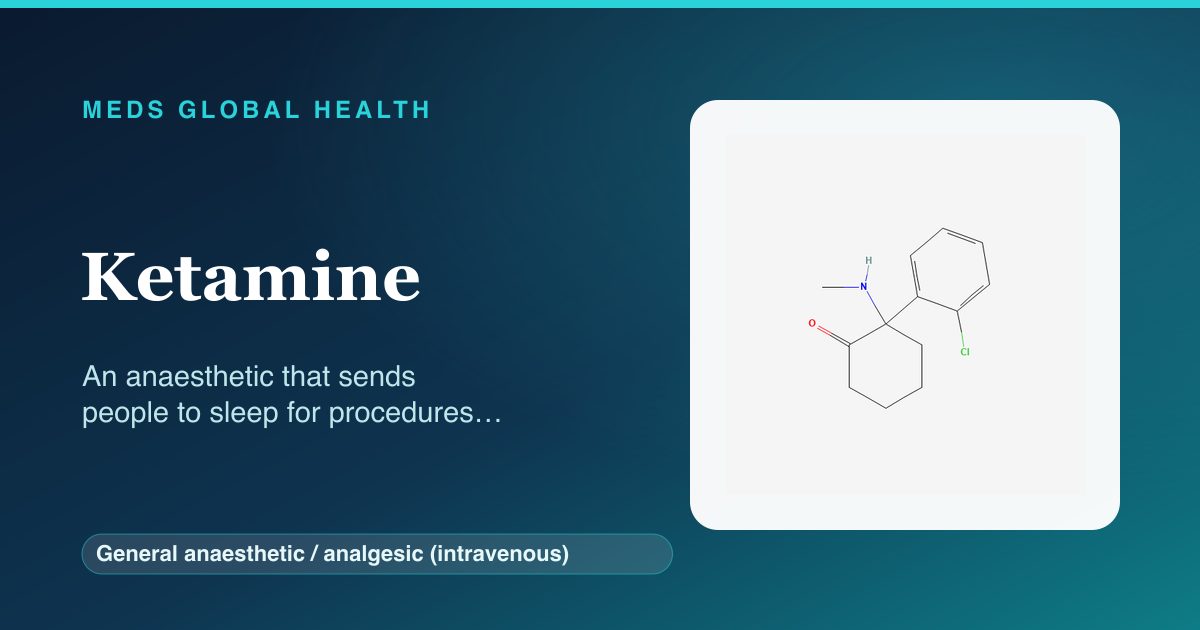
What it is
Ketamine is a general anaesthetic given by injection that both sends people to sleep and provides powerful pain relief. It is always given and supervised by anaesthetists or emergency doctors, who watch breathing, heart rate, blood pressure and how awake the person is. It is especially valued in emergencies and trauma, and for short procedures in children, because it works quickly and tends to preserve breathing and blood pressure better than many other anaesthetics. In much smaller amounts it is also used by pain and mental-health specialists.
How it works
Ketamine produces what is called a dissociative anaesthetic state, where the brain is, in effect, disconnected from incoming sensations so the person feels no pain and is unaware of the procedure. It acts mainly by blocking a particular nerve-signalling system in the brain. Because of how it works, it dulls pain strongly and usually keeps the airway and breathing reflexes and blood pressure more stable than most other anaesthetics, which is why it is chosen for unstable or emergency situations. The same brain effects can cause vivid dreams or hallucinations during recovery.
Company & origin
A long-established anaesthetic used in UK hospitals and emergency care, valued because it provides strong pain relief while largely maintaining breathing and blood pressure.
Practical use
How to take Ketamine
General, dose-free guidance — always follow your prescriber's and the leaflet's specific instructions.
- Ketamine is given by injection or infusion in hospital or emergency care by an anaesthetist or emergency doctor; it is not something you take yourself.
- Tell the team about all your medicines, allergies, and any heart, blood-pressure or mental-health conditions before it is used.
- You will be monitored throughout, and the team will manage your breathing, heart and consciousness as the anaesthetic works.
- Expect to wake in a calm recovery area; tell staff if you feel frightened, see things or feel detached, as these effects can be eased and settle.
- If you are prescribed low-dose ketamine for chronic pain or depression by a specialist, follow their exact instructions and attend the reviews they arrange.
Weighing it up
Advantages & disadvantages of Ketamine
Advantages
- Provides both anaesthesia and strong pain relief, which is valuable in surgery, trauma and painful procedures.
- Tends to maintain breathing and support blood pressure, making it useful in emergencies and in unstable or shocked patients.
- Works quickly and is suitable for short procedures and for children, and has specialist roles in chronic pain and treatment-resistant depression.
Disadvantages
- Can cause vivid dreams, hallucinations and a detached, dissociated feeling on waking, which some people find distressing.
- May briefly raise blood pressure and heart rate and increase saliva.
- Recreational misuse can cause serious bladder damage, tummy pain and memory problems.
Practical use
Good to know
Ketamine is given in a monitored hospital or emergency setting by trained staff, so the dose and your breathing and heart are watched closely. A well-known feature is that, as people wake up, they may have vivid or strange dreams, hallucinations, or a feeling of being detached from their body or surroundings; a calm, quiet recovery area helps, and these effects settle. It can briefly raise blood pressure and heart rate, and increase saliva. Because it largely maintains breathing and blood pressure, it is often the anaesthetic of choice in trauma, emergencies and for children. In much lower amounts, specialist teams use it for certain types of difficult chronic pain and, under close supervision, for treatment-resistant depression. Recreational misuse is a serious concern: repeated use can cause severe, sometimes permanent, bladder damage as well as tummy pain and memory problems.
Who should not take it / use with caution
- It is used with great caution, or avoided, in people whose blood pressure is dangerously high or in some heart conditions, as it can raise blood pressure and heart rate.
- Caution is needed in people with raised pressure in the eye or certain brain conditions, and in some severe psychiatric illnesses.
- As with all anaesthetics, the team must know about any personal or family history of serious reactions to anaesthesia.
Monitoring
- Continuous monitoring of breathing, oxygen levels, heart rate, blood pressure and consciousness while it is given.
- Watching for distressing dreams or hallucinations on waking, with a calm recovery setting to reduce them.
- For low-dose specialist use in pain or depression, regular review of benefit, mood, blood pressure and any bladder symptoms.
Side effects
- Vivid dreams, hallucinations or a detached, dissociated feeling as the anaesthetic wears off.
- A temporary rise in blood pressure and heart rate, increased saliva, and sometimes nausea or vomiting.
- With repeated recreational misuse, serious bladder damage, tummy pain and memory problems.
Key interactions
- Effects can add to those of other sedatives, strong painkillers and alcohol, increasing drowsiness; the anaesthetic team accounts for this.
- Care is taken when combining it with medicines that affect blood pressure or heart rate.
- Specialist teams consider interactions with mental-health medicines when ketamine is used for depression or chronic pain.
Available as: Injection and infusion given in hospital or emergency care; specialist low-dose forms are used in some pain and mental-health services.
Answers
Ketamine: frequently asked questions
Why might ketamine be chosen over other anaesthetics?
It provides strong pain relief and tends to keep breathing going and support blood pressure, which makes it especially useful in emergencies, trauma and for children.
Why did I have strange dreams or feel detached when I woke up?
Vivid dreams, hallucinations or a detached feeling are well-known effects of ketamine as it wears off; they settle, and a calm recovery area helps.
Is ketamine used for depression?
Yes, in much lower amounts and under close specialist supervision, it is used for treatment-resistant depression; this is very different from anaesthetic use.
Is ketamine dangerous if misused?
Yes. Recreational misuse can cause serious and sometimes permanent bladder damage, as well as tummy pain and memory problems.
Will I be awake during my procedure?
No. When used as an anaesthetic it sends you to sleep and prevents pain, with the team monitoring you throughout and managing your recovery.
Authoritative sources
- BNF
- NICE CKS
Building a medicines information resource?
We create evidence-led, dose-free drug and formulary references for teams.