A strong NSAID for short-term moderate to severe pain
Ketorolac
A strong anti-inflammatory painkiller used for short-term moderate to severe pain, often after surgery, in short courses only.
What is Ketorolac?
Ketorolac is a strong anti-inflammatory painkiller, a type of NSAID, used for short-term moderate to severe pain, most often after an operation. It works by reducing the body chemicals that cause pain and inflammation and can be given by injection or by mouth. A key point is that it is only used for short courses, because using it for longer or at higher amounts raises the risk of serious side effects such as stomach bleeding and kidney problems. It is used with care, and avoided in some people, and is not a medicine for long-term or everyday pain.
Education and reference only. This is a plain-language guide to Ketorolac — it deliberately contains no doses. Doses depend on the person, the brand and the reason for treatment, and belong with your prescriber. Always check the BNF, the product labelling (SmPC) and follow medical advice.
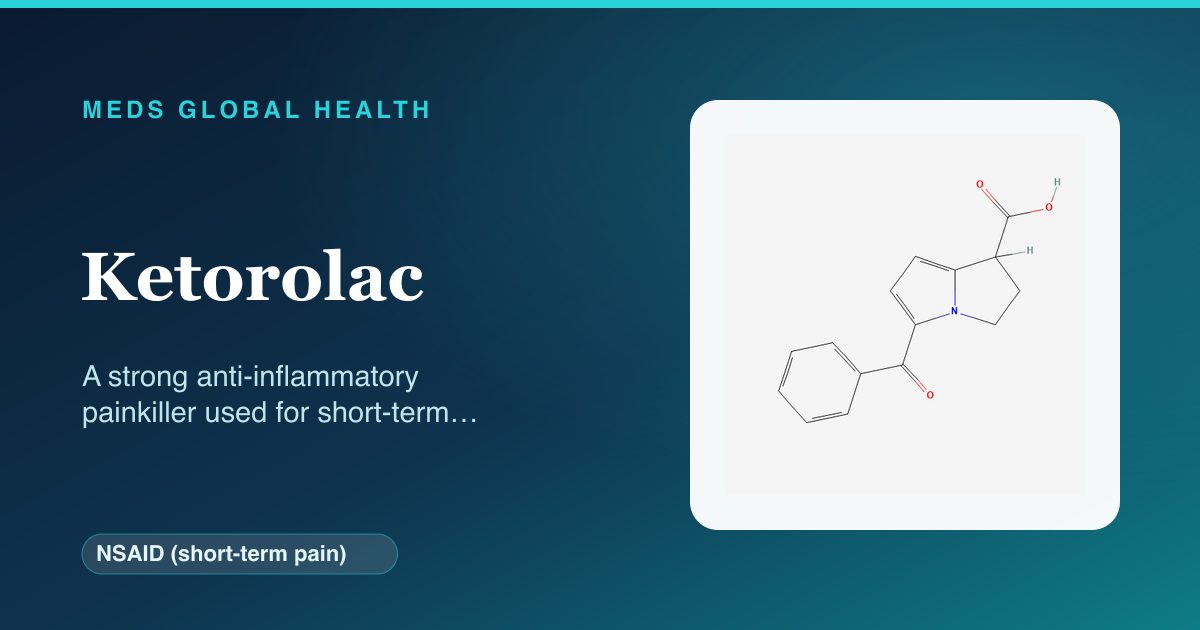
What it is
Ketorolac is a non-steroidal anti-inflammatory drug, or NSAID, but a particularly strong one used for managing moderate to severe pain over a short period, such as after surgery. It can be given as an injection into a muscle or vein in hospital, or as tablets, usually to continue a short course. Although it is in the same family as ibuprofen, it is more powerful and carries a higher risk of side effects, so it is deliberately limited to short-term use. It is not intended for long-term or minor pain, where gentler options are preferred.
How it works
Ketorolac works by blocking enzymes that make prostaglandins, the chemicals that cause pain, swelling and inflammation. By cutting these chemicals it provides strong relief from moderate to severe pain. The same action reduces protective prostaglandins in the stomach lining and affects blood flow in the kidneys, which is why NSAIDs can cause stomach and kidney problems. Because ketorolac is potent and these risks rise the longer it is used, treatment is kept to a short course, and it is often used as part of a wider pain plan that may include other types of painkiller.
Company & origin
A strong anti-inflammatory painkiller used in the UK for short-term moderate to severe pain, often after surgery, in short courses only.
Practical use
How to take Ketorolac
General, dose-free guidance — always follow your prescriber's and the leaflet's specific instructions.
- Use it only for the short course you are given, usually starting in hospital, and do not take it for longer than advised.
- Take any tablets with or after food to help protect your stomach.
- Do not take other anti-inflammatory painkillers at the same time unless told to, as this increases the risk of side effects.
- Tell your team about other medicines and any history of stomach, kidney, heart, bleeding or asthma problems before it is used.
- Seek urgent help if you notice signs of stomach bleeding, such as black stools or vomiting blood, or pass little or no urine.
Weighing it up
Advantages & disadvantages of Ketorolac
Advantages
- A strong, effective painkiller for moderate to severe short-term pain, such as after surgery.
- Can be given by injection or by mouth, which is useful when someone cannot easily take tablets at first.
- Can reduce the need for opioid painkillers as part of a combined pain plan.
Disadvantages
- Only suitable for short courses, as the risk of serious side effects rises with longer use.
- Carries a higher risk of stomach ulcers, bleeding and kidney problems than gentler painkillers.
- Not suitable for long-term or minor pain, and avoided in a number of people.
Practical use
Good to know
The most important thing to understand about ketorolac is that it is for short-term use only: using it for longer than a short course, or at higher amounts, sharply increases the risk of serious side effects such as stomach ulcers and bleeding, kidney problems and effects on the heart. It is a strong painkiller, so it is helpful for severe pain after surgery, but it is deliberately limited and is not a medicine to keep taking for ongoing pain. It is taken with food where possible to protect the stomach, and is often combined with other painkillers so that less of it is needed. Tell your team about other medicines and any history of stomach, kidney, heart, bleeding or asthma problems, as these affect whether it can be used. Report any signs of stomach bleeding, such as black stools or vomiting blood, urgently.
Who should not take it / use with caution
- People with a current or past stomach or duodenal ulcer or bleeding should not take it.
- People with significant kidney problems, or who are dehydrated or at risk of bleeding, should not take it.
- It should not be used around major surgery where bleeding is a concern, or in late pregnancy.
- People who have had asthma, wheezing or an allergic reaction to aspirin or other NSAIDs should not take it.
Monitoring
- Keeping treatment to a short course and reviewing the continued need for it.
- Watching for signs of stomach bleeding and checking kidney function where appropriate.
- Reviewing other medicines that add to the bleeding or kidney risk.
Side effects
- Stomach pain, indigestion or nausea, and, more seriously, stomach ulcers or bleeding.
- Effects on the kidneys, fluid retention and raised blood pressure, especially with longer use.
- Headache, dizziness, drowsiness, and an increased tendency to bleed or bruise.
Key interactions
- It greatly increases the bleeding risk when taken with anticoagulants such as warfarin or with aspirin.
- It can harm the kidneys when combined with certain blood-pressure medicines or water tablets.
- Taking it with other NSAIDs, steroids or certain antidepressants raises the risk of stomach bleeding.
Available as: A solution for injection into a muscle or vein, and tablets taken by mouth.
Answers
Ketorolac: frequently asked questions
What is ketorolac used for?
It is a strong anti-inflammatory painkiller used for short-term moderate to severe pain, most often after surgery.
Why is it only used for a short time?
Using it for longer than a short course, or at higher amounts, sharply increases the risk of serious side effects such as stomach bleeding and kidney problems, so it is deliberately limited.
Is it stronger than ibuprofen?
It is a more powerful NSAID than everyday painkillers like ibuprofen, which is why it is reserved for stronger, short-term pain and used with more caution.
How is it given?
It can be given as an injection into a muscle or vein, often in hospital, or as tablets, usually to continue a short course.
What warning signs should I watch for?
Seek urgent help if you notice black stools, vomiting blood, severe stomach pain, or pass little or no urine, as these can signal serious side effects.
Authoritative sources
- BNF
- NICE CKS
Building a medicines information resource?
We create evidence-led, dose-free drug and formulary references for teams.