An anti-worm medicine also used in some childhood kidney disease
Levamisole
An anti-worm medicine that is also used by specialists to reduce the need for steroids in some childhood kidney disease.
What is Levamisole?
Levamisole is an older medicine that treats certain worm infections and is also used by kidney specialists as an immune-modifier in some children with nephrotic syndrome, where it can help reduce the amount of steroid needed (a 'steroid-sparing' effect). The most important safety point is that it can lower the white blood cell count, sometimes severely (agranulocytosis), which raises the risk of infection, so regular blood monitoring is needed. Other effects include flu-like symptoms and rash. It is used under specialist supervision.
Education and reference only. This is a plain-language guide to Levamisole — it deliberately contains no doses. Doses depend on the person, the brand and the reason for treatment, and belong with your prescriber. Always check the BNF, the product labelling (SmPC) and follow medical advice.
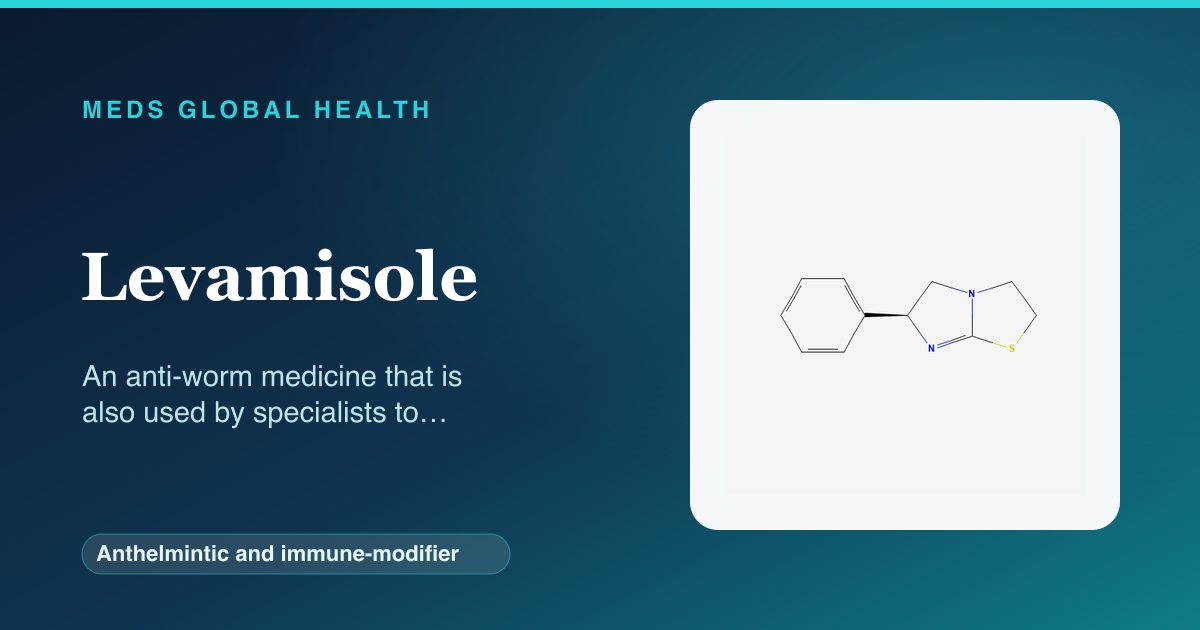
What it is
Levamisole is a long-established medicine with two main roles. Its original use is as an anthelmintic, meaning a medicine that treats infections with certain worms. In the UK it is also used by kidney specialists as an immune-modifier in some children with nephrotic syndrome, a kidney condition in which the kidneys leak protein and the body swells. In that setting it is given to help keep the condition under control while reducing how much steroid medicine a child needs, which is known as a steroid-sparing effect. It is taken by mouth and, in kidney disease, used under specialist supervision with regular blood tests.
How it works
As an anti-worm medicine, levamisole paralyses worms so that the body can pass them out. In nephrotic syndrome, it works differently: it acts as an immune-modifier, gently adjusting the activity of the immune system, which is thought to help keep the kidney condition in remission. By helping maintain remission, it can allow doctors to use less steroid medicine, which is helpful because long-term steroids have their own side effects in children. Because it can affect the bone marrow where blood cells are made, its effect on white blood cells has to be watched carefully during treatment.
Company & origin
An older medicine used to treat worm infections, and in the UK used by specialists as a steroid-sparing treatment in some children with nephrotic syndrome.
Practical use
How to take Levamisole
General, dose-free guidance — always follow your prescriber's and the leaflet's specific instructions.
- Take it by mouth exactly as your specialist prescribes, including any treatment-free days if you are given that kind of schedule.
- Attend all blood-test appointments, as checking the white blood cell count is an essential safety step.
- Report a sore throat, mouth ulcers, fever or feeling unwell straight away, as these can signal a low white-cell count.
- Do not stop or change the dose without specialist advice, especially when it is being used to reduce steroids.
- Tell the team about other medicines and any history of blood or immune problems.
Weighing it up
Advantages & disadvantages of Levamisole
Advantages
- Effectively treats certain worm infections.
- Can help keep some childhood nephrotic syndrome in remission while reducing the need for steroids.
- Taken by mouth and, when used long term, generally avoids some of the side effects of high-dose steroids.
Disadvantages
- Can lower the white blood cell count, sometimes severely, raising the risk of serious infection.
- Requires regular blood monitoring throughout treatment.
- Can cause flu-like symptoms and skin rashes.
Practical use
Good to know
The most important thing to know about levamisole is that it can lower the white blood cell count, sometimes severely (a condition called agranulocytosis), which makes infections more likely and more serious; for this reason, regular blood tests are an essential part of treatment, and any sign of infection such as a sore throat, mouth ulcers, fever or feeling generally unwell should be reported promptly. Flu-like symptoms, such as aches, tiredness and feeling off-colour, and skin rashes can also occur. When used in childhood nephrotic syndrome, the goal is often to keep the condition stable while using less steroid, so it is part of a wider plan managed by a kidney specialist. It is taken by mouth, and it is important not to miss the blood-monitoring appointments. Tell the team about other medicines and any blood or immune problems.
Who should not take it / use with caution
- People who have had a serious allergic reaction to levamisole should not take it.
- It is used with great caution, or avoided, in people with low blood counts or certain blood or bone-marrow problems.
- It should only be used under specialist supervision, with regular blood monitoring.
Monitoring
- Regular blood tests to check the white blood cell count for signs of a dangerous drop.
- Watching for symptoms of infection, such as sore throat, fever or mouth ulcers.
- Reviewing how well the worm infection or kidney condition is responding, and the steroid dose where relevant.
Side effects
- A fall in white blood cells, sometimes severe (agranulocytosis), which raises infection risk and needs urgent attention.
- Flu-like symptoms such as aches, tiredness and feeling off-colour.
- Skin rash, nausea or stomach upset in some people.
- Rarely, more serious skin or immune reactions, which need prompt medical attention.
Key interactions
- It is used with care alongside other medicines that can affect blood counts or the immune system.
- Drinking alcohol while taking it can cause an unpleasant reaction in some people, so seek advice.
- It can affect the blood-thinning medicine warfarin, so tell the team about all your medicines.
Available as: Tablets taken by mouth.
Answers
Levamisole: frequently asked questions
What is levamisole used for?
It treats certain worm infections and is also used by kidney specialists as an immune-modifier in some children with nephrotic syndrome to help reduce the need for steroids.
Why do I need regular blood tests?
Levamisole can lower the white blood cell count, sometimes severely, which raises the risk of serious infection, so blood monitoring is an essential safety step.
What does 'steroid-sparing' mean?
In childhood nephrotic syndrome, it can help keep the condition in remission while allowing doctors to use less steroid medicine, reducing the side effects of long-term steroids.
What symptoms should I report urgently?
Report a sore throat, mouth ulcers, fever or feeling generally unwell straight away, as these can be signs of a low white blood cell count.
Can it cause flu-like symptoms?
Yes, flu-like symptoms such as aches, tiredness and feeling off-colour, as well as skin rashes, can occur with levamisole.
Authoritative sources
- BNF
- NICE CKS
Building a medicines information resource?
We create evidence-led, dose-free drug and formulary references for teams.