A cooling skin treatment for itching and minor aches
Levomenthol (menthol)
An over-the-counter cooling agent applied to the skin to relieve itching and minor aches, or inhaled to ease a stuffy nose.
What is Levomenthol (menthol)?
Levomenthol is the natural form of menthol, the cooling substance from mint. Applied to the skin it produces a cooling sensation that helps relieve itching (pruritus) and minor muscle or joint aches, and it is also used in inhalant products to ease a blocked-feeling nose. It works by stimulating cold-sensing nerves rather than by treating an underlying disease. It is widely available without prescription and is generally well tolerated when used on intact skin.
Education and reference only. This is a plain-language guide to Levomenthol (menthol) — it deliberately contains no doses. Doses depend on the person, the brand and the reason for treatment, and belong with your prescriber. Always check the BNF, the product labelling (SmPC) and follow medical advice.
What it is
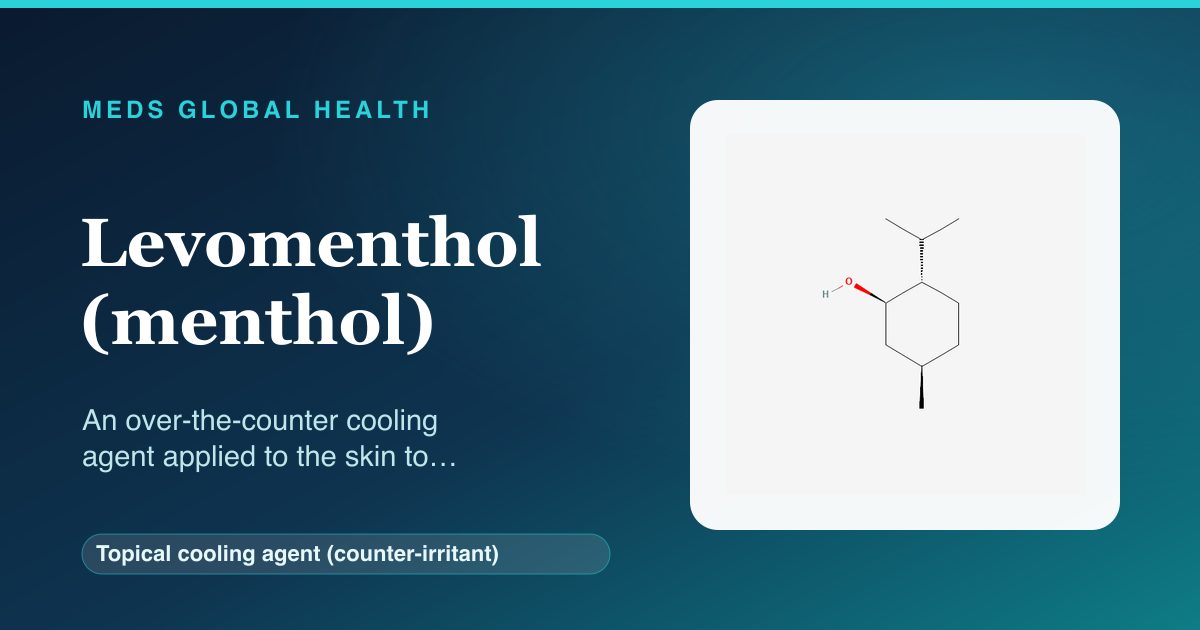
Levomenthol is a purified form of menthol used as a soothing topical and inhalant remedy. On the skin it is found in cooling creams and lotions, and it is sometimes added to aqueous cream to calm itchy skin. As an inhalant it appears in rubs and capsules that release a minty vapour. It is a symptom-relief product rather than a cure, intended to make irritated skin or a congested-feeling nose more comfortable.
How it works
Levomenthol activates cold-sensitive nerve endings in the skin and lining of the nose, producing a cooling sensation. On itchy skin this cooling can distract from and dampen the urge to scratch, giving relief from pruritus. Over aching muscles and joints it acts as a mild counter-irritant, where the cool feeling helps take attention away from the discomfort beneath. As a vapour it gives a refreshing sense of clearer breathing, although it does not actually shrink swollen nasal tissues.
Company & origin
The naturally occurring form of menthol, the cooling compound from mint. It has been used for generations as a soothing skin remedy and is a familiar ingredient in pharmacy products across the UK. It appears in cooling creams and lotions for itchy skin, in aqueous cream preparations, and in inhalant rubs and capsules used to ease a blocked-feeling nose.
Practical use
How to take Levomenthol (menthol)
General, dose-free guidance — always follow your prescriber's and the leaflet's specific instructions.
- Apply cooling creams or lotions thinly to the affected area of intact skin and allow them to absorb.
- Wash your hands after applying, and avoid touching the eyes until they are clean.
- Use inhalant rubs or capsules as directed, for example added to hot (not boiling) water for the vapour, keeping your face a safe distance away.
- Keep it away from broken or weeping skin, the eyes and the inside of the nose.
- Stop and seek advice if the skin becomes more irritated, red or sore after using it.
Weighing it up
Advantages & disadvantages of Levomenthol (menthol)
Advantages
- Gives quick, soothing cooling relief from itching and minor aches.
- Available without a prescription and simple to use at home.
- Generally well tolerated on healthy, intact skin.
Disadvantages
- Relieves symptoms only and does not treat the underlying cause.
- Can sting or irritate if it reaches the eyes, broken skin or mucous membranes.
- The cooling effect is temporary and may need reapplying.
Practical use
Good to know
Levomenthol is for external use or inhalation only and should be kept away from the eyes, broken skin and mucous membranes, where it can sting. The cooling feeling is normal and is not a sign of damage. Inhalant menthol products should not be put directly under the nose of babies and very young children. If itching or aches persist, worsen or come with other symptoms, it is worth getting them checked rather than relying on cooling relief alone.
Who should not take it / use with caution
- Anyone applying it to broken, weeping or infected skin without advice.
- Babies and very young children with inhalant products placed near the face or nostrils.
- Anyone who has had a previous reaction to menthol or mint-containing products.
Monitoring
- No blood tests are needed; judge by whether symptoms are easing.
- Watch the treated skin for increasing redness, soreness or rash.
- Review the cause with a clinician if itching or aches persist despite use.
Side effects
- A cooling or tingling sensation, which is expected and usually harmless.
- Skin redness or mild irritation in some people.
- Stinging if it contacts the eyes or broken skin.
Key interactions
- Few medicine interactions, as very little is absorbed through intact skin.
- Avoid applying other strong topical products to the same area at the same time unless advised.
- Tell a pharmacist about other skin treatments you are using if symptoms are not settling.
Available as: Creams, lotions and gels for the skin, plus inhalant rubs and capsules for the vapour.
Answers
Levomenthol (menthol): frequently asked questions
Why does levomenthol feel cold?
It activates the same nerve endings in the skin that detect cold temperatures, so your brain registers a cooling sensation even though the skin is not actually getting colder. This cooling is what helps soothe itching.
Can I use it on broken or weeping skin?
No, it is meant for intact skin and can sting or irritate if applied to broken, raw or weeping areas. If your skin is broken or infected, get advice before using it.
Is it safe for children?
Cooling skin products can often be used in older children as directed, but inhalant menthol products should not be placed directly under the nose of babies and very young children. Check the product information and ask a pharmacist if unsure.
Does the menthol inhalant clear a blocked nose?
It gives a refreshing sense of clearer breathing but does not actually shrink the swollen tissues causing congestion. It can make a stuffy nose feel more comfortable while a cold settles.
What should I do if it makes my skin worse?
Stop using it, wash the area gently, and seek advice from a pharmacist. Increasing redness, soreness or a rash can mean the skin is irritated by the product and it should not be continued.
Authoritative sources
- BNF
- NICE CKS
Building a medicines information resource?
We create evidence-led, dose-free drug and formulary references for teams.