Eye drops for dry eye disease
Lifitegrast
Eye drops used to treat the signs and symptoms of dry eye disease.
What is Lifitegrast?
Lifitegrast is a prescription eye drop used to treat the signs and symptoms of dry eye disease. It works by calming the inflammation on the surface of the eye that contributes to dryness, irritation and discomfort. The most common side effects are temporary blurred vision just after putting the drops in, eye irritation, and an unusual taste in the mouth. It is used regularly over time rather than as a quick one-off, as the benefit builds up with continued use.
Education and reference only. This is a plain-language guide to Lifitegrast — it deliberately contains no doses. Doses depend on the person, the brand and the reason for treatment, and belong with your prescriber. Always check the BNF, the product labelling (SmPC) and follow medical advice.
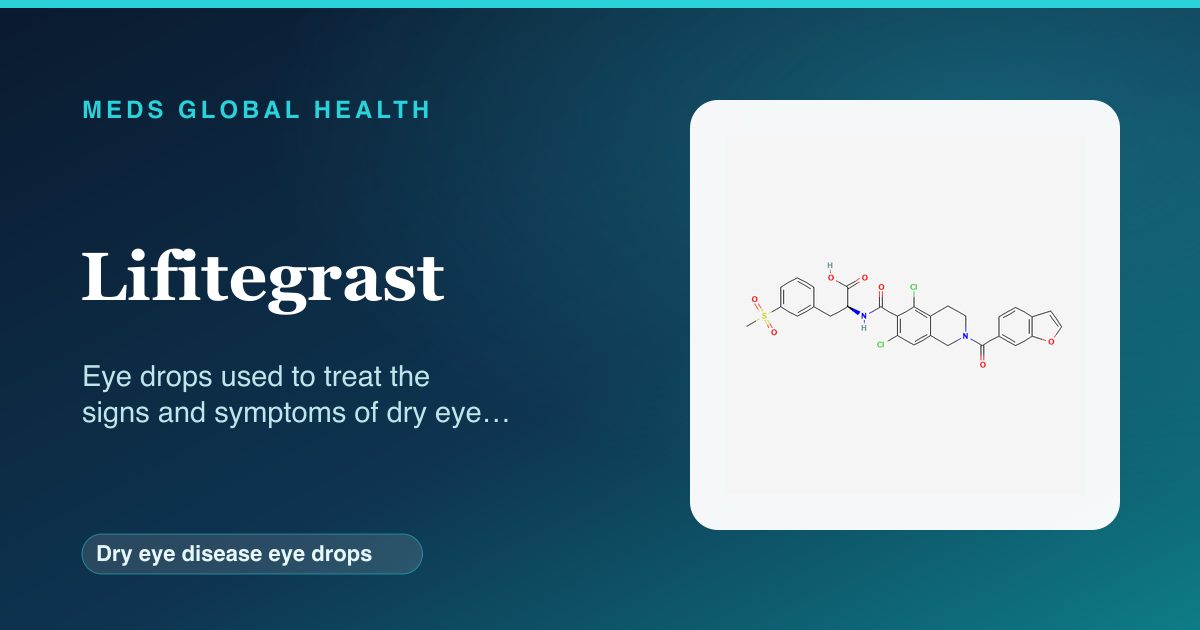
What it is
Lifitegrast is a prescription eye-drop medicine for dry eye disease, a common condition in which the eyes do not stay properly lubricated, leading to dryness, grittiness, irritation and discomfort. Unlike simple lubricating drops that just add moisture, lifitegrast acts on the inflammation that is part of dry eye disease. It is put into the eyes regularly and is used when ordinary tear-substitute drops alone are not enough. It is prescribed by an eye specialist or doctor and used over the longer term to improve the signs and symptoms of the condition.
How it works
Dry eye disease involves not just a lack of tears but also inflammation on the surface of the eye, which keeps the cycle of dryness and irritation going. Lifitegrast works by interfering with a step in this inflammatory process, helping to calm the inflammation that drives the symptoms. By reducing this inflammation over time, it can improve both the symptoms people feel, such as dryness and discomfort, and the signs that an eye specialist can see. Because it works on inflammation rather than simply adding moisture, the benefit builds up with regular use rather than appearing instantly.
Company & origin
A prescription eye-drop treatment used in the UK for the signs and symptoms of dry eye disease.
Practical use
How to take Lifitegrast
General, dose-free guidance — always follow your prescriber's and the leaflet's specific instructions.
- Put the drops into the affected eye or eyes regularly, exactly as your eye specialist or prescriber advises.
- Use it consistently over time, as the benefit for dry eye disease builds up rather than working instantly.
- If you wear contact lenses, take them out before using the drops and wait a short while before putting them back in.
- Avoid touching the dropper tip to your eye or any surface to keep it clean.
- Tell your prescriber if you get troublesome eye irritation or if your symptoms do not improve.
Weighing it up
Advantages & disadvantages of Lifitegrast
Advantages
- Treats the underlying inflammation of dry eye disease, not just the dryness.
- Can improve both the symptoms people feel and the signs an eye specialist can see.
- Applied directly to the eye as drops.
Disadvantages
- Can cause temporary blurred vision just after the drops go in.
- Commonly causes eye irritation and an unusual taste in the mouth.
- Works gradually with regular use rather than giving instant relief.
Practical use
Good to know
It helps to know that lifitegrast treats the inflammation behind dry eye disease rather than just adding moisture, so it is used regularly and the benefit builds up over time rather than working instantly. The most common effects are a brief blurring of vision straight after putting the drops in, some eye irritation, and an unusual or odd taste in the mouth soon after use, which is harmless. If you wear contact lenses, you usually need to take them out before using the drops and wait a short while before putting them back in. As with all eye drops, gently closing the eye and pressing at the inner corner for a moment after instilling can help. Tell your eye specialist if irritation is troublesome or if your symptoms do not improve.
Who should not take it / use with caution
- People who have had a serious allergic reaction to lifitegrast should not use it.
- Contact lens wearers need to remove their lenses before use and wait before putting them back in.
- It is used under the guidance of an eye specialist or prescriber, who will check it is suitable for you.
Monitoring
- Reviewing how well your dry eye symptoms and signs improve over time.
- Checking for troublesome eye irritation or other side effects.
- Reviewing whether to continue treatment based on how you respond.
Side effects
- Temporary blurred vision just after the drops are put in.
- Eye irritation, stinging or redness.
- An unusual or odd taste in the mouth soon after using the drops.
Key interactions
- There are few well-established routine medicine interactions, but tell your prescriber about all your eye drops and medicines.
- If you use other eye drops, leave a gap between them so each works properly, as advised.
- Take contact lenses out before use, as advised, to avoid the lenses being affected.
Available as: Eye drops, often supplied in single-use containers.
Answers
Lifitegrast: frequently asked questions
What is lifitegrast used for?
It is an eye drop used to treat the signs and symptoms of dry eye disease by calming the inflammation on the surface of the eye that drives the dryness and irritation.
How is it different from ordinary lubricating drops?
Lubricating drops simply add moisture, while lifitegrast acts on the inflammation that is part of dry eye disease, so it is used regularly and the benefit builds up over time.
Why does my vision blur after using it?
Temporary blurred vision just after the drops go in is a common, short-lived effect that settles on its own.
Why do I get an odd taste in my mouth?
An unusual taste in the mouth soon after using the drops is a common and harmless side effect of lifitegrast.
Can I wear contact lenses?
You usually need to take your lenses out before using the drops and wait a short while before putting them back in; follow your prescriber's advice.
Authoritative sources
- BNF
- NICE CKS
Building a medicines information resource?
We create evidence-led, dose-free drug and formulary references for teams.