An older lincosamide antibiotic related to clindamycin
Lincomycin
An older lincosamide antibiotic, related to clindamycin, used much less often now because of the risk of serious bowel infection.
What is Lincomycin?
Lincomycin is an older antibiotic from the lincosamide group, closely related to clindamycin. It is used to treat certain serious bacterial infections, but it has largely been superseded by other antibiotics. Its most important risk is antibiotic-associated colitis, a serious bowel inflammation caused by an overgrowth of a bacterium called Clostridioides difficile (C. difficile), which can cause severe, watery or bloody diarrhoea. Any significant diarrhoea during or after treatment must be reported promptly and should not be self-treated. It is a specialist or rarely used medicine in the UK.
Education and reference only. This is a plain-language guide to Lincomycin — it deliberately contains no doses. Doses depend on the person, the brand and the reason for treatment, and belong with your prescriber. Always check the BNF, the product labelling (SmPC) and follow medical advice.
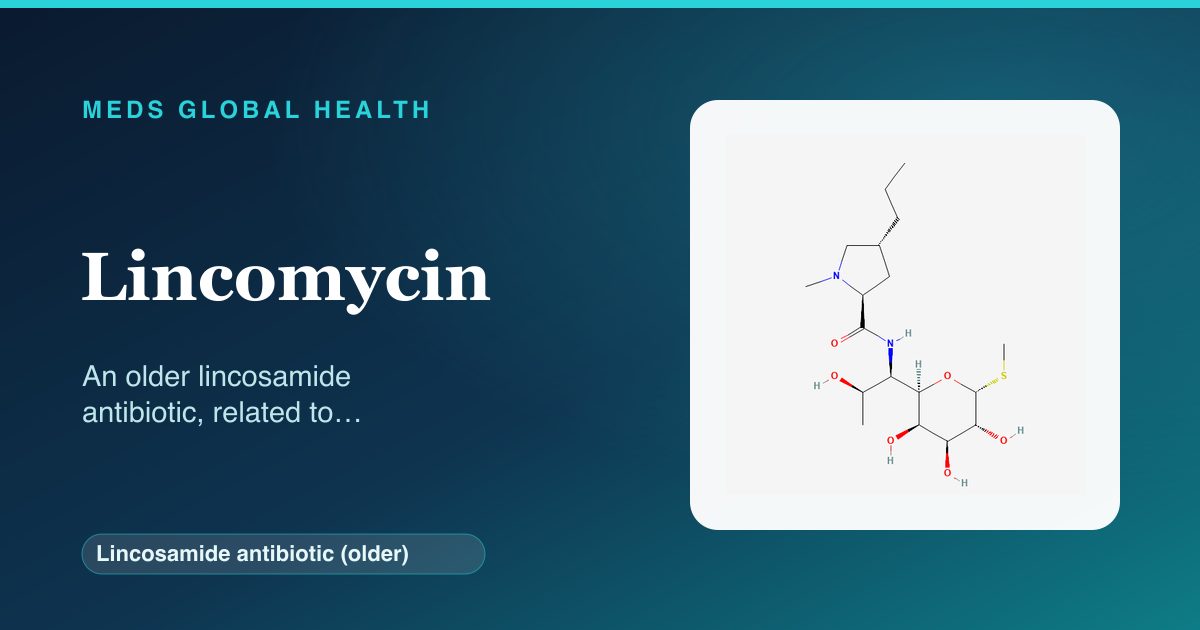
What it is
Lincomycin is a lincosamide antibiotic, the same family as the more commonly used clindamycin. It is used to treat some serious bacterial infections, particularly those caused by certain bacteria, when other antibiotics are not suitable. It is an older medicine that has largely been replaced in everyday use by other antibiotics, so it is now uncommon and tends to be used in specific situations under specialist advice. It can be given by mouth or by injection. Its use is shaped above all by the well-known risk of serious antibiotic-associated bowel infection.
How it works
Lincomycin works by stopping bacteria from making the proteins they need to grow and multiply, which allows the body to clear the infection. Like other antibiotics, it acts on bacteria rather than viruses, so it is no use for colds or flu. A key consequence of how antibiotics like this work is that, as well as targeting harmful bacteria, they disturb the normal balance of bacteria in the gut. This can let a harmful bacterium called C. difficile overgrow and produce toxins, which is why serious diarrhoea is such an important risk with this group of medicines.
Company & origin
An older antibiotic, related to clindamycin, used much less often today now that other antibiotics are usually preferred.
Practical use
How to take Lincomycin
General, dose-free guidance — always follow your prescriber's and the leaflet's specific instructions.
- Take it exactly as prescribed and finish the full course, even if you feel better.
- Report any diarrhoea promptly, especially if it is severe, watery or bloody, and do not treat it yourself with anti-diarrhoea medicines.
- Take oral doses with plenty of water as advised by your prescriber.
- Tell your prescriber about any previous reaction to clindamycin or lincomycin.
- Let your doctor know about any bowel problems or recent antibiotic courses before starting.
Weighing it up
Advantages & disadvantages of Lincomycin
Advantages
- Can treat certain serious bacterial infections, including some where other antibiotics are unsuitable.
- Available as both an oral and an injectable form.
- A long-established medicine with decades of experience behind it.
Disadvantages
- Carries an important risk of serious antibiotic-associated colitis caused by C. difficile.
- Has largely been superseded by other antibiotics and is now rarely used.
- Like all antibiotics, it can cause side effects and disturb the normal gut bacteria.
Practical use
Good to know
The single most important thing to understand about lincomycin is the risk of antibiotic-associated colitis caused by C. difficile. This can cause severe, watery or sometimes bloody diarrhoea, and it can happen during treatment or even weeks after the course has finished. Because of this, any significant or persistent diarrhoea must be reported to a doctor straight away and should not be treated with ordinary anti-diarrhoea medicines, which can make it worse. This serious risk is one of the main reasons lincomycin has been largely superseded by other antibiotics. As with all antibiotics, it is important to take the full course as prescribed and to tell your doctor about any allergies to clindamycin or lincomycin.
Who should not take it / use with caution
- People who have had a serious allergic reaction to lincomycin or clindamycin should not take it.
- It is used with great caution, or avoided, in people with a history of bowel inflammation such as colitis.
- It should be used under medical supervision, with attention to the risk of serious diarrhoea.
Monitoring
- Watching closely for diarrhoea during and after treatment, as a sign of serious colitis.
- Reviewing how well the infection responds to treatment.
- Checking for allergic reactions and other side effects.
Side effects
- Diarrhoea, which can range from mild to a serious, potentially dangerous bowel infection.
- Nausea, vomiting or stomach upset.
- Skin rashes or, rarely, more serious allergic reactions.
Key interactions
- It may interact with certain other medicines, so tell your prescriber everything you take.
- Ordinary anti-diarrhoea medicines should be avoided if diarrhoea develops, as they can worsen serious colitis.
- It may interact with some muscle-relaxing medicines used in surgery, so tell anaesthetic teams.
Available as: Capsules taken by mouth and a solution for injection.
Answers
Lincomycin: frequently asked questions
What is lincomycin used for?
It is an older lincosamide antibiotic, related to clindamycin, used to treat certain serious bacterial infections, though it has largely been replaced by other antibiotics.
Why is diarrhoea such an important warning?
Antibiotics like lincomycin can let a bacterium called C. difficile overgrow in the gut and cause severe colitis, so any significant diarrhoea must be reported promptly.
Should I take anything for the diarrhoea?
No, do not use ordinary anti-diarrhoea medicines, as they can make serious antibiotic-associated colitis worse; tell your doctor straight away instead.
How is it related to clindamycin?
Lincomycin and clindamycin are both lincosamide antibiotics from the same family, so they share similar effects and risks, including the bowel-infection risk.
Why is it used so rarely now?
It has largely been superseded by other antibiotics, partly because of the risk of serious antibiotic-associated colitis, so it is now uncommon.
Authoritative sources
- BNF
- NICE CKS
Building a medicines information resource?
We create evidence-led, dose-free drug and formulary references for teams.