A mood stabiliser for bipolar disorder
Lithium carbonate
A mood stabiliser used to treat and prevent the mood swings of bipolar disorder, needing regular blood tests because of its narrow safety margin.
What is Lithium carbonate?
Lithium carbonate is a long-established mood stabiliser used mainly to treat and prevent the highs (mania) and lows of bipolar disorder, and sometimes to help in hard-to-treat depression. Its defining feature is a narrow safety margin: the amount that helps is close to the amount that can cause harm, so regular blood tests are needed to keep the level in the safe range. It can affect the thyroid and kidneys over time, so these are checked too, and dehydration or certain medicines such as anti-inflammatory painkillers and water tablets can push levels up and cause toxicity. A fine hand tremor is common.
Education and reference only. This is a plain-language guide to Lithium carbonate — it deliberately contains no doses. Doses depend on the person, the brand and the reason for treatment, and belong with your prescriber. Always check the BNF, the product labelling (SmPC) and follow medical advice.
What it is
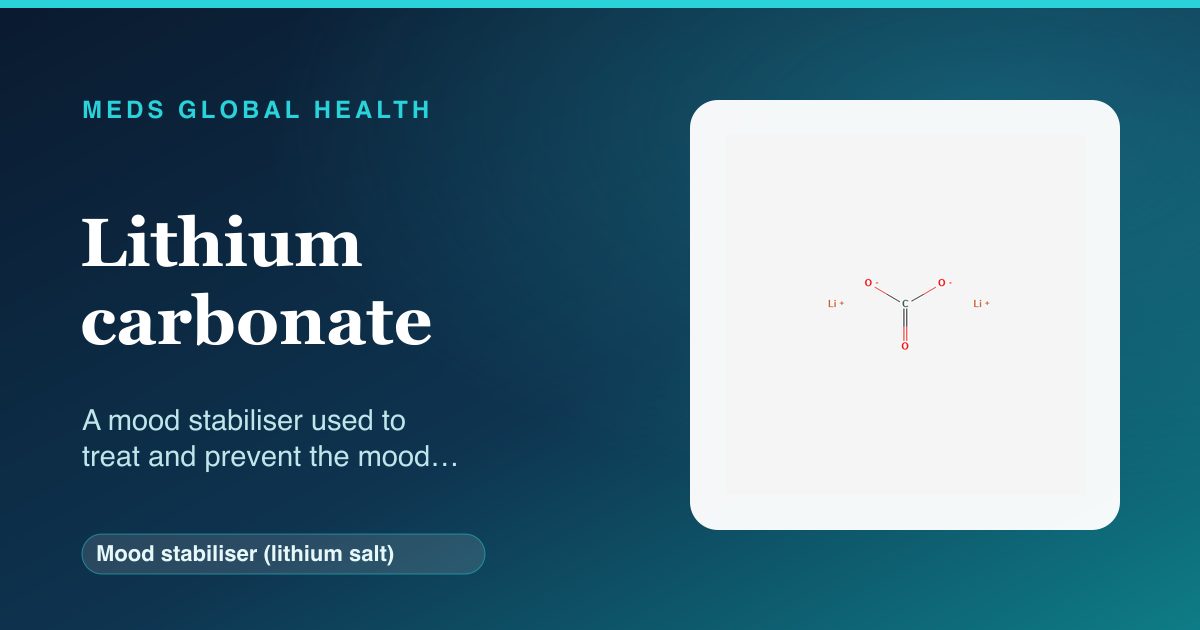
Lithium carbonate is a mood stabiliser, a medicine used to even out mood in bipolar disorder, where people experience episodes of mania (very high, overactive mood) and depression. It is used both to settle episodes and, very importantly, to prevent them coming back over the long term. It is sometimes added to other treatments for depression that has been difficult to treat. It is taken by mouth as tablets, usually for a long time, and is one of the medicines that needs the most careful monitoring because the helpful amount and the harmful amount are quite close together.
How it works
Lithium is a simple element that, taken as a salt, has a stabilising effect on mood, though exactly how it works is not fully understood. It is thought to change the way nerve cells in the brain send and respond to signals, dampening the extremes of both high and low mood. By keeping these signalling systems steadier, it reduces the frequency and severity of manic and depressive episodes. Because lithium is handled by the kidneys and its level in the blood matters so much, anything that changes how much water or salt the body holds can raise or lower that level, which is central to how it is used safely.
Company & origin
A long-established mood stabiliser used in the UK to treat and prevent the highs and lows of bipolar disorder, needing regular blood-level and other monitoring.
What it treats
Conditions Lithium carbonate is used for
Practical use
How to take Lithium carbonate
General, dose-free guidance — always follow your prescriber's and the leaflet's specific instructions.
- Take it regularly as prescribed and stick to the same brand, as different brands can behave slightly differently.
- Attend all your blood tests so your lithium level, thyroid and kidneys can be checked.
- Keep well hydrated and keep your salt intake fairly steady, as dehydration or salt changes can raise your lithium level.
- Avoid taking anti-inflammatory painkillers such as ibuprofen unless your prescriber agrees, as they can raise lithium to dangerous levels.
- Seek urgent help if you get worsening tremor, drowsiness, vomiting, diarrhoea, slurred speech or confusion, as these can signal toxicity.
Weighing it up
Advantages & disadvantages of Lithium carbonate
Advantages
- A well-proven mood stabiliser that both treats and helps prevent episodes of bipolar disorder.
- One of the few medicines shown to reduce the risk of suicide in people with mood disorders.
- A long-established treatment with decades of experience behind its use.
Disadvantages
- Has a narrow safety margin, so it needs regular blood tests and careful management.
- Can affect the thyroid and kidneys over the longer term, requiring ongoing monitoring.
- Levels can rise dangerously with dehydration, illness, anti-inflammatory painkillers or certain water tablets, risking toxicity.
Practical use
Good to know
The most important thing to understand about lithium is that it has a narrow safety margin, so it relies on regular blood tests to keep the level in the right range; too little does not work, and too much causes toxicity. Lithium toxicity is a medical emergency, with warning signs such as worsening tremor, drowsiness, slurred speech, vomiting, diarrhoea, confusion or unsteadiness, and it can be triggered by dehydration, illness, salt changes, anti-inflammatory painkillers and certain water tablets or blood-pressure medicines. Because of this, staying well hydrated, keeping your salt intake steady and avoiding self-prescribed anti-inflammatory painkillers are all important. Over the longer term lithium can affect the thyroid and kidneys, so these are checked regularly too. A fine hand tremor is common and usually manageable. Lithium also needs care in pregnancy. Switching between different brands is discouraged, as they can behave slightly differently.
Who should not take it / use with caution
- People who cannot have regular blood-level monitoring should not usually take it.
- It is used with great caution, or avoided, in people with serious kidney problems or untreated thyroid disease.
- It needs careful specialist review in pregnancy, as it can affect the developing baby.
- People who have had a serious reaction to lithium should not take it.
Monitoring
- Regular blood tests to check the lithium level and keep it within the safe range.
- Checking thyroid and kidney function before and during treatment.
- Reviewing for side effects, signs of toxicity, hydration and any new medicines that could affect levels.
Side effects
- A fine hand tremor, increased thirst and passing more urine.
- Weight gain, mild nausea and a metallic taste, especially early on.
- Over time, an underactive thyroid or reduced kidney function, which monitoring is designed to catch.
- Signs of toxicity such as coarse tremor, drowsiness, vomiting, diarrhoea, slurred speech or confusion, which need urgent care.
Key interactions
- Anti-inflammatory painkillers (NSAIDs) can raise lithium to harmful levels and should be avoided unless advised.
- Water tablets (diuretics) and some blood-pressure medicines such as ACE inhibitors can increase lithium levels.
- Other medicines that affect mood or the brain may add to its effects, so tell your prescriber everything you take.
Available as: Tablets taken by mouth.
Answers
Lithium carbonate: frequently asked questions
What is lithium carbonate used for?
It is a mood stabiliser used mainly to treat and prevent the high and low mood episodes of bipolar disorder, and sometimes added to treatment for depression that has been difficult to control.
Why do I need regular blood tests?
Lithium has a narrow safety margin, so blood tests are needed to keep the level high enough to work but not so high that it becomes toxic; thyroid and kidney function are checked too.
What are the signs of lithium toxicity?
Warning signs include worsening tremor, drowsiness, slurred speech, vomiting, diarrhoea, unsteadiness and confusion; seek urgent medical help if these happen, as toxicity is an emergency.
Why must I avoid ibuprofen?
Anti-inflammatory painkillers such as ibuprofen can raise your lithium level into the dangerous range, so avoid them unless your prescriber specifically agrees.
Does it matter which brand I take?
Yes. Different brands of lithium can behave slightly differently, so you should stay on the same brand and not switch without advice and a blood-level check.
The wider class
About Mood stabiliser (lithium salt)
Lithium carbonate belongs to the mood stabiliser (lithium salt) class. For how the class as a whole works, its shared safety principles and monitoring, see the full guide.
Browse by body system
Authoritative sources
- BNF
- NICE CKS
Building a medicines information resource?
We create evidence-led, dose-free drug and formulary references for teams.