Mast-cell-stabiliser eye drops for allergic eye conditions
Lodoxamide
Mast-cell-stabiliser eye drops used regularly to prevent and ease allergic eye symptoms.
What is Lodoxamide?
Lodoxamide is an eye-drop medicine used to prevent and ease the symptoms of allergic eye conditions, such as itchy, red, watery eyes. It is a mast-cell stabiliser, which means it works by stopping the cells in the eye from releasing the chemicals that cause allergic symptoms. Because it works mainly by prevention, it is used regularly rather than just when symptoms flare, and it can take a little time of regular use before the full benefit is felt. The main side effects are local stinging or itching when the drops go in.
Education and reference only. This is a plain-language guide to Lodoxamide — it deliberately contains no doses. Doses depend on the person, the brand and the reason for treatment, and belong with your prescriber. Always check the BNF, the product labelling (SmPC) and follow medical advice.
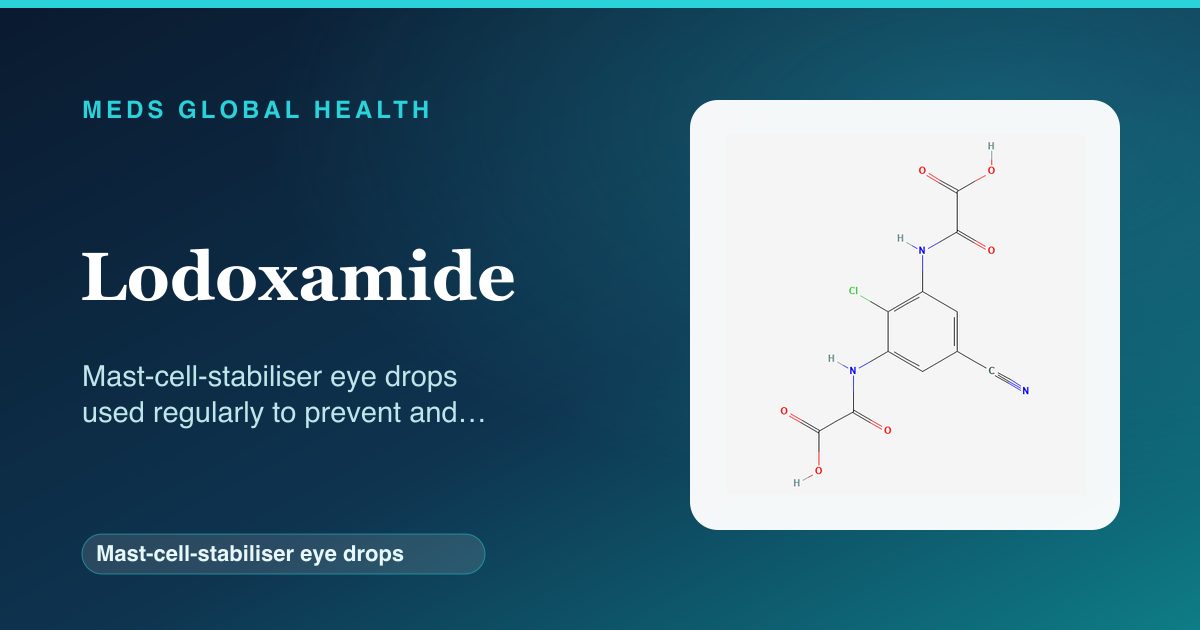
What it is
Lodoxamide is an eye-drop medicine used for allergic eye conditions, including allergic conjunctivitis and some longer-lasting allergic eye problems that cause itching, redness, watering and irritation. It belongs to a group of medicines called mast-cell stabilisers. Rather than simply relieving symptoms once they have started, it works mainly to prevent the allergic reaction in the eye, so it is used regularly. It is put directly into the eyes and is suitable for people who get recurring or ongoing allergic eye symptoms, used as part of their regular eye-care routine.
How it works
Allergic eye symptoms happen when cells in the eye called mast cells release chemicals, such as histamine, in response to allergens; these chemicals cause the itching, redness and watering. Lodoxamide is a mast-cell stabiliser, meaning it helps keep these cells stable so they release fewer of these chemicals. Because it mainly prevents the release of these chemicals rather than blocking them once released, it works best when used regularly, before and during the times symptoms are likely. This is why it can take a little while of consistent use before the full benefit is noticed.
Company & origin
An eye-drop treatment used in the UK to prevent and ease the symptoms of allergic eye conditions.
Practical use
How to take Lodoxamide
General, dose-free guidance — always follow your prescriber's and the leaflet's specific instructions.
- Put the drops into the affected eye or eyes regularly, exactly as your prescriber advises, not just when symptoms flare.
- Keep using them consistently, as the preventive benefit builds up with regular use over time.
- If you wear contact lenses, take them out before using the drops and wait a short while before putting them back in.
- Avoid touching the dropper tip to your eye or any surface to keep it clean.
- Tell your prescriber if your symptoms are not controlled or if stinging or itching is troublesome.
Weighing it up
Advantages & disadvantages of Lodoxamide
Advantages
- Helps prevent and ease the itching, redness and watering of allergic eye conditions.
- Works by stabilising the cells that drive allergic eye symptoms.
- Applied directly to the eye and suitable for regular, longer-term use.
Disadvantages
- Works mainly by prevention, so it needs to be used regularly rather than just when symptoms appear.
- Can take a little time of regular use before the full benefit is felt.
- Can cause local stinging, burning or itching when the drops go in.
Practical use
Good to know
The key thing with lodoxamide is that it is mainly a preventer, so it works best when used regularly, even on days when the eyes feel fairly comfortable, rather than only when symptoms flare up; it can take a little time of regular use before you feel the full benefit. The most common effects are local stinging, burning or itching when the drops go in, which usually settles quickly. If you wear contact lenses, you usually need to take them out before using the drops and wait a short while before putting them back in, as advised. Avoid touching the dropper tip to the eye to keep it clean. Tell your prescriber if your symptoms are not controlled or if irritation is troublesome, so your eye care can be reviewed.
Who should not take it / use with caution
- People who have had a serious allergic reaction to lodoxamide should not use it.
- Contact lens wearers need to remove their lenses before use and wait before putting them back in.
- It is used under the guidance of a prescriber, who will check it is suitable for you.
Monitoring
- Reviewing how well your allergic eye symptoms are controlled over time.
- Checking for troublesome stinging, itching or other side effects.
- Reviewing whether to continue treatment, especially around seasons when symptoms are worse.
Side effects
- Local stinging, burning or itching when the drops are put in, usually settling quickly.
- Watering, redness or a feeling of something in the eye in some people.
- Rarely, more troublesome eye irritation, which should be reported to your prescriber.
Key interactions
- There are few well-established routine medicine interactions, but tell your prescriber about all your eye drops and medicines.
- If you use other eye drops, leave a gap between them so each works properly, as advised.
- Take contact lenses out before use, as advised, to avoid the lenses being affected.
Available as: Eye drops put into the eye.
Answers
Lodoxamide: frequently asked questions
What is lodoxamide used for?
It is an eye drop used to prevent and ease the symptoms of allergic eye conditions, such as itchy, red and watery eyes.
How does it work?
It is a mast-cell stabiliser, meaning it helps keep the cells in the eye stable so they release fewer of the chemicals that cause allergic symptoms.
Do I need to use it every day?
Yes, it works mainly by prevention, so it is used regularly even when your eyes feel comfortable, and the benefit builds up over time.
Why do the drops sting?
Local stinging, burning or itching when the drops go in is the most common side effect and usually settles quickly.
Can I wear contact lenses?
You usually need to take your lenses out before using the drops and wait a short while before putting them back in; follow your prescriber's advice.
Authoritative sources
- BNF
- NICE CKS
Building a medicines information resource?
We create evidence-led, dose-free drug and formulary references for teams.