A medicine that eases opioid withdrawal
Lofexidine
A non-opioid medicine that eases the physical symptoms of opioid withdrawal during detox.
What is Lofexidine?
Lofexidine is a medicine used to ease the physical symptoms of opioid withdrawal, such as sweating, chills, aches, cramps and a racing heart, while someone comes off opioids. Importantly, it is not an opioid itself; it calms the part of the nervous system that drives many withdrawal symptoms. It works best as part of a planned detox with support, tailored to the person. Because it can lower blood pressure, slow the heart rate and cause drowsiness and a dry mouth, it is started and stopped gradually rather than abruptly, with blood pressure checked along the way.
Education and reference only. This is a plain-language guide to Lofexidine — it deliberately contains no doses. Doses depend on the person, the brand and the reason for treatment, and belong with your prescriber. Always check the BNF, the product labelling (SmPC) and follow medical advice.
What it is
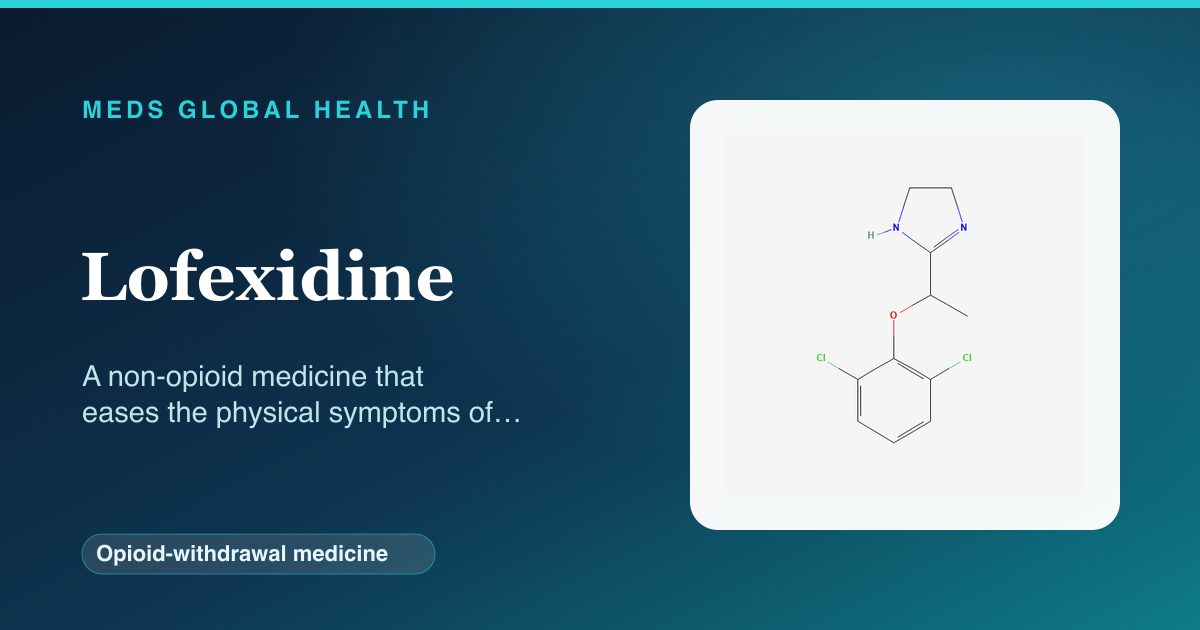
Lofexidine is a non-opioid medicine taken by mouth to help manage the physical symptoms of opioid withdrawal during a planned detox. When opioids are stopped, the nervous system becomes overactive, causing symptoms such as sweating, chills, muscle aches, stomach cramps, a fast heartbeat and restlessness. Lofexidine helps to settle this overactivity, making the withdrawal period more bearable. It does not satisfy opioid craving in the way a substitute opioid does, but it reduces the bodily discomfort of coming off, usually over a short course.
How it works
Lofexidine acts on receptors in the nervous system that normally help to keep adrenaline-driven activity in check. During opioid withdrawal this system becomes overactive, which produces many of the unpleasant physical symptoms. By calming that overactivity, lofexidine reduces sweating, chills, aches, cramps and a racing heart. Because it works on these pathways rather than on opioid receptors, it also tends to lower blood pressure and slow the heart, which is why doses are built up and then tailed off gradually.
Company & origin
A medicine used in the UK to ease the physical symptoms of opioid withdrawal during detoxification; it is not itself an opioid.
Practical use
How to take Lofexidine
General, dose-free guidance — always follow your prescriber's and the leaflet's specific instructions.
- Take it as prescribed during your detox; the dose is usually built up over the first days and then reduced gradually at the end.
- Do not stop it suddenly, as this can cause a rebound rise in blood pressure; follow the tapering plan you are given.
- Stand up slowly from sitting or lying down, as lofexidine can lower your blood pressure and make you feel dizzy.
- Avoid driving or using machinery if it makes you drowsy, and be careful with alcohol, which adds to drowsiness.
- Keep your appointments so your blood pressure and pulse can be checked while you are taking it.
Weighing it up
Advantages & disadvantages of Lofexidine
Advantages
- Eases the physical symptoms of opioid withdrawal without being an opioid itself.
- Useful for people who want to come off opioids rather than continue on a substitute.
- Given as a short, planned course as part of a supported detox.
Disadvantages
- Lowers blood pressure and slows the heart, which can cause dizziness, especially on standing.
- Commonly causes drowsiness and a dry mouth.
- Must be tailed off gradually, as stopping suddenly can cause a rebound rise in blood pressure.
Practical use
Good to know
Lofexidine works best as part of a structured detox plan with support, rather than alone, and it is tailored to each person and how their withdrawal is going. The main practical points are that it lowers blood pressure and slows the heart rate, so it can cause dizziness, especially on standing, and it commonly causes drowsiness and a dry mouth. Because of these effects, it is usually started at a lower dose, built up, and then reduced step by step at the end rather than stopped suddenly, as stopping abruptly can cause a rebound rise in blood pressure. Blood pressure and pulse are checked during treatment, and it is sensible to get up slowly and avoid driving if you feel drowsy. It eases the physical symptoms of withdrawal but does not remove craving, which is where ongoing support matters.
Who should not take it / use with caution
- Used with caution, or avoided, in people with very low blood pressure or a slow heart rate.
- People with significant heart disease, or recent heart problems, may need careful assessment first.
- Care is needed in people with poor kidney or liver function, or who take other medicines that lower blood pressure.
Monitoring
- Blood pressure and pulse checks during treatment, particularly as the dose is changed.
- Watching for dizziness, excessive drowsiness or a very slow heart rate.
- Reviewing the tapering plan so it is stopped gradually rather than abruptly.
Side effects
- Drowsiness, dry mouth, low blood pressure and dizziness (especially on standing) are common.
- A slow heart rate, tiredness or feeling cold can occur.
- Less often, the heart's rhythm can be affected, so it may be monitored in some people.
Key interactions
- Other medicines that lower blood pressure or slow the heart can add to these effects.
- Alcohol, sedatives and sleeping tablets increase drowsiness.
- Some medicines that affect heart rhythm may be checked before using it together.
Available as: Tablets taken by mouth.
Answers
Lofexidine: frequently asked questions
Is lofexidine an opioid?
No. Lofexidine is not an opioid; it calms the overactive nervous system that causes many withdrawal symptoms, easing the physical discomfort of coming off opioids.
Will lofexidine stop my cravings?
It mainly eases physical symptoms such as sweating, chills, aches and a racing heart rather than removing craving, which is why ongoing support is an important part of treatment.
Why do I feel dizzy on it?
Lofexidine lowers blood pressure and can slow the heart, so dizziness, especially when standing up, is common; getting up slowly helps, and your blood pressure will be checked.
Can I stop taking it as soon as I feel better?
It should be tailed off gradually rather than stopped suddenly, as stopping abruptly can cause a rebound rise in blood pressure; follow the plan you are given.
Can I drive while taking it?
It can make you drowsy and lower your blood pressure, so avoid driving or using machinery until you know how it affects you, and be careful with alcohol.
Authoritative sources
- BNF
- NICE CKS
Building a medicines information resource?
We create evidence-led, dose-free drug and formulary references for teams.