An ALK-targeted treatment for advanced lung cancer
Lorlatinib
A targeted treatment for advanced lung cancer with an ALK gene change, taken as a daily tablet.
What is Lorlatinib?
Lorlatinib is a specialist targeted cancer medicine used to treat a type of advanced non-small-cell lung cancer that has a change in a gene called ALK. It works by blocking the faulty ALK signal that drives the cancer to grow, and it is taken by mouth as a daily tablet. Two effects stand out: it can cause changes in mood, thinking, speech and memory, and it can raise blood fats (cholesterol and triglycerides), which usually need treatment with lipid-lowering medicines. It can also cause weight gain and swelling. It must not be used with strong medicines or supplements that speed up its breakdown, and it is harmful to a developing baby, so reliable contraception is important.
Education and reference only. This is a plain-language guide to Lorlatinib — it deliberately contains no doses. Doses depend on the person, the brand and the reason for treatment, and belong with your prescriber. Always check the BNF, the product labelling (SmPC) and follow medical advice.
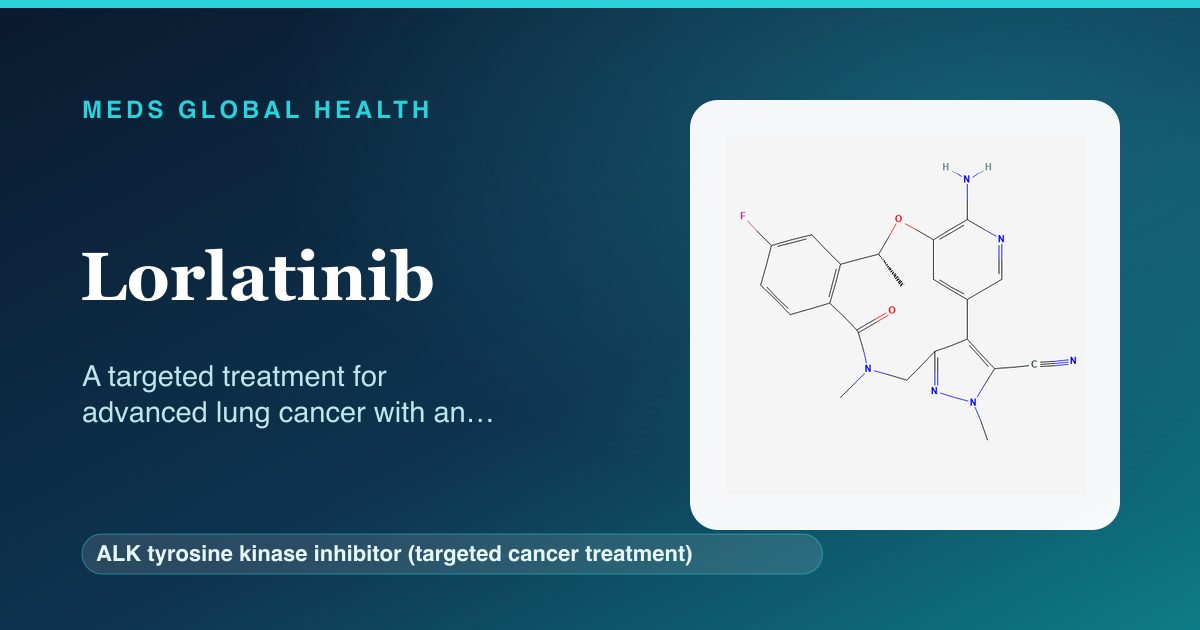
What it is
Lorlatinib is a targeted cancer treatment used for advanced non-small-cell lung cancer that carries a specific change in a gene called ALK. Cancers with this change rely on the faulty ALK protein to keep growing, and lorlatinib is designed to switch that protein off. It is taken by mouth as a tablet, usually once a day, and is able to reach the brain well, which matters because this type of lung cancer can spread there. It is prescribed and monitored by a specialist cancer team and is used when the cancer has been confirmed to have the ALK change by a laboratory test.
How it works
In ALK-positive lung cancer, a faulty version of the ALK protein sends constant 'grow' signals that drive the cancer. Lorlatinib blocks this protein, cutting off those signals so the cancer cells stop multiplying and many die off. Because it is designed to pass into the brain, it can also act on cancer that has spread there. It is taken every day to keep the ALK protein switched off continuously. Over time some cancers can find ways around the block, which is one reason the specialist team keeps a close eye on how well it is working.
Company & origin
A specialist targeted cancer medicine used in the UK to treat a type of advanced non-small-cell lung cancer that has a change in the ALK gene.
Practical use
How to take Lorlatinib
General, dose-free guidance — always follow your prescriber's and the leaflet's specific instructions.
- Take it by mouth once a day, at about the same time, with or without food, swallowing the tablet whole.
- Avoid grapefruit and grapefruit juice, which change how the medicine is handled in the body.
- Report any changes in mood, memory, concentration, speech or behaviour to your team promptly, as the dose may need adjusting.
- Attend your blood tests so cholesterol and triglycerides can be checked, as these often rise and may need treatment.
- Use reliable contraception during treatment and for the time your team advises afterwards, as it is harmful to a developing baby.
Weighing it up
Advantages & disadvantages of Lorlatinib
Advantages
- Targets the specific ALK change driving the cancer, sparing many healthy cells.
- Taken as a convenient daily tablet rather than an infusion.
- Reaches the brain well, which helps when the cancer has spread there.
Disadvantages
- Can cause changes in mood, thinking, memory and speech that need close monitoring.
- Commonly raises blood fats and causes weight gain and swelling, often needing extra treatment.
- Cannot be used with strong medicines or supplements that speed up its breakdown.
Practical use
Good to know
The effect that surprises people most with lorlatinib is its impact on the brain and mood: it can cause changes in thinking, memory, concentration, speech, mood and sometimes more marked psychiatric symptoms, and these should be reported promptly because the dose can be adjusted. Another key point is that it commonly raises blood fats, both cholesterol and triglycerides, so these are checked regularly and most people end up needing a lipid-lowering medicine such as a statin. Weight gain and swelling are common too. It is taken with or without food, but grapefruit should be avoided because it changes how the medicine is handled. Strong medicines, and some supplements such as St John's wort, that speed up its breakdown must be avoided as they can make it stop working. It is harmful to a developing baby, so reliable contraception is needed during treatment and for a time afterwards.
Who should not take it / use with caution
- People who have had a serious allergic reaction to lorlatinib should not take it.
- It must not be used with strong medicines or supplements, such as St John's wort, that speed up its breakdown.
- It is not used in pregnancy because it is harmful to a developing baby, and reliable contraception is needed.
- It is used with care in people with existing mood or mental-health conditions, under specialist guidance.
Monitoring
- Regular checks of mood, thinking and behaviour, with prompt review of any changes.
- Regular blood tests for cholesterol and triglycerides, with lipid-lowering treatment if needed.
- Checks of weight, swelling, heart rhythm and liver function, and scans to see how the cancer is responding.
Side effects
- Changes in mood, thinking, memory, concentration or speech, which should be reported promptly.
- Raised cholesterol and triglycerides, often needing a lipid-lowering medicine.
- Weight gain, swelling of the limbs, and tiredness.
- Less commonly, numbness or tingling in the hands and feet, or changes in heart-rhythm or liver blood tests.
Key interactions
- Medicines and supplements that speed up its breakdown, such as St John's wort, can make it stop working and must be avoided.
- Medicines that slow its breakdown can raise its levels and side effects, so the team reviews them.
- Grapefruit changes how the medicine is handled and should be avoided.
Available as: Tablets taken by mouth.
Answers
Lorlatinib: frequently asked questions
What is lorlatinib used for?
It is used to treat a type of advanced non-small-cell lung cancer that has a change in the ALK gene, by blocking the faulty ALK protein that drives the cancer to grow.
Why does my team ask about my mood and memory?
Lorlatinib can affect mood, thinking, memory and speech, so your team checks for these so the dose can be adjusted if needed; report any changes promptly.
Why do my cholesterol levels go up?
Lorlatinib commonly raises cholesterol and triglycerides, so these are checked regularly and most people need a lipid-lowering medicine such as a statin.
Can I eat grapefruit while taking it?
No. Grapefruit and grapefruit juice change how the medicine is handled in the body, so they should be avoided during treatment.
Do I need contraception?
Yes. Lorlatinib is harmful to a developing baby, so reliable contraception is needed during treatment and for the time your team advises afterwards.
Authoritative sources
- BNF
- NICE CKS
Building a medicines information resource?
We create evidence-led, dose-free drug and formulary references for teams.