An oral medicine for itching caused by liver disease
Maralixibat
A medicine taken by mouth to relieve severe itching caused by certain cholestatic liver conditions.
What is Maralixibat?
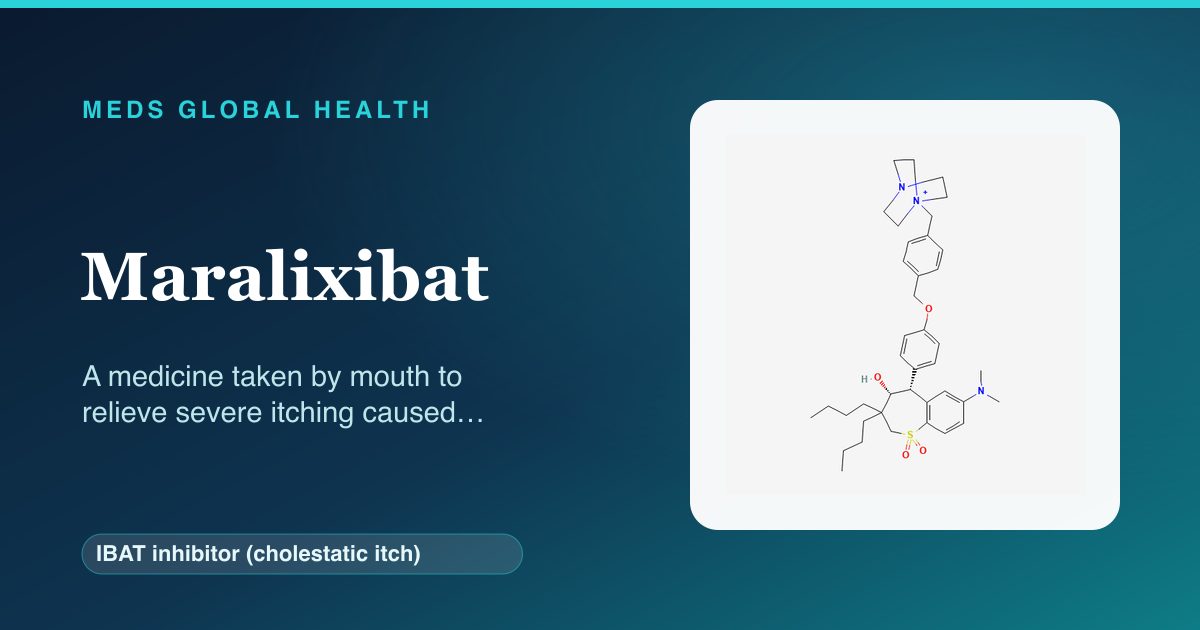
Maralixibat is a specialist medicine used to relieve severe itching (pruritus) caused by certain cholestatic liver conditions, where bile does not flow normally and bile acids build up. It is used particularly in conditions such as Alagille syndrome and is taken by mouth. It works by reducing how much bile acid the gut takes back into the body, which can ease the itching. The most common side effect is diarrhoea, and the team monitors liver blood tests and levels of fat-soluble vitamins. It helps the itching rather than curing the underlying liver condition.
Education and reference only. This is a plain-language guide to Maralixibat — it deliberately contains no doses. Doses depend on the person, the brand and the reason for treatment, and belong with your prescriber. Always check the BNF, the product labelling (SmPC) and follow medical advice.
What it is
Maralixibat is a medicine used to relieve the severe itching that can come with certain cholestatic liver conditions, in which the flow of bile is reduced and bile acids build up in the body. It is used especially in conditions such as Alagille syndrome, often in children, where itching can be intense and very distressing. It is taken by mouth as a liquid. Maralixibat does not cure the liver condition; it is given to ease the itching and the misery it causes. It is prescribed and supervised by a specialist liver team.
How it works
Normally, bile acids made by the liver are released into the gut and most are reabsorbed and recycled back to the liver. In cholestatic conditions, bile acids build up and are thought to drive severe itching. Maralixibat blocks a transporter in the gut (the ileal bile acid transporter, or IBAT) that reabsorbs these bile acids, so more are passed out in the stool and fewer are recycled. Lowering the build-up of bile acids in this way can reduce the itching. Because it changes how bile acids are handled, it can loosen the stools and affect how some vitamins are absorbed.
Company & origin
A specialist oral medicine used in the UK to relieve severe itching caused by certain childhood cholestatic liver conditions, such as Alagille syndrome.
Practical use
How to take Maralixibat
General, dose-free guidance — always follow your prescriber's and the leaflet's specific instructions.
- Take it by mouth as your specialist team directs, usually before food, measuring liquid doses carefully.
- Expect that stools may become looser; tell your team if diarrhoea is severe or persistent.
- Keep up the blood tests and vitamin checks the team arranges, including fat-soluble vitamin levels.
- Take any vitamin supplements you are prescribed, as absorption of some vitamins can be affected.
- Continue the rest of your liver care, as maralixibat eases itching rather than curing the condition.
Weighing it up
Advantages & disadvantages of Maralixibat
Advantages
- Can relieve severe, distressing itching caused by certain cholestatic liver conditions.
- Taken by mouth as a liquid, which suits use in children.
- Works in the gut to lower bile acid build-up, a targeted approach to the itching.
Disadvantages
- Commonly causes diarrhoea or tummy upset.
- Can affect absorption of fat-soluble vitamins, so monitoring and supplements may be needed.
- Eases itching but does not cure the underlying liver condition.
Practical use
Good to know
The main aim of maralixibat is to relieve severe itching, which can be life-changing in these conditions, rather than to cure the underlying liver problem. The most common side effect is diarrhoea or tummy upset, which makes sense given how the medicine works by moving more bile acids into the stool. Because it changes how bile acids and fats are handled in the gut, the team checks levels of fat-soluble vitamins (such as vitamins A, D, E and K) and may give supplements. Liver blood tests are also monitored, as these conditions affect the liver and the team wants to keep a close eye on it. It is taken by mouth, usually before food as directed, and is used alongside the rest of the specialist liver care.
Who should not take it / use with caution
- People who have had a serious allergic reaction to maralixibat should not take it.
- It is used with care in people with more advanced liver problems, under specialist judgement.
- It should only be used under a specialist liver service that can monitor liver tests and vitamins.
Monitoring
- Regular liver blood tests to keep an eye on the liver.
- Checking levels of fat-soluble vitamins and giving supplements if needed.
- Reviewing how well the itching is controlled and overall response over time.
Side effects
- Diarrhoea, tummy pain or other gut upset.
- Low levels of fat-soluble vitamins, which is why these are monitored.
- Changes in liver blood tests, which the team keeps an eye on.
- Bone fractures have been reported in these conditions, so bone health is considered.
Key interactions
- Bile-acid-binding medicines may reduce how well maralixibat works, so timing or use is reviewed.
- It may affect the absorption of some other medicines and vitamins, so the team advises on timing.
- Tell your team about everything you take so interactions can be checked.
Available as: An oral liquid (solution) taken by mouth.
Answers
Maralixibat: frequently asked questions
What is maralixibat used for?
It is used to relieve severe itching caused by certain cholestatic liver conditions, such as Alagille syndrome, where bile acids build up in the body.
How does it ease itching?
It blocks a transporter in the gut that recycles bile acids, so more are passed out in the stool and the build-up that drives itching is reduced.
Why does it cause diarrhoea?
Because it moves more bile acids into the stool, it can loosen the stools; tell your team if diarrhoea is severe or persistent.
Why are my vitamins checked?
It can affect how fat-soluble vitamins such as A, D, E and K are absorbed, so the team checks their levels and may give supplements.
Will it cure the liver condition?
No. It is given to ease the severe itching, not to cure the underlying liver condition, so the rest of your liver care continues.
Authoritative sources
- BNF
- NICE CKS
Building a medicines information resource?
We create evidence-led, dose-free drug and formulary references for teams.