A progestogen used to stimulate appetite and weight gain
Megestrol
A progestogen medicine used to stimulate appetite and weight gain in cancer- or AIDS-related wasting, and in some hormone-sensitive cancers.
What is Megestrol?
Megestrol is a progestogen, a man-made version of the hormone progesterone. Its main use is to stimulate appetite and help weight gain in people with serious weight loss from cancer or AIDS-related wasting, and it is also used in some hormone-sensitive cancers such as breast and womb cancer. It is taken by mouth. The most important safety points are a raised risk of blood clots, the possibility of adrenal suppression and Cushingoid effects (such as a rounder face and easy bruising) with longer use, and a tendency to raise blood sugar. It is prescribed and monitored by a specialist.
Education and reference only. This is a plain-language guide to Megestrol — it deliberately contains no doses. Doses depend on the person, the brand and the reason for treatment, and belong with your prescriber. Always check the BNF, the product labelling (SmPC) and follow medical advice.
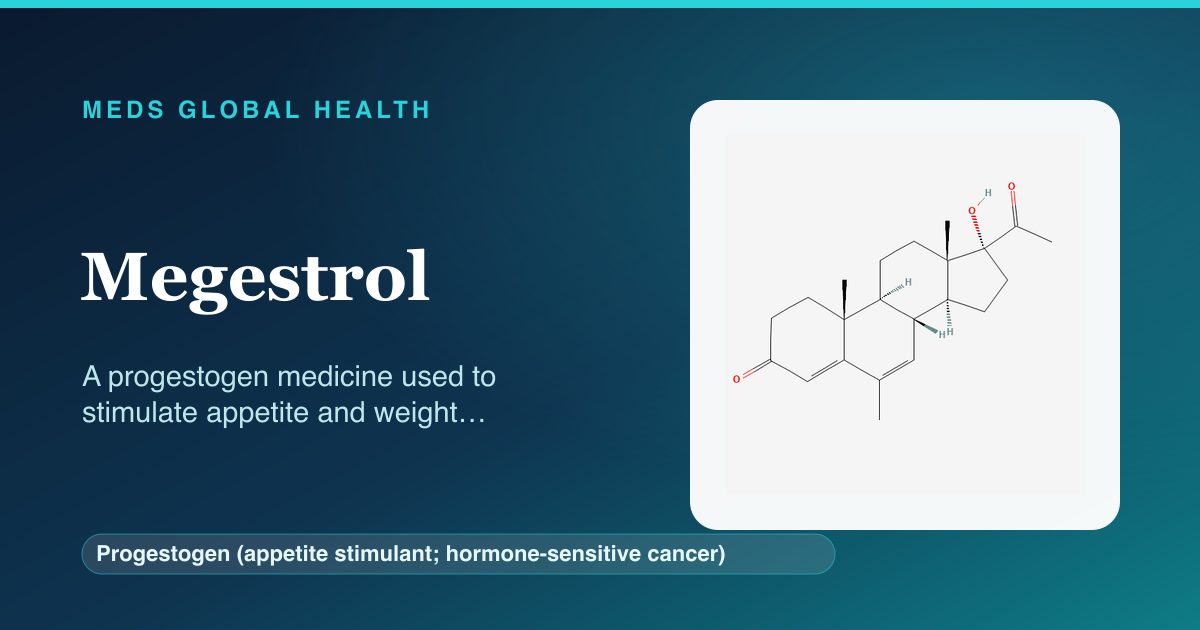
What it is
Megestrol is a progestogen, meaning a man-made form of the natural hormone progesterone. It has two main roles. The first, and most common, is to improve appetite and encourage weight gain in people who are losing weight badly because of cancer or AIDS-related wasting, where it can help people feel more like eating. The second is in the treatment of certain hormone-sensitive cancers, particularly some breast and womb cancers, where hormones influence how the cancer grows. It is taken by mouth and is prescribed under specialist supervision.
How it works
As a progestogen, megestrol acts on hormone pathways in the body. In appetite and weight loss, it is thought to act on the parts of the brain and body that control appetite, helping people feel hungrier and put on weight, including some fat and fluid. In hormone-sensitive cancers, it changes the hormonal signals that some cancers rely on to grow, helping to slow them. Because it is a hormone medicine taken over time, its effects build gradually, and its hormonal actions also explain side effects such as fluid retention and a raised blood-clot risk.
Company & origin
A medicine used in the UK to help with appetite and weight loss in advanced illness, and in some hormone-sensitive cancers.
Practical use
How to take Megestrol
General, dose-free guidance — always follow your prescriber's and the leaflet's specific instructions.
- Take it by mouth as prescribed, at about the same time each day.
- If you have diabetes, watch your blood sugar more closely, as megestrol can raise it.
- Report any leg pain or swelling, breathlessness or chest pain straight away, as these can signal a blood clot.
- Do not stop it suddenly after long-term use without advice, as your body's steroid production may need time to recover.
- Tell your team if you notice a rounder face, easy bruising or swelling, which can occur with longer use.
Weighing it up
Advantages & disadvantages of Megestrol
Advantages
- Can improve appetite and help weight gain in people with serious illness-related weight loss.
- Offers a treatment option in some hormone-sensitive breast and womb cancers.
- Taken by mouth rather than by injection.
Disadvantages
- Raises the risk of blood clots in the legs or lungs.
- With longer use can cause adrenal suppression and Cushingoid effects such as a rounder face and easy bruising.
- Tends to raise blood sugar and can cause fluid retention, so some weight gain is fluid and fat rather than muscle.
Practical use
Good to know
The most important safety point with megestrol is that, like other hormone medicines, it raises the risk of blood clots in the legs or lungs, so any leg pain, swelling, breathlessness or chest pain should be reported urgently. With longer use it can affect the body's own steroid system, sometimes causing adrenal suppression and Cushingoid effects such as a rounder face, weight around the middle, easy bruising and raised blood pressure, and it should not be stopped suddenly after long use because the body's steroid production may need time to recover. It also tends to raise blood sugar, which matters especially for people with diabetes, who may need closer monitoring. Some of the weight gain is fluid and fat rather than muscle. Your specialist team weighs these effects against the benefit of better appetite and weight.
Who should not take it / use with caution
- People who have had a serious allergic reaction to megestrol should not take it.
- It is generally avoided in people with a history of blood clots unless a specialist decides the benefit outweighs the risk.
- It is not used in pregnancy, and it is used with care in people with diabetes or poorly controlled blood pressure.
Monitoring
- Checking weight, appetite and fluid retention to see how well it is working.
- Monitoring blood sugar, especially in people with diabetes.
- Watching for signs of blood clots and, with longer use, for Cushingoid effects and effects on the body's steroid system.
Side effects
- Fluid retention and weight gain, some of which is fluid and fat rather than muscle.
- Raised blood sugar, which matters particularly for people with diabetes.
- Blood clots in the legs or lungs, which need urgent medical attention.
- With longer use, adrenal suppression and Cushingoid effects such as a rounder face, easy bruising and raised blood pressure.
Key interactions
- It can add to the blood-clot risk of other medicines that affect clotting, so tell your team what you take.
- It may affect blood-sugar control, so diabetes medicines may need reviewing.
- Tell your prescriber about all your medicines, as hormone medicines can interact in several ways.
Available as: Tablets and an oral liquid taken by mouth.
Answers
Megestrol: frequently asked questions
What is megestrol used for?
It is a progestogen used mainly to stimulate appetite and help weight gain in cancer- or AIDS-related wasting, and also in some hormone-sensitive breast and womb cancers.
Why does it raise the risk of blood clots?
Like other hormone medicines, megestrol can make the blood more likely to clot, so report any leg pain or swelling, breathlessness or chest pain straight away.
Can it affect my blood sugar?
Yes, it tends to raise blood sugar, which matters especially if you have diabetes, so your blood sugar may need closer monitoring.
Why should I not stop it suddenly after long use?
With longer use it can dampen your body's own steroid production, so stopping suddenly is avoided to let that system recover; follow your team's advice.
Is the weight I gain muscle?
Some of the weight gain is fluid and fat rather than muscle, although improved appetite can still be valuable when weight loss is a problem.
Authoritative sources
- BNF
- NICE CKS
Building a medicines information resource?
We create evidence-led, dose-free drug and formulary references for teams.