An arsenic-based medicine for late-stage sleeping sickness
Melarsoprol
An arsenic-based medicine used in hospital for the late brain stage of African sleeping sickness.
What is Melarsoprol?
Melarsoprol is a specialist, arsenic-based medicine used to treat the late stage of African sleeping sickness, when the parasite has reached the brain. It is given into a vein in hospital under expert supervision. The most important and dangerous side effect is a severe brain reaction called reactive encephalopathy (brain inflammation), which can sometimes be fatal. Because it is highly toxic, it is only ever used for this serious infection when needed, by specialists, with close monitoring. It is a last-resort medicine for a life-threatening disease.
Education and reference only. This is a plain-language guide to Melarsoprol — it deliberately contains no doses. Doses depend on the person, the brand and the reason for treatment, and belong with your prescriber. Always check the BNF, the product labelling (SmPC) and follow medical advice.
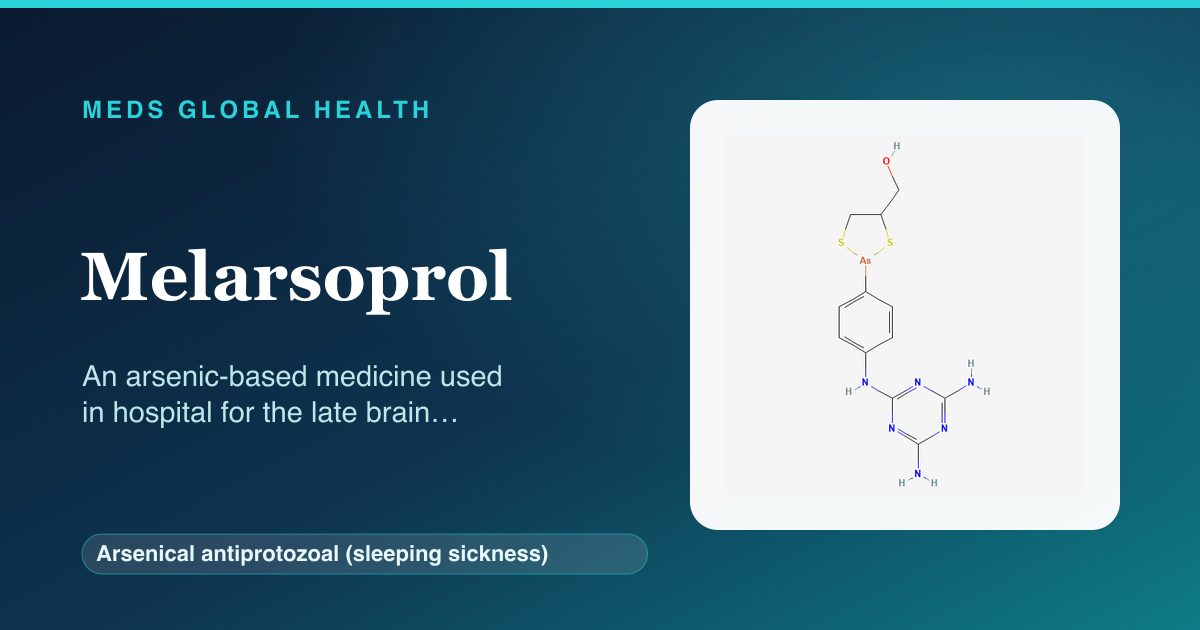
What it is
Melarsoprol is an arsenic-based medicine used to treat the late, brain-affecting stage of African trypanosomiasis, also known as African sleeping sickness, a serious infection spread by the tsetse fly. Once the parasite reaches the brain, the infection is life-threatening, and melarsoprol is one of the medicines that can reach and kill the parasite there. It is given as an injection into a vein, only in hospital and under the care of specialists experienced in this disease. Because it contains arsenic and is highly toxic, it is reserved for this serious situation and is used with close monitoring.
How it works
Melarsoprol is an arsenical, meaning it is based on arsenic, and it works by being toxic to the trypanosome parasite that causes sleeping sickness, killing it including once it has spread to the brain and the fluid around it. Reaching the brain is important, because the late stage of the disease involves the nervous system and milder medicines cannot get there well enough. However, the same toxicity that affects the parasite also affects the body, which is why serious side effects, especially a severe brain reaction, can occur. It is given in carefully supervised courses in hospital.
Company & origin
A specialist arsenic-based medicine used to treat the late, brain-affecting stage of African sleeping sickness, given only in hospital under expert care.
Practical use
How to take Melarsoprol
General, dose-free guidance — always follow your prescriber's and the leaflet's specific instructions.
- It is given only in hospital, as an injection into a vein, by specialists experienced in treating sleeping sickness.
- It is given in carefully supervised courses, with close monitoring throughout.
- Patients are watched very closely for signs of a serious brain reaction, such as fits, confusion or drowsiness.
- Additional medicines may be given to help reduce the risk of the severe brain reaction.
- It is reserved for the late, brain-affecting stage of the disease and is never for mild illness or self-use.
Weighing it up
Advantages & disadvantages of Melarsoprol
Advantages
- Can reach and kill the parasite in the brain in the late stage of African sleeping sickness, which is otherwise fatal.
- An effective option for a life-threatening infection when needed.
- Given under close hospital supervision so problems can be managed quickly.
Disadvantages
- Highly toxic, as it is based on arsenic, and can cause severe, sometimes fatal, brain inflammation (reactive encephalopathy).
- Can damage the heart, kidneys and other organs, needing intensive monitoring.
- Used only in hospital by specialists, and reserved for a serious, life-threatening infection.
Practical use
Good to know
The most important thing to understand about melarsoprol is that it is a highly toxic, arsenic-based medicine used only for a life-threatening infection when there is no safer adequate option, and only in hospital under expert care. Its most feared side effect is reactive encephalopathy, a severe inflammation of the brain that can cause fits, drowsiness, coma and can sometimes be fatal; the team watches very closely for this and may give additional medicines to lower the risk. Because of its toxicity, it can also affect the heart, kidneys and other organs, so monitoring is intensive throughout treatment. It is never a medicine for mild illness or for self-use; it is reserved for the late, brain stage of sleeping sickness and given by specialists who manage this disease. Patients and families are told what serious symptoms to watch for.
Who should not take it / use with caution
- It is not used for mild illness or self-treatment; it is reserved for the late stage of African sleeping sickness.
- People who have had a serious allergic reaction to melarsoprol should not be given it.
- It is used only in hospital, under expert specialist care, where serious reactions can be managed.
Monitoring
- Close watching for signs of a severe brain reaction, such as fits, confusion or drowsiness.
- Regular checks of the heart, kidneys, liver and blood during treatment.
- Reviewing how the infection responds and managing any serious reactions promptly.
Side effects
- Reactive encephalopathy, a severe brain inflammation that can cause fits, drowsiness or coma and can sometimes be fatal.
- Effects on the heart, kidneys and liver, which is why monitoring is intensive.
- Reactions where the medicine is given, fever, headache and feeling generally unwell.
- Other serious reactions, given that the medicine is highly toxic, which the team watches for closely.
Key interactions
- It is used with care alongside other medicines, given its toxicity, so the team reviews everything you take.
- Other medicines affecting the heart, kidneys or nervous system are considered carefully by the specialist team.
- Additional medicines may be given deliberately to reduce the risk of the severe brain reaction.
Available as: A solution for injection into a vein, given only in hospital.
Answers
Melarsoprol: frequently asked questions
What is melarsoprol used for?
It is an arsenic-based medicine used to treat the late, brain-affecting stage of African sleeping sickness, a life-threatening infection, given only in hospital.
Why is it considered dangerous?
It is highly toxic because it is based on arsenic, and its most feared side effect is a severe, sometimes fatal, brain inflammation called reactive encephalopathy.
How is it given?
It is given as an injection into a vein, only in hospital and under the care of specialists experienced in treating sleeping sickness.
Why is it still used despite the risks?
Once sleeping sickness reaches the brain it is fatal without treatment, and melarsoprol can reach and kill the parasite there, so it is used when needed under close supervision.
What serious symptoms are watched for?
The team watches closely for fits, confusion, drowsiness or coma, which can signal the severe brain reaction, as well as effects on the heart and kidneys.
Authoritative sources
- BNF
- NICE CKS
Building a medicines information resource?
We create evidence-led, dose-free drug and formulary references for teams.