A cooling, anti-itch preparation
Menthol
A cooling cream that relieves itch (pruritus), commonly used as menthol in aqueous cream.
What is Menthol?
Menthol is a cooling ingredient, often supplied as menthol in aqueous cream, used to relieve itchy skin (pruritus). It gives a pleasant cooling sensation that distracts from and eases the urge to itch. It is safe and soothing, can be applied as needed, and is useful when itching has no rash or when itch lingers after a rash. Avoid broken skin and the eyes. It eases the itch rather than treating an underlying cause.
Education and reference only. This is a plain-language guide to Menthol — it deliberately contains no doses. Doses depend on the person, the brand and the reason for treatment, and belong with your prescriber. Always check the BNF, the product labelling (SmPC) and follow medical advice.
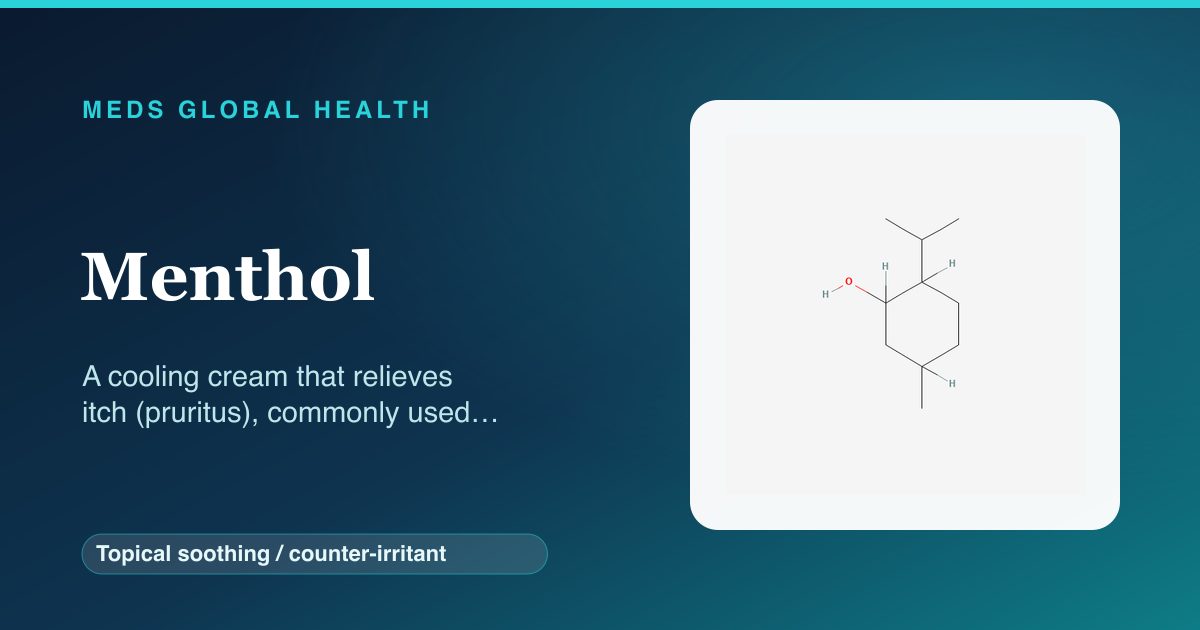
What it is
Menthol is the cooling substance from mint, used on the skin to relieve itching. It is commonly dispensed as menthol in aqueous cream, a simple moisturising base with menthol added. It is used for itchy skin (pruritus), including itch with no visible rash and itch that lingers after a rash has settled. It works by cooling rather than by treating any infection or inflammation, and is a gentle, widely used option available without a prescription or on prescription.
How it works
Menthol triggers the skin's cold-sensing nerves, producing a cooling feeling that distracts from and dampens the sensation of itch. This counter-irritant cooling effect makes itchy skin feel more comfortable and reduces the urge to scratch. Carried in a moisturising base such as aqueous cream, it also softens and hydrates the skin, which itself helps with dryness-related itch. It eases the symptom rather than curing any underlying cause of the itching.
Company & origin
A cooling preparation, often menthol in aqueous cream, used in the UK to relieve itchy skin.
Practical use
How to take Menthol
General, dose-free guidance — always follow your prescriber's and the leaflet's specific instructions.
- Smooth a small amount onto the itchy skin whenever itching bothers you.
- Expect a cooling, slightly tingly feeling, which is normal and part of how it works.
- Keep it away from your eyes and other delicate areas, where it can sting.
- Avoid broken, cracked or weeping skin, where it may sting or irritate.
- If your skin becomes red or sore where it is applied, stop and ask your pharmacist, as a different base may suit better.
- Get persistent, severe or spreading itch checked rather than relying on menthol alone.
Weighing it up
Advantages & disadvantages of Menthol
Advantages
- Provides quick, pleasant cooling relief from itch.
- Gentle and soothing, and carried in a moisturising base that also helps dry skin.
- Useful for itch with no rash and for itch that lingers after a rash settles.
Disadvantages
- Eases the itch rather than treating any underlying cause.
- Can sting on broken skin or in the eyes and may feel too tingly for some.
- The aqueous cream base itself can irritate some people's skin.
Practical use
Good to know
Menthol in aqueous cream is a gentle, soothing way to take the edge off itch, especially dryness-related itch or itch left behind after a rash. Smooth it on whenever itching bothers you; the cooling effect is normal and is part of how it works, though it can feel a little tingly. Avoid broken, cracked or weeping skin and keep it away from the eyes and other delicate areas, where it can sting. Some people find aqueous cream itself irritating if it is left on for a long time as a leave-on moisturiser, so if your skin becomes red or sore, mention it, as a different base may suit better. If the itch is severe, spreading, or comes with a worrying rash or feeling unwell, get it checked rather than relying on menthol alone.
Who should not take it / use with caution
- It should not be applied to broken, cracked or weeping skin.
- It should be kept away from the eyes and other delicate areas.
- Anyone who finds the aqueous cream base irritating should switch to a different option.
Monitoring
- Checking whether the itch is eased and whether the cause of itch needs review.
- Watching for skin irritation, which can sometimes come from the cream base.
- Getting persistent, severe or unexplained itch assessed properly.
Side effects
- A cooling, sometimes tingly sensation, which is expected.
- Stinging if applied to broken skin or if it gets in the eyes.
- Skin redness or irritation in some people, sometimes from the cream base itself.
Key interactions
- No significant medicine interactions, as it acts on the skin surface.
- Other strong or irritating skin products on the same area may add to any stinging.
- Tell your pharmacist about other creams if you are layering treatments together.
Available as: A cream, with menthol added to a moisturising base such as aqueous cream.
Answers
Menthol: frequently asked questions
Why does it feel cold when I put it on?
Menthol activates the skin's cold-sensing nerves, giving a cooling feeling that distracts from and eases the itch; this is normal and part of how it works.
Does it cure the cause of my itch?
No, it soothes the itch but does not treat an underlying cause, so persistent or unexplained itch should still be checked.
Can I use it as often as I like?
Yes, you can smooth a small amount onto itchy skin whenever you need it, as it is gentle.
Can I put it on broken skin?
No, avoid broken, cracked or weeping skin and the area around the eyes, where it can sting.
My skin went red after using it — why?
Some people find the aqueous cream base irritating; if your skin becomes red or sore, stop and ask your pharmacist, as a different base may suit better.
Authoritative sources
- BNF
- NICE CKS
Building a medicines information resource?
We create evidence-led, dose-free drug and formulary references for teams.