Also called quinacrine
Mepacrine
An older medicine used for giardia, some types of skin lupus, and occasionally malaria.
What is Mepacrine?
Mepacrine, also called quinacrine, is an older medicine with a few different uses: treating giardia (a parasite that infects the gut), helping some forms of skin or discoid lupus, and occasionally treating malaria. It is taken by mouth. A well-known and harmless effect is that it can turn the skin and urine yellow. It can cause stomach upset and, less commonly, mood or mental changes, so it is used under medical supervision. It is a specialist or less commonly used medicine in the UK.
Education and reference only. This is a plain-language guide to Mepacrine — it deliberately contains no doses. Doses depend on the person, the brand and the reason for treatment, and belong with your prescriber. Always check the BNF, the product labelling (SmPC) and follow medical advice.
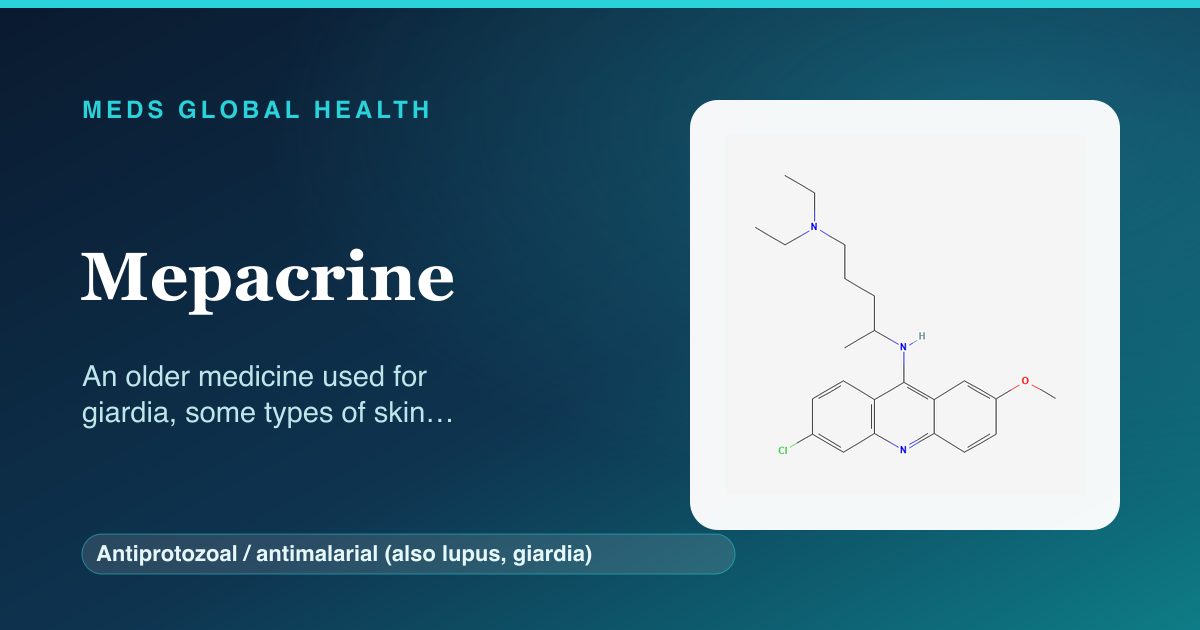
What it is
Mepacrine, also known as quinacrine, is a long-established medicine that has been used in several ways: to treat giardia, an infection of the gut caused by a tiny parasite; to help certain skin conditions, particularly some forms of skin or discoid lupus; and, in the past more than now, to treat malaria. It is taken by mouth as a tablet. It is an older medicine that is used less often today and tends to be prescribed by, or with advice from, a specialist. A characteristic, harmless effect is a yellow colouring of the skin and urine.
How it works
Mepacrine works in different ways depending on what it is used for. Against giardia, it interferes with the parasite so the infection can be cleared. In skin lupus, it is thought to calm the overactive immune activity that causes the rash, which is why it is used as one of the options for that condition. Its older use in malaria was to act against the malaria parasite. Because it builds up in body tissues, it can give the skin and urine a yellow tint, which is harmless and fades after the medicine is stopped.
Company & origin
An older medicine used in the UK for giardia, some forms of skin lupus, and occasionally malaria.
Practical use
How to take Mepacrine
General, dose-free guidance — always follow your prescriber's and the leaflet's specific instructions.
- Take it by mouth as prescribed, usually with or after food to reduce stomach upset.
- Do not be alarmed if your skin or urine turns yellow; this is a harmless effect that fades after stopping.
- Finish the course you are given, even if you feel better, particularly when it is treating an infection such as giardia.
- Tell your prescriber promptly about any change in mood, behaviour or thinking.
- Mention any history of mental-health or liver problems before starting, as these affect whether it is suitable.
Weighing it up
Advantages & disadvantages of Mepacrine
Advantages
- An effective option for clearing giardia and for helping some forms of skin or discoid lupus.
- Taken by mouth as a tablet.
- A long-established medicine with decades of experience behind its use.
Disadvantages
- Commonly turns the skin and urine yellow, which, although harmless, can be alarming.
- Can cause stomach upset and, less commonly, mood or mental changes, including, rarely, severe confusion or psychosis.
- An older, less commonly used medicine, usually needing specialist input.
Practical use
Good to know
It helps to know that the yellow colouring of the skin and urine that mepacrine often causes is harmless and goes away once the medicine is stopped — it is not jaundice. The most common bother is stomach upset, such as nausea or diarrhoea, and taking it with food can help. A less common but important point is that it can occasionally affect mood or cause mental changes, such as feeling agitated, low or confused, so any change in mood or behaviour should be reported promptly. It is an older medicine used for specific reasons rather than a first choice for most infections today, so it is usually prescribed with specialist input. Tell your prescriber about other medicines and any history of mental-health or liver problems, as these affect whether it is suitable.
Who should not take it / use with caution
- People who have had a serious allergic reaction to mepacrine should not take it.
- It is used with caution in people with a history of mental-health problems, because it can affect mood.
- It is used with caution in people with the inherited condition G6PD deficiency, because of a risk of red-blood-cell breakdown.
- It is used with care in people with liver problems or certain blood conditions, under medical guidance.
Monitoring
- Reviewing how well the infection or skin condition responds to treatment.
- Watching for changes in mood, behaviour or thinking.
- Checking blood counts and liver function during longer use, as serious blood problems can rarely occur.
Side effects
- A harmless yellow colouring of the skin and urine that fades after stopping.
- Nausea, diarrhoea or stomach upset, often eased by taking it with food.
- Less commonly, mood or mental changes such as agitation or confusion, which should be reported.
- Rarely but seriously, a severe drop in blood cells (including aplastic anaemia) or serious skin reactions, which need urgent medical attention.
Key interactions
- It can interact with some other medicines, so tell your prescriber everything you take.
- It is used with care alongside medicines that affect the liver or mental health.
- Drinking alcohol while taking it can cause an unpleasant reaction in some people, so seek advice.
Available as: Tablets taken by mouth.
Answers
Mepacrine: frequently asked questions
What is mepacrine used for?
It is an older medicine used to treat giardia (a gut parasite), to help some forms of skin or discoid lupus, and occasionally to treat malaria.
Why has my skin or urine turned yellow?
A yellow tint to the skin and urine is a well-known, harmless effect of mepacrine that fades once the medicine is stopped; it is not jaundice.
Is it the same as quinacrine?
Yes, mepacrine is also called quinacrine; they are two names for the same medicine.
Can it affect my mood?
Less commonly it can cause mood or mental changes, such as feeling agitated, low or confused, so report any such changes to your prescriber promptly.
Should I take it with food?
Taking it with or after food can help reduce stomach upset such as nausea, which is a common side effect.
Authoritative sources
- BNF
- NICE CKS
Building a medicines information resource?
We create evidence-led, dose-free drug and formulary references for teams.