An old anti-anxiety sedative (carbamate)
Meprobamate
An old anti-anxiety sedative, now obsolete because of dependence, dangerous withdrawal and overdose risks.
What is Meprobamate?
Meprobamate is an old sedative medicine, from the carbamate group, that was once used to treat anxiety. It is now obsolete and a controlled drug in the UK because of serious problems: it causes dependence, its withdrawal can be dangerous and even cause seizures, and it is dangerous in overdose. It also causes marked drowsiness. Safer treatments for anxiety, such as other medicines and talking therapies, have long replaced it. This entry is mainly for historical and reference purposes rather than describing a current treatment.
Education and reference only. This is a plain-language guide to Meprobamate — it deliberately contains no doses. Doses depend on the person, the brand and the reason for treatment, and belong with your prescriber. Always check the BNF, the product labelling (SmPC) and follow medical advice.
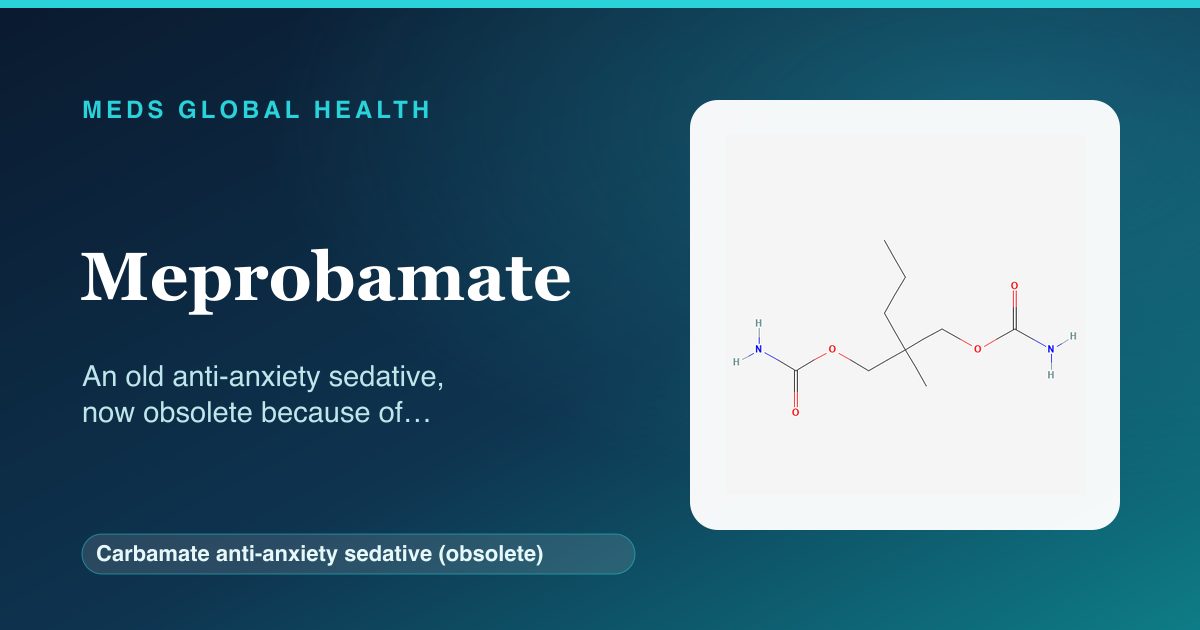
What it is
Meprobamate is a sedative medicine belonging to a group called the carbamates. In the past it was widely used to treat anxiety and to help people relax, before its serious drawbacks were fully understood. It is now considered obsolete and is classed as a controlled drug in the UK because of its potential for dependence and misuse. It works as a central nervous system depressant, meaning it calms brain activity and causes sedation. Modern anxiety care uses safer medicines and psychological therapies, so meprobamate is described here for background rather than as a treatment in current use.
How it works
Meprobamate acts as a depressant on the central nervous system, calming overactivity in the brain and producing a sedative, anxiety-reducing effect. This calming action is why it was once used for anxiety. However, the body can become used to it, leading to tolerance and dependence, so that stopping it suddenly can cause a dangerous withdrawal reaction, including seizures. Because it depresses brain and breathing activity, taking too much can be life-threatening. This combination of sedation, dependence and danger in overdose is why it was abandoned in favour of safer options.
Company & origin
An old sedative once used for anxiety, now obsolete and controlled in the UK because of dependence, withdrawal and overdose dangers.
Practical use
How to take Meprobamate
General, dose-free guidance — always follow your prescriber's and the leaflet's specific instructions.
- This is an obsolete, controlled medicine that is not used in modern UK anxiety care, so it would not normally be started today.
- Never stop it suddenly if you are taking it, as withdrawal can be dangerous and may cause seizures; reductions are made gradually under medical supervision.
- Avoid alcohol, which dangerously adds to its sedative effect.
- Do not drive or operate machinery if it makes you drowsy.
- Speak to your GP about safer modern treatments for anxiety, including talking therapies.
Weighing it up
Advantages & disadvantages of Meprobamate
Advantages
- Reduced anxiety and produced calm in an era before safer treatments existed.
- Taken by mouth.
- Now largely of historical interest, having been replaced by safer options.
Disadvantages
- Causes dependence, with a dangerous withdrawal that can include seizures.
- Dangerous in overdose and causes marked drowsiness.
- Obsolete and a controlled drug, no longer part of modern anxiety treatment.
Practical use
Good to know
The key things to understand about meprobamate are the reasons it is no longer used. It causes dependence, meaning the body becomes reliant on it, and stopping it suddenly can cause a serious withdrawal reaction that may include seizures, so it should never be stopped abruptly without medical supervision. It is also dangerous in overdose, more so than many newer medicines, and it causes pronounced drowsiness that can impair driving and daily activities, an effect worsened by alcohol. Because of these dangers and its potential for misuse, it is a controlled drug and is essentially obsolete. Anxiety is now treated with safer medicines and talking therapies, and anyone with anxiety should speak to their GP about these modern options.
Who should not take it / use with caution
- It is not used in modern practice, so in effect no one is started on it today.
- People who have had a serious allergic reaction to it should not take it.
- It would be unsuitable for anyone with a history of dependence or misuse, or with breathing problems, and is avoided in pregnancy.
Monitoring
- Had it been used, careful monitoring for dependence and misuse would have been essential.
- Watching for excessive sedation and effects on breathing.
- Ensuring it was never stopped abruptly, to avoid a dangerous withdrawal reaction.
Side effects
- Marked drowsiness and sedation.
- Dizziness, unsteadiness and impaired concentration.
- Dependence with long-term use, and a dangerous withdrawal reaction (including seizures) if stopped suddenly.
- In overdose, dangerous depression of breathing and consciousness, which can be fatal.
Key interactions
- Alcohol and other sedatives add dangerously to its drowsiness and depression of breathing.
- Combining it with opioids, sleeping tablets or other depressants greatly increases the risk of serious harm.
- Its dependence potential and dangerous interactions were among the reasons it was abandoned.
Available as: Tablets taken by mouth (historical formulation).
Answers
Meprobamate: frequently asked questions
What was meprobamate used for?
It was an old sedative used to treat anxiety; it is now obsolete and a controlled drug in the UK because of its serious risks.
Why is it no longer used?
It causes dependence, its withdrawal can be dangerous and even cause seizures, and it is dangerous in overdose, so safer medicines and therapies replaced it.
Is it addictive?
Yes, it can cause dependence, which is one of the main reasons it became a controlled drug and fell out of use.
What happens if it is stopped suddenly?
Stopping it abruptly can cause a dangerous withdrawal reaction, including seizures, so it must never be stopped suddenly without medical supervision.
What is used for anxiety now?
Anxiety is treated with safer medicines and talking therapies; your GP can explain the modern options that suit you.
Authoritative sources
- BNF
- NICE CKS
Building a medicines information resource?
We create evidence-led, dose-free drug and formulary references for teams.