An opioid painkiller for moderate to severe pain
Meptazinol
An opioid painkiller used for moderate to severe pain, including after surgery and during labour.
What is Meptazinol?
Meptazinol is an opioid painkiller used for moderate to severe pain, including pain after an operation and pain during labour. Like other opioids it acts on pain signals in the brain and spinal cord to dull the feeling of pain, although it works in a slightly different way from some opioids. It can be taken as a tablet or given by injection. Common side effects include feeling sick, dizziness and drowsiness. It can cause dependence with longer use and may not mix well with some other medicines, so it is used carefully and for as short a time as needed.
Education and reference only. This is a plain-language guide to Meptazinol — it deliberately contains no doses. Doses depend on the person, the brand and the reason for treatment, and belong with your prescriber. Always check the BNF, the product labelling (SmPC) and follow medical advice.
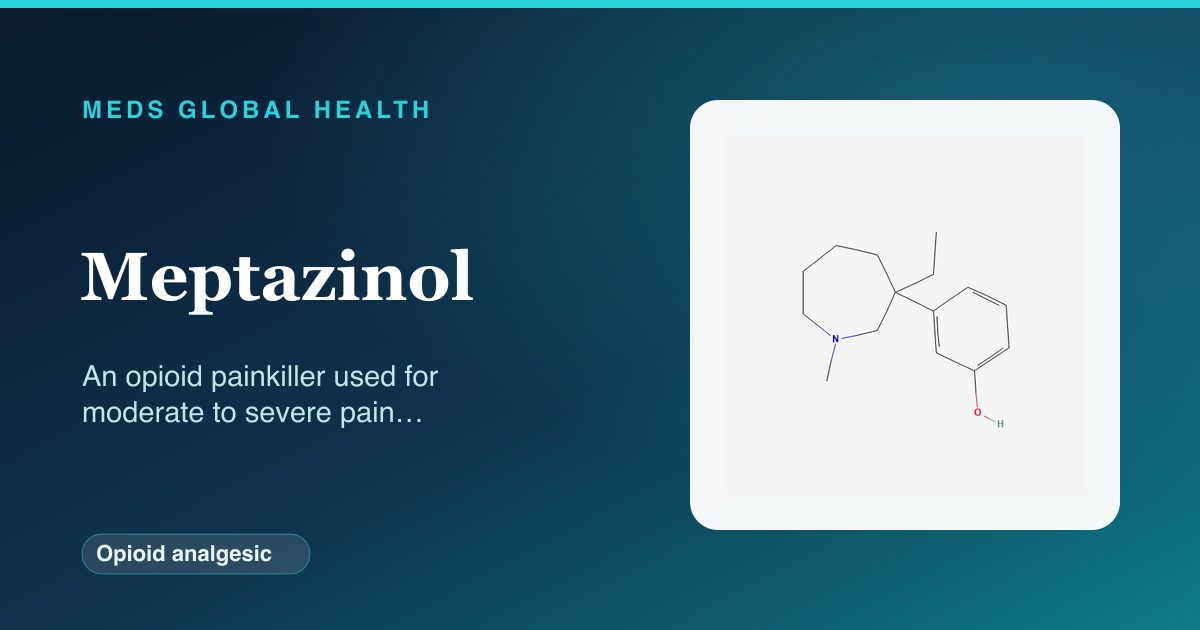
What it is
Meptazinol is an opioid painkiller used to relieve moderate to severe pain. It is used in several situations, including pain after surgery and pain relief during labour, and it can also be used for other kinds of moderate to severe pain. It is available as tablets and as an injection. Although it is an opioid, it acts on the body's pain pathways in a somewhat different way from some other opioids, which can affect its pattern of side effects. It is used under medical guidance and, like all opioids, for the shortest time needed to control pain.
How it works
Meptazinol works on opioid receptors in the brain and spinal cord, which are part of the system that controls how the body senses pain. By acting on these receptors it dampens pain signals, so pain feels less intense. It has a mixed action on these receptors, which is thought to influence its effects and may give it a somewhat different side-effect pattern from some other opioids. As with other opioids, its effect on the brain is also why it can cause drowsiness and, with longer use, dependence, which is why it is used carefully.
Company & origin
An opioid painkiller used in the UK for moderate to severe pain, including pain after surgery and pain in labour.
Practical use
How to take Meptazinol
General, dose-free guidance — always follow your prescriber's and the leaflet's specific instructions.
- Take it exactly as prescribed, as a tablet or by injection, and only for as long as you need it.
- Do not drive or operate machinery until you know how it affects you, as it can cause drowsiness and dizziness.
- Avoid alcohol while taking it, as this adds to drowsiness.
- Tell your prescriber about all your other medicines, especially other opioids, sedatives or medicines for depression.
- Speak to your prescriber before stopping after longer use, as opioids may need to be reduced gradually.
Weighing it up
Advantages & disadvantages of Meptazinol
Advantages
- An effective option for moderate to severe pain, including after surgery and in labour.
- Available both as a tablet and as an injection, giving flexibility in how it is given.
- Works in a somewhat different way from some opioids, which can suit certain situations.
Disadvantages
- Commonly causes feeling sick, dizziness and drowsiness.
- Like other opioids, it can cause dependence with longer use.
- It can add to the effects of other sedating medicines and alcohol.
Practical use
Good to know
A useful point is that, although meptazinol is an opioid, it works in a slightly different way from some opioids, which can affect how it is used and tolerated; even so, the usual opioid precautions still apply. The most common side effects are feeling sick, dizziness and drowsiness, so it is sensible not to drive or operate machinery until you know how it affects you, especially when you first start it. Like other opioids, it can cause dependence if used for a long time, so it is generally used for short periods and reviewed regularly. It can interact with other medicines that make you sleepy, and combining it with such medicines or with alcohol increases drowsiness. Tell your prescriber about other medicines, including any other opioids and any used for depression, so the combination can be checked.
Who should not take it / use with caution
- People who have had a serious allergic reaction to meptazinol should not take it.
- It is avoided or used with great care in people with severe breathing problems or where opioids are not suitable, under medical guidance.
- It is used with caution in older people, in those with liver or kidney problems, and in pregnancy and breastfeeding (other than its specific use in labour), guided by your team.
Monitoring
- Reviewing how well your pain is controlled and whether you still need it.
- Watching for side effects such as drowsiness, and for signs of dependence with longer use.
- Checking for interactions with other sedating medicines or opioids you take.
Side effects
- Feeling sick or being sick, especially when treatment first starts.
- Dizziness, drowsiness or a feeling of light-headedness.
- Less commonly, slowed breathing, particularly at higher doses or with other sedating medicines, which needs urgent attention.
Key interactions
- Other medicines that cause drowsiness, such as sedatives or sleeping tablets, add to its sedating effect.
- Alcohol increases drowsiness and should be avoided while taking it.
- It can interact with some medicines used for depression and with other opioids, so tell your prescriber everything you take.
Available as: Tablets taken by mouth and a solution for injection.
Answers
Meptazinol: frequently asked questions
What is meptazinol used for?
It is an opioid painkiller used for moderate to severe pain, including pain after an operation and pain relief during labour.
Is it different from other opioids?
It acts on opioid receptors in a somewhat different way from some opioids, which can affect its use and side effects, but the usual opioid precautions still apply.
Can it make me drowsy?
Yes. Drowsiness, dizziness and feeling sick are common, so do not drive or operate machinery until you know how it affects you, and avoid alcohol.
Can I become dependent on it?
Like other opioids, it can cause dependence with longer use, so it is usually used for short periods and reviewed, and may need to be reduced gradually.
How is it given?
It can be taken as a tablet or given by injection, depending on the situation and what your prescriber decides.
Authoritative sources
- BNF
- NICE CKS
Building a medicines information resource?
We create evidence-led, dose-free drug and formulary references for teams.