Also called methsuximide, a succinimide anti-epileptic
Mesuximide
An older anti-epileptic from the succinimide family, used for absence seizures and now rarely needed.
What is Mesuximide?
Mesuximide, also called methsuximide, is an older anti-epileptic medicine from the succinimide family, related to ethosuximide. It is used to control absence seizures, the brief 'blank' episodes seen particularly in childhood epilepsy, usually when other medicines have not worked. It can cause drowsiness and stomach upset, and, less commonly, problems with the blood cells, so blood tests may be needed. It is now used only rarely in the UK. As with all epilepsy medicines, it should never be stopped suddenly.
Education and reference only. This is a plain-language guide to Mesuximide — it deliberately contains no doses. Doses depend on the person, the brand and the reason for treatment, and belong with your prescriber. Always check the BNF, the product labelling (SmPC) and follow medical advice.
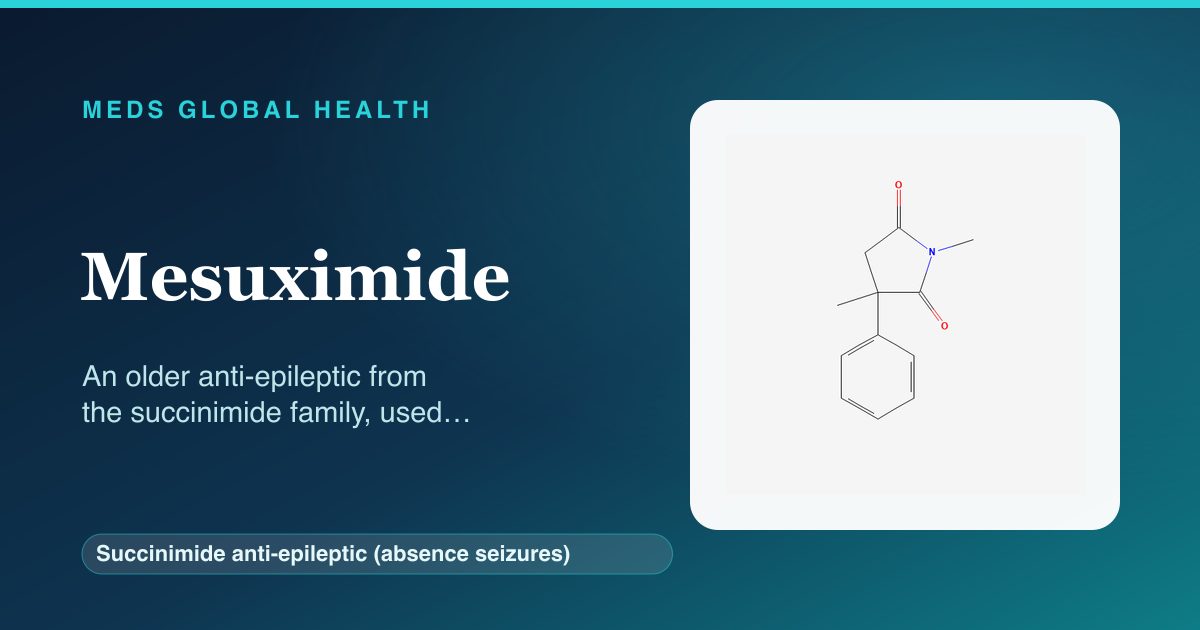
What it is
Mesuximide is an anti-epileptic (anticonvulsant) medicine belonging to the succinimide group, the same family as ethosuximide. Succinimides are used mainly for absence seizures, a type of seizure causing brief lapses of awareness rather than convulsions. Mesuximide is an older member of this group and tends to be reserved for absence seizures that have not responded to first-choice treatments. It is taken by mouth. Because newer and better-tolerated options are usually preferred, it is now used only occasionally and under specialist supervision.
How it works
Mesuximide works in a way typical of the succinimide anti-epileptics, by reducing particular electrical signals in the brain that are involved in absence seizures. These seizures are linked to abnormal rhythmic activity between certain brain regions, and succinimides dampen this activity, helping to prevent the brief lapses of awareness. Because it targets the mechanism behind absence seizures, it is useful for that seizure type in particular, rather than for convulsive seizures. It is taken regularly to keep this protective effect steady, and is usually introduced and adjusted by a specialist.
Company & origin
An older succinimide anti-epileptic, related to ethosuximide, used for absence seizures and now used only rarely in the UK.
What it treats
Conditions Mesuximide is used for
Practical use
How to take Mesuximide
General, dose-free guidance — always follow your prescriber's and the leaflet's specific instructions.
- Take it by mouth as prescribed, with food if it upsets your stomach.
- Take it regularly at the same times each day to keep its effect steady.
- Never stop it suddenly, as this can trigger seizures; any changes are made gradually by your specialist.
- Report any signs of infection, fever, sore throat, mouth ulcers or unusual bruising, as it can rarely affect the blood cells.
- Do not drive or do anything needing full alertness if it makes you drowsy, until you know how it affects you.
Weighing it up
Advantages & disadvantages of Mesuximide
Advantages
- Can control absence seizures that have not responded to first-choice medicines.
- Taken by mouth.
- A long-established medicine with decades of experience behind it.
Disadvantages
- Commonly causes drowsiness and stomach upset.
- Can, less commonly, affect the blood cells, so blood tests may be needed.
- An older, second-line medicine now used only rarely.
Practical use
Good to know
The main points to understand about mesuximide are how it is used and what to watch for. It is mostly reserved for absence seizures that have not responded to first-choice medicines such as ethosuximide or sodium valproate, so it tends to be a specialist, second-line option. It commonly causes drowsiness and stomach upset, which can settle over time or with taking it alongside food. A less common but important concern is that, like some related medicines, it can affect the blood cells, so blood tests may be used and any signs of infection, fever, sore throat or unusual bruising should be reported. As with every epilepsy medicine, it must never be stopped suddenly, because this can trigger seizures; any changes are made gradually under specialist guidance.
Who should not take it / use with caution
- People who have had a serious allergic reaction to it or to related succinimide medicines should not take it.
- It is used with caution in people with liver, kidney or blood problems, under specialist guidance.
- It is used with care in pregnancy, where the specialist weighs seizure control against risks.
Monitoring
- Reviewing how well absence seizures are controlled.
- Checking blood counts and liver function during treatment, as serious blood problems can occur.
- Watching for drowsiness, stomach upset and any mood changes.
Side effects
- Drowsiness, dizziness or unsteadiness.
- Nausea, loss of appetite or stomach upset.
- Headache, hiccups or mood changes in some people.
- Less commonly but more seriously, drops in blood cells, liver problems or skin reactions, which need medical attention.
Key interactions
- It can interact with other anti-epileptic medicines, with levels affecting one another.
- Other medicines that cause drowsiness, including alcohol, add to its sedative effect.
- Tell your specialist about all your medicines so interactions can be managed.
Available as: Capsules taken by mouth.
Answers
Mesuximide: frequently asked questions
What is mesuximide used for?
It is an older anti-epileptic medicine used to control absence seizures, usually when first-choice treatments such as ethosuximide have not worked.
Is it the same as methsuximide?
Yes, mesuximide is also called methsuximide; they are two names for the same succinimide anti-epileptic medicine.
Why might I need blood tests?
Like some related medicines, it can occasionally affect the blood cells, so blood tests may be used and any signs of infection or unusual bruising should be reported.
Can I stop it if my seizures settle?
No. Epilepsy medicines must never be stopped suddenly, as this can trigger seizures; any changes are made gradually under your specialist's guidance.
Will it make me drowsy?
Drowsiness is a common effect, so avoid driving or tasks needing full alertness until you know how it affects you, and take care with alcohol.
Authoritative sources
- BNF
- NICE CKS
Building a medicines information resource?
We create evidence-led, dose-free drug and formulary references for teams.