A long-acting opioid for opioid dependence
Methadone
A long-acting opioid taken daily by mouth to treat opioid dependence, and sometimes used for severe pain.
What is Methadone?
Methadone is a long-acting opioid most often used as a daily liquid taken by mouth to treat dependence on heroin or other opioids. By giving a steady, controlled medicine it eases withdrawal and craving, helping people stabilise their lives and stay in treatment and support. It works best as part of a wider treatment plan tailored to the person, alongside services and support. It is a powerful medicine: starting it, mixing it with alcohol or other sedatives, or taking it when not used to opioids can dangerously slow breathing, and it can be fatal if a child swallows it, so it is kept locked away and dispensing is often supervised at first.
Education and reference only. This is a plain-language guide to Methadone — it deliberately contains no doses. Doses depend on the person, the brand and the reason for treatment, and belong with your prescriber. Always check the BNF, the product labelling (SmPC) and follow medical advice.
What it is
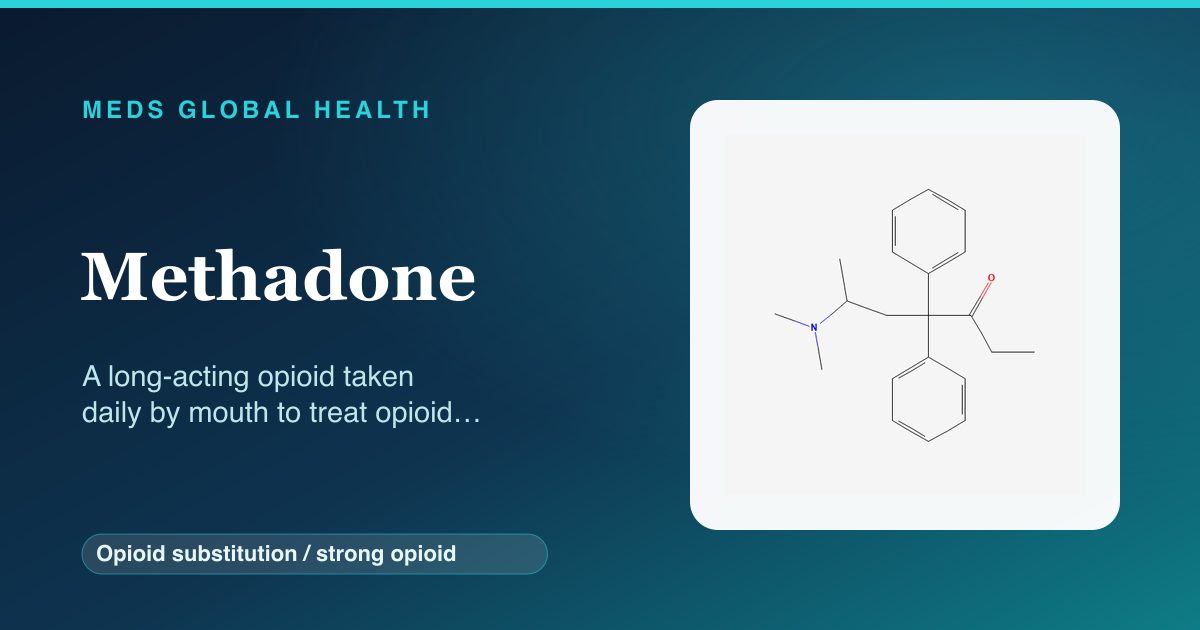
Methadone is a long-acting opioid. In the UK it is used most often as a substitution treatment for dependence on heroin or other opioids, given as a once-daily oral liquid (and sometimes tablets), and it is occasionally used for severe or specialist pain. Because it lasts a long time in the body, a single daily dose can hold someone steady through the day, replacing the cycle of highs and withdrawal that comes with street opioids. It is usually started and adjusted carefully by a specialist drug treatment service, with dispensing supervised at the pharmacy in the early stages.
How it works
Methadone acts on the same opioid receptors in the brain as heroin and other opioids, but in a slow, steady and long-lasting way. This means it prevents withdrawal symptoms and reduces craving without the sharp peaks and crashes of shorter-acting opioids, and it blunts the effect of any opioid used on top. Holding someone in this stable state gives space to engage with support, reduce risky drug use and rebuild day-to-day life. The dose is found gradually for each person, because too little leaves withdrawal and too much can be dangerous, especially before tolerance builds up.
Company & origin
A long-established long-acting opioid used in the UK mainly as a daily oral medicine to treat heroin and opioid dependence, and sometimes for severe pain.
Practical use
How to take Methadone
General, dose-free guidance — always follow your prescriber's and the leaflet's specific instructions.
- Take your methadone exactly as agreed with your drug treatment service, usually once a day; do not take extra to 'top up'.
- Expect supervised dispensing at the pharmacy at first, with take-home doses introduced as things become more settled.
- Avoid alcohol, sleeping tablets, pregabalin and other sedatives with methadone, as together they can dangerously slow your breathing.
- Always keep methadone locked and well out of the sight and reach of children, as even a small amount can be fatal to a child.
- If you miss several days' doses, do not simply restart your usual dose — contact your service first, as your tolerance may have dropped.
Weighing it up
Advantages & disadvantages of Methadone
Advantages
- A well-established, effective treatment that reduces opioid withdrawal and craving and helps people stay in treatment.
- Its long action allows steady, once-daily dosing that supports a more stable daily routine.
- Used within a support plan, it lowers the risks linked to street opioid use and helps people rebuild their lives.
Disadvantages
- It is itself an opioid, so it can cause dependence and dangerous slowing of breathing, especially when starting or combined with sedatives or alcohol.
- It can affect the heart's rhythm and may require supervised dispensing and monitoring at first.
- It is extremely dangerous, and potentially fatal, if taken by a child or by someone without opioid tolerance.
Practical use
Good to know
Methadone is most effective when it is part of a wider, individual treatment plan, alongside keyworker support and services, rather than a medicine used alone. The most important safety points are about breathing: methadone can slow breathing dangerously, and the highest risk is in the first days of treatment, when the dose is increased, if it is taken with alcohol, sleeping tablets, pregabalin or other sedatives, or by anyone who has lost their tolerance (for example after a break, prison or detox). For this reason doses are introduced cautiously and often dispensed under supervision at first. It must be kept locked well away from children, because even a small amount can be fatal to a child who swallows it. Methadone can also affect the heart's rhythm (a QT effect), so the heart is sometimes checked, particularly at higher doses or with other medicines that have the same effect. Stopping suddenly causes withdrawal, so any reduction is planned and gradual.
Who should not take it / use with caution
- It is used with great caution, or avoided, in people with severe breathing problems or untreated sleep apnoea.
- People with certain heart-rhythm problems, or taking other medicines that affect heart rhythm, may need extra checks or an alternative.
- It is not suitable for anyone who has lost their opioid tolerance unless the dose is restarted carefully under specialist guidance.
Monitoring
- Close review during the first days and any dose increases, watching for over-sedation and slow breathing.
- Heart-rhythm (QT) checks in some people, especially at higher doses or with interacting medicines.
- Ongoing review of progress, support needs and any plan to reduce the dose gradually.
Side effects
- Drowsiness, sweating, constipation, dry mouth, nausea and reduced sex drive are common, especially early on.
- Slowed or shallow breathing is the most serious risk and can be life-threatening, particularly with alcohol or other sedatives.
- Less often, changes in heart rhythm, dizziness or low blood pressure.
Key interactions
- Alcohol, sleeping tablets, benzodiazepines, pregabalin and other sedatives add to the risk of dangerously slow breathing.
- Some medicines that affect heart rhythm can increase the QT effect, so combinations are checked carefully.
- Certain medicines for HIV, epilepsy or infections can raise or lower methadone levels, so doses may need adjusting.
Available as: Oral liquid (most common) and tablets taken by mouth; an injectable form is used only in specialist settings.
Answers
Methadone: frequently asked questions
Is methadone just swapping one drug for another?
Methadone is a controlled, steady medicine that prevents withdrawal and craving without the highs and crashes of street opioids; used with support it helps people stabilise and rebuild their lives, which is very different from continued risky drug use.
Why is my methadone supervised at the pharmacy?
Supervised dispensing at first helps keep you safe while the dose settles and reduces the risk of doses being taken unsafely or reaching children; take-home doses are usually introduced as things become more stable.
Can I drink alcohol while taking methadone?
It is best avoided, because alcohol and methadone together can dangerously slow your breathing; the same is true of sleeping tablets, pregabalin and other sedatives.
What if I miss a few days of methadone?
Do not just restart your usual dose, as your tolerance can drop quickly and the normal amount could then be dangerous; contact your treatment service for advice first.
Why must it be kept locked away from children?
Methadone is very strong, and even a small amount can be fatal to a child who swallows it, so it must always be locked and kept well out of their sight and reach.
The wider class
About Opioid substitution / strong opioid
Methadone belongs to the opioid substitution / strong opioid class. For how the class as a whole works, its shared safety principles and monitoring, see the full guide.
Browse by body system
Authoritative sources
- BNF
- NICE CKS
Building a medicines information resource?
We create evidence-led, dose-free drug and formulary references for teams.