A carbonic-anhydrase inhibitor for glaucoma
Methazolamide
A carbonic-anhydrase-inhibitor tablet used to lower the pressure inside the eye in glaucoma.
What is Methazolamide?
Methazolamide is a carbonic-anhydrase inhibitor, a type of medicine taken by mouth to lower the pressure inside the eye in glaucoma. It is related to acetazolamide. Common effects include tingling in the hands and feet, taste changes (drinks such as fizzy ones can taste odd) and tiredness. Over time it can affect the body's salt and acid balance and raise the risk of kidney stones. It is related to sulfonamide medicines, so people with that allergy use it with caution. It is taken under medical supervision with monitoring.
Education and reference only. This is a plain-language guide to Methazolamide — it deliberately contains no doses. Doses depend on the person, the brand and the reason for treatment, and belong with your prescriber. Always check the BNF, the product labelling (SmPC) and follow medical advice.
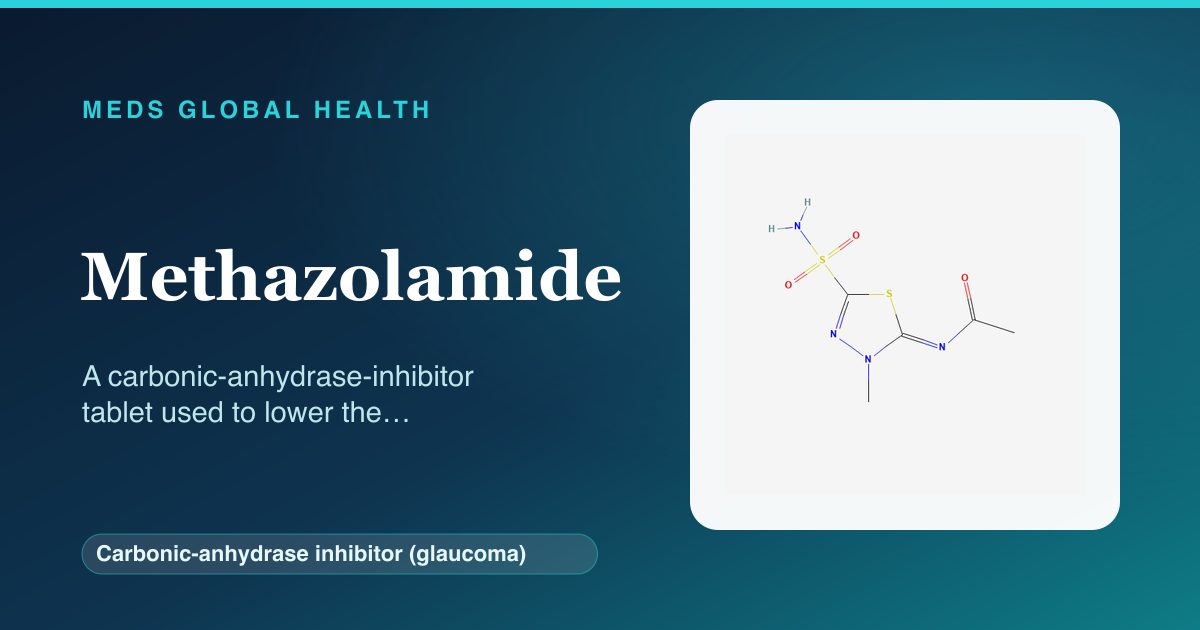
What it is
Methazolamide is a medicine from a group called carbonic-anhydrase inhibitors, taken as a tablet to lower raised pressure inside the eye in glaucoma. By reducing the amount of fluid the eye makes, it helps protect the optic nerve from the damage that high eye pressure can cause. It is closely related to acetazolamide and works in a similar way. It is usually used when eye drops alone are not enough, and it is taken under the care of an eye specialist with regular review.
How it works
Methazolamide blocks an enzyme called carbonic anhydrase, which the eye uses to produce the watery fluid inside it. With this enzyme dampened down, the eye makes less fluid, so the pressure inside the eye falls and the optic nerve is better protected. The same enzyme is found elsewhere in the body, which is why the medicine can also affect the kidneys and the balance of salts and acid, leading to side effects such as tingling, taste changes and a tendency to kidney stones.
Company & origin
A carbonic-anhydrase-inhibitor tablet used to lower pressure in the eye in glaucoma; related to acetazolamide.
What it treats
Conditions Methazolamide is used for
Practical use
How to take Methazolamide
General, dose-free guidance — always follow your prescriber's and the leaflet's specific instructions.
- Take it by mouth as prescribed, at evenly spaced times during the day.
- Drink enough fluids, as the medicine can raise the risk of kidney stones.
- Do not be alarmed by tingling in the hands and feet or by drinks tasting odd; these are common effects.
- Tell your prescriber if you have a sulfonamide (sulfa) allergy before starting.
- Keep up with the blood tests arranged, as the medicine can affect salts and acid balance.
Weighing it up
Advantages & disadvantages of Methazolamide
Advantages
- Lowers raised pressure inside the eye in glaucoma, helping protect the optic nerve.
- A tablet option for when eye drops alone are not enough.
- Related to acetazolamide and well understood in eye care.
Disadvantages
- Commonly causes tingling in the hands and feet and changes in taste.
- Can affect the body's salt and acid balance and raise the risk of kidney stones.
- Related to sulfonamide medicines, so it needs caution in people with a sulfa allergy.
Practical use
Good to know
It helps to expect some characteristic effects: tingling or pins and needles in the hands, feet or around the mouth is common, and many people notice that fizzy drinks taste strange or flat. Tiredness and a general off-colour feeling can also occur. Over time the medicine can shift the body's balance of salts and acid and lower potassium, which is why blood tests are used, and it raises the risk of kidney stones, so drinking enough fluids is sensible. Because methazolamide is related to sulfonamide medicines, anyone with a sulfonamide (sulfa) allergy should use it with caution and mention it to their prescriber. It is taken under specialist supervision, usually when eye drops alone are not controlling the pressure well enough.
Who should not take it / use with caution
- People who have had a serious allergic reaction to methazolamide or to sulfonamide medicines should not take it.
- It is avoided or used with great caution in people with significant kidney or liver problems or certain salt imbalances.
- It is used with care in people prone to kidney stones, with monitoring of blood tests.
Monitoring
- Checking the pressure inside the eye to see how well it is working.
- Blood tests for salts, potassium and acid balance, and kidney function.
- Watching for kidney-stone symptoms and ongoing side effects such as tingling.
Side effects
- Tingling or pins and needles in the hands, feet or around the mouth.
- Changes in taste, with drinks such as fizzy ones tasting odd, and a metallic taste.
- Tiredness, low mood or feeling generally off-colour.
- Over time, changes in the body's salts and acid balance, low potassium and a raised risk of kidney stones.
Key interactions
- It can add to the effects of other medicines that lower potassium, such as some water tablets.
- It can change how the body handles other medicines by altering the acidity of the urine.
- Tell your prescriber about all your medicines, especially other medicines that affect salts or the kidneys.
Available as: Tablets taken by mouth.
Answers
Methazolamide: frequently asked questions
What is methazolamide used for?
It is a carbonic-anhydrase-inhibitor tablet used to lower the pressure inside the eye in glaucoma, related to acetazolamide.
Why do my hands and feet tingle?
Tingling or pins and needles in the hands, feet or around the mouth is a common effect of this group of medicines and is usually not harmful.
Why do drinks taste strange?
Taste changes, with fizzy drinks tasting odd or flat, are a well-known effect of carbonic-anhydrase inhibitors like methazolamide.
Can it cause kidney stones?
Yes, it can raise the risk of kidney stones over time, so drinking enough fluids and keeping up with blood tests is sensible.
I have a sulfa allergy; can I take it?
Methazolamide is related to sulfonamide medicines, so a sulfa allergy means it is used with caution; always tell your prescriber about the allergy.
The wider class
About Carbonic-anhydrase inhibitor (glaucoma)
Methazolamide belongs to the carbonic-anhydrase inhibitor (glaucoma) class. For how the class as a whole works, its shared safety principles and monitoring, see the full guide.
Browse by body system
Authoritative sources
- BNF
- NICE CKS
Building a medicines information resource?
We create evidence-led, dose-free drug and formulary references for teams.