A psoralen used with UVA light in PUVA therapy
Methoxsalen
A psoralen taken or applied before controlled UVA light treatment (PUVA) for skin conditions such as psoriasis and vitiligo.
What is Methoxsalen?
Methoxsalen is a psoralen, a medicine that makes the skin much more sensitive to ultraviolet A (UVA) light. It is used as part of PUVA therapy, where it is taken by mouth or applied to the skin and then the skin is exposed to controlled UVA light to treat conditions such as psoriasis and vitiligo. The most important thing to understand is the strong, lasting skin and eye sensitivity to light it causes: UV-protective wraparound eyewear and strict sun avoidance are needed after each treatment, and long-term there is an increased risk of skin cancer and cataracts.
Education and reference only. This is a plain-language guide to Methoxsalen — it deliberately contains no doses. Doses depend on the person, the brand and the reason for treatment, and belong with your prescriber. Always check the BNF, the product labelling (SmPC) and follow medical advice.
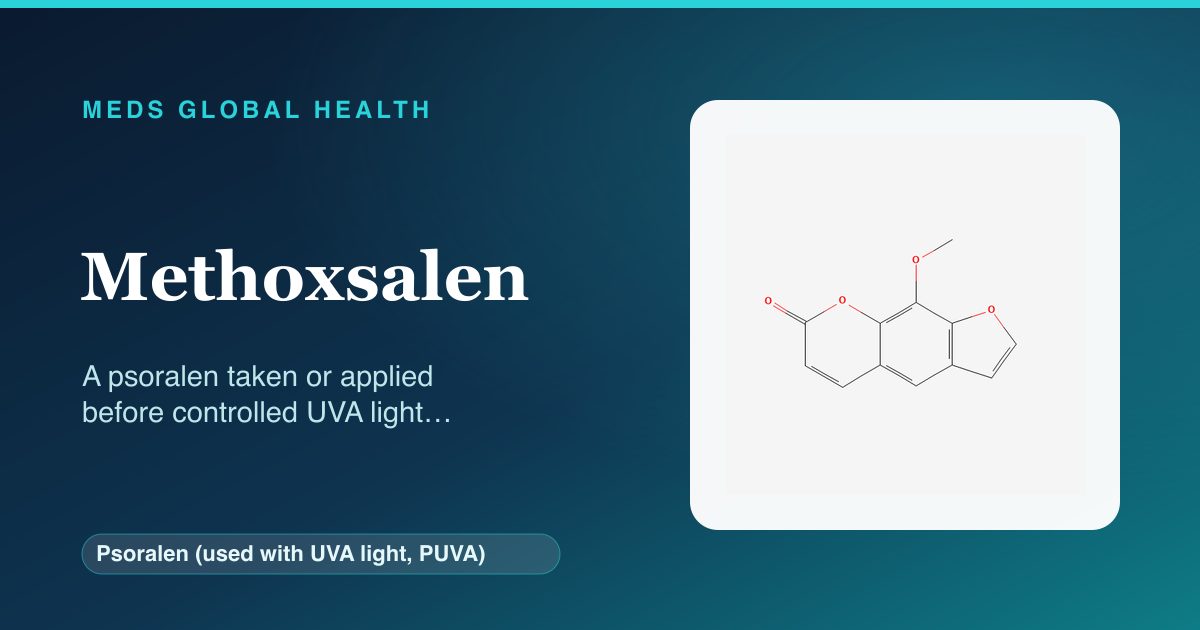
What it is
Methoxsalen is a psoralen, a type of medicine that makes the skin react strongly to ultraviolet A (UVA) light. It is not used on its own but as one half of a hospital treatment called PUVA, which stands for psoralen plus UVA. The medicine is taken by mouth or applied to the skin, and then, after a set waiting time, the skin is exposed to carefully measured UVA light. PUVA is used by dermatology teams for stubborn skin conditions such as psoriasis and vitiligo. It is always given under specialist supervision because of the powerful light sensitivity it causes.
How it works
Methoxsalen soaks into the skin and, when the skin is then exposed to UVA light, it reacts with the light to affect the rapidly dividing skin cells and the immune activity in the skin. In psoriasis this slows the overactive turnover of skin cells that drives the scaly patches, and in vitiligo it can help colour return to pale patches of skin. Because the medicine only acts when UVA light hits it, the timing between taking or applying it and the light exposure is carefully controlled. The same light-sensitising effect is why the skin and eyes stay very sensitive to sunlight for hours afterwards.
Company & origin
A specialist medicine used in UK dermatology with controlled UVA light treatment for conditions such as psoriasis and vitiligo.
Practical use
How to take Methoxsalen
General, dose-free guidance — always follow your prescriber's and the leaflet's specific instructions.
- Take it by mouth, or have it applied to the skin, exactly as your dermatology team directs, with the correct waiting time before the UVA light.
- Wear wraparound UV-protective sunglasses after each treatment and avoid sunlight for the rest of that day, indoors and out.
- Cover your skin and avoid the sun and sunbeds completely between sessions, as your skin stays highly sensitive to light.
- Attend all your scheduled light sessions, as the medicine and light work together and the dose of light is carefully measured.
- Go to your regular skin and eye checks, as long-term PUVA increases the risk of skin cancer and cataracts.
Weighing it up
Advantages & disadvantages of Methoxsalen
Advantages
- Can clear stubborn psoriasis and help restore colour in vitiligo when other treatments have not worked.
- Targets the skin and immune activity that drive these conditions.
- Given under close specialist supervision with carefully measured light.
Disadvantages
- Causes severe, lasting skin and eye sensitivity to light, needing strict sun avoidance and UV-protective eyewear.
- Long-term use increases the risk of skin cancer and cataracts.
- Requires repeated hospital visits and, by mouth, often causes nausea.
Practical use
Good to know
The dominant safety issue with methoxsalen is the severe, lasting sensitivity to light it causes. After each treatment your skin and especially your eyes remain very sensitive to UV light for the rest of that day, so wraparound UV-protective sunglasses must be worn and direct sunlight avoided, even through windows and on cloudy days, to prevent painful burning and eye damage. Over the longer term, repeated PUVA treatment raises the risk of skin cancer and of cataracts, so the number of treatments is tracked over a lifetime and your skin and eyes are checked regularly. Nausea is common when it is taken by mouth. It is essential to attend the supervised light sessions and never to sunbathe or use a sunbed alongside it. Tell your team about all your medicines, as some increase light sensitivity further.
Who should not take it / use with caution
- People who have had a serious allergic reaction to methoxsalen or other psoralens should not use it.
- It is avoided in people with conditions that make them extremely sensitive to light, or with a history of certain skin cancers, unless a specialist advises otherwise.
- It is used with great care, and generally avoided, in pregnancy and breastfeeding, and only under specialist supervision.
Monitoring
- Keeping a lifetime record of the number of treatments because of the long-term skin-cancer risk.
- Regular skin checks for any suspicious changes and regular eye checks for cataracts.
- Reviewing how well the skin condition is responding and adjusting the treatment plan.
Side effects
- Severe sensitivity to light, with a risk of painful skin burning and eye damage if sun protection is not followed.
- Nausea, especially when it is taken by mouth.
- Itching, redness or darkening of the skin, and, with long-term use, increased risk of skin cancer and cataracts.
Key interactions
- Other medicines or products that increase sensitivity to light can add to the effect, so tell your team everything you take.
- Some foods and supplements can affect light sensitivity, so follow any advice you are given.
- It must never be combined with unsupervised sunbeds or extra UV exposure outside the planned sessions.
Available as: Capsules taken by mouth and preparations applied to the skin, used with controlled UVA light.
Answers
Methoxsalen: frequently asked questions
What is methoxsalen used for?
It is a psoralen used as part of PUVA therapy, where it is combined with controlled UVA light to treat skin conditions such as psoriasis and vitiligo.
Why do I need special sunglasses?
Methoxsalen makes your eyes and skin very sensitive to UV light for the rest of the treatment day, so wraparound UV-protective sunglasses are needed to protect your eyes from damage.
Why must I avoid the sun after treatment?
Your skin stays highly sensitive to light for hours, so sunlight, including through windows, can cause painful burning unless you stay covered and out of the sun.
Does it increase cancer risk?
Yes, repeated PUVA treatment over time increases the risk of skin cancer and of cataracts, which is why your treatments are tracked and your skin and eyes are checked regularly.
Why does it make me feel sick?
Nausea is a common side effect when methoxsalen is taken by mouth; your team can give advice to help manage this.
Authoritative sources
- BNF
- NICE CKS
Building a medicines information resource?
We create evidence-led, dose-free drug and formulary references for teams.