A medicine that lowers cortisol in Cushing's syndrome
Metyrapone
A specialist medicine used to lower high cortisol in Cushing's syndrome by blocking the final step of cortisol production.
What is Metyrapone?
Metyrapone is a specialist medicine used to control high levels of the hormone cortisol in Cushing's syndrome. It works by blocking the last step the adrenal glands use to make cortisol, which brings the level down. It is taken by mouth and is used to manage symptoms while the underlying cause, such as a tumour, is investigated or treated. The main risk is the opposite problem of too little cortisol (adrenal insufficiency), so cortisol levels are monitored closely and the dose is adjusted to keep them in a safe range.
Education and reference only. This is a plain-language guide to Metyrapone — it deliberately contains no doses. Doses depend on the person, the brand and the reason for treatment, and belong with your prescriber. Always check the BNF, the product labelling (SmPC) and follow medical advice.
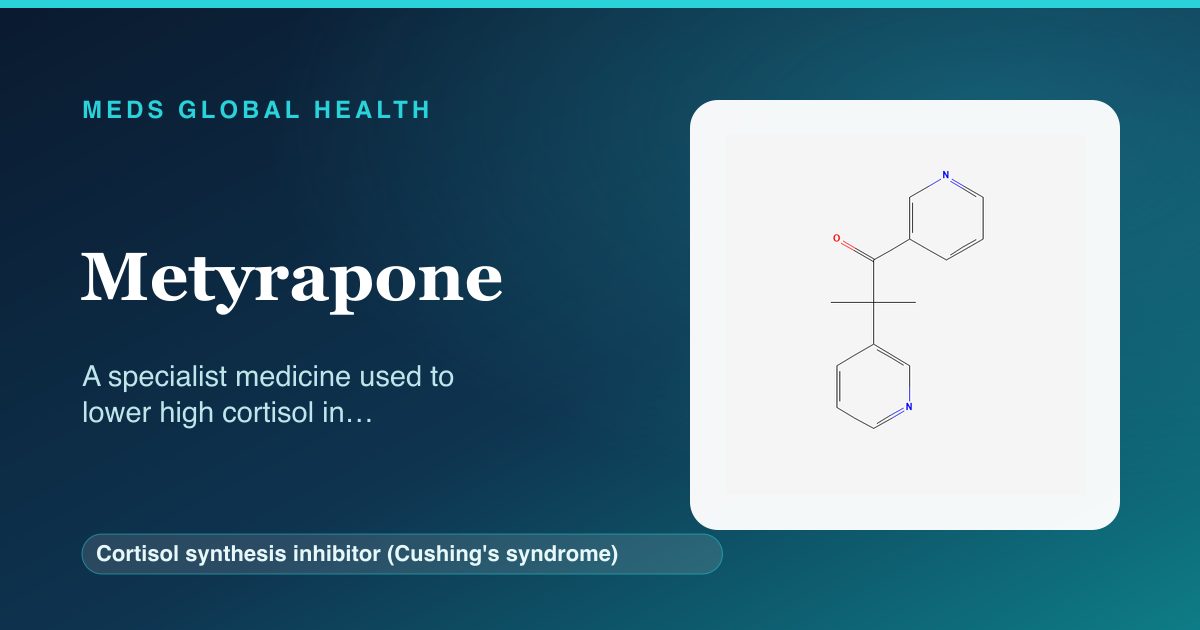
What it is
Metyrapone is a medicine used to lower cortisol, a steroid hormone made by the adrenal glands, when it is being produced in excess. This happens in Cushing's syndrome, which can be caused by a pituitary or adrenal tumour or by a tumour elsewhere in the body. Metyrapone is taken by mouth and is often used to control symptoms and bring cortisol down while the cause is being investigated, prepared for surgery, or treated in other ways. It is also sometimes used as a test of how the pituitary and adrenal glands are working. It is prescribed and closely supervised by an endocrine specialist team.
How it works
The adrenal glands make cortisol through a series of steps, and the final step relies on a particular enzyme. Metyrapone blocks that enzyme, so the adrenal glands cannot complete the production of cortisol and the level in the blood falls. By dialling cortisol down in this way, it relieves the harmful effects of having too much. Because the effect depends on the amount taken and the body's needs can change, the level can swing too low, which is why cortisol is measured regularly and the treatment is carefully adjusted to keep it in the right range.
Company & origin
A specialist medicine used in the UK to lower high cortisol levels in Cushing's syndrome, and sometimes to test how the adrenal glands are working.
Practical use
How to take Metyrapone
General, dose-free guidance — always follow your prescriber's and the leaflet's specific instructions.
- Take it by mouth as prescribed, usually with food or milk to reduce stomach upset.
- Take it exactly as directed and attend your blood tests, as the dose is fine-tuned using your cortisol levels.
- Learn the signs of too little cortisol, such as severe tiredness, dizziness, nausea or feeling very unwell, and seek help if they occur.
- Tell your team if you become ill, are injured or are having surgery, as your body may need more cortisol cover.
- Do not change or stop it on your own, as cortisol can swing too high or too low.
Weighing it up
Advantages & disadvantages of Metyrapone
Advantages
- An effective way to bring down high cortisol and relieve the symptoms of Cushing's syndrome.
- Useful for controlling cortisol while the cause is investigated or before surgery.
- Taken by mouth and can be combined with steroid replacement in a 'block and replace' approach.
Disadvantages
- Can lower cortisol too much, causing adrenal insufficiency, so close monitoring is needed.
- Commonly causes stomach upset, especially early on.
- Can increase other adrenal hormones, sometimes causing extra hair growth or acne.
Practical use
Good to know
The central balancing act with metyrapone is keeping cortisol low enough to treat Cushing's syndrome but not so low that the body runs short, a state called adrenal insufficiency. Because of this, the team measures cortisol regularly and adjusts treatment; sometimes a small steroid replacement is given alongside in a 'block and replace' approach. It is important to know the warning signs of too little cortisol, such as severe tiredness, dizziness, nausea, vomiting and feeling generally unwell, and to seek help if they happen, especially during illness, injury or stress, when the body needs more cortisol. Because blocking cortisol production can push the body to make more of other adrenal hormones, some people notice extra hair growth or acne. Stomach upset is common, and taking it with food or milk can help.
Who should not take it / use with caution
- People who have had a serious allergic reaction to metyrapone should not take it.
- It is used with great care in people whose adrenal glands are already underactive, because of the risk of too little cortisol.
- It is used in pregnancy only under specialist guidance, weighing the benefits and risks carefully.
Monitoring
- Regular blood (and sometimes urine) tests to measure cortisol and keep it in a safe range.
- Watching for signs of too little cortisol, especially during illness, injury or stress.
- Reviewing blood pressure, blood salts and general wellbeing during treatment.
Side effects
- Nausea, vomiting or stomach upset, often eased by taking it with food.
- Dizziness, low blood pressure, tiredness or headache.
- Signs of too little cortisol, such as severe tiredness, nausea and feeling very unwell, which need prompt attention.
- Extra hair growth, acne, or a temporary rise in blood pressure from other adrenal hormones being made.
Key interactions
- Other medicines that affect cortisol or hormone tests can complicate treatment and monitoring.
- Some medicines that act on the liver's enzymes can change how metyrapone works.
- Tell your team about all your medicines, as the balance of cortisol is sensitive and closely managed.
Available as: Capsules taken by mouth.
Answers
Metyrapone: frequently asked questions
What is metyrapone used for?
It is used to lower high cortisol levels in Cushing's syndrome, often to control symptoms while the cause is investigated or before surgery, and sometimes as a test of adrenal function.
How does it lower cortisol?
It blocks the enzyme the adrenal glands use in the final step of making cortisol, so less cortisol is produced and the blood level falls.
What is the main risk to watch for?
The main risk is lowering cortisol too much (adrenal insufficiency); watch for severe tiredness, dizziness, nausea or feeling very unwell, and seek help, especially when ill or stressed.
Why might I be given a steroid alongside it?
Sometimes cortisol is blocked fully and a steroid is replaced in a controlled way, called 'block and replace', to keep the level steady and avoid the body running short.
Should I take it with food?
Yes, taking it with food or milk can help reduce the stomach upset that is common with metyrapone.
Authoritative sources
- BNF
- NICE CKS
Building a medicines information resource?
We create evidence-led, dose-free drug and formulary references for teams.